TL;DR
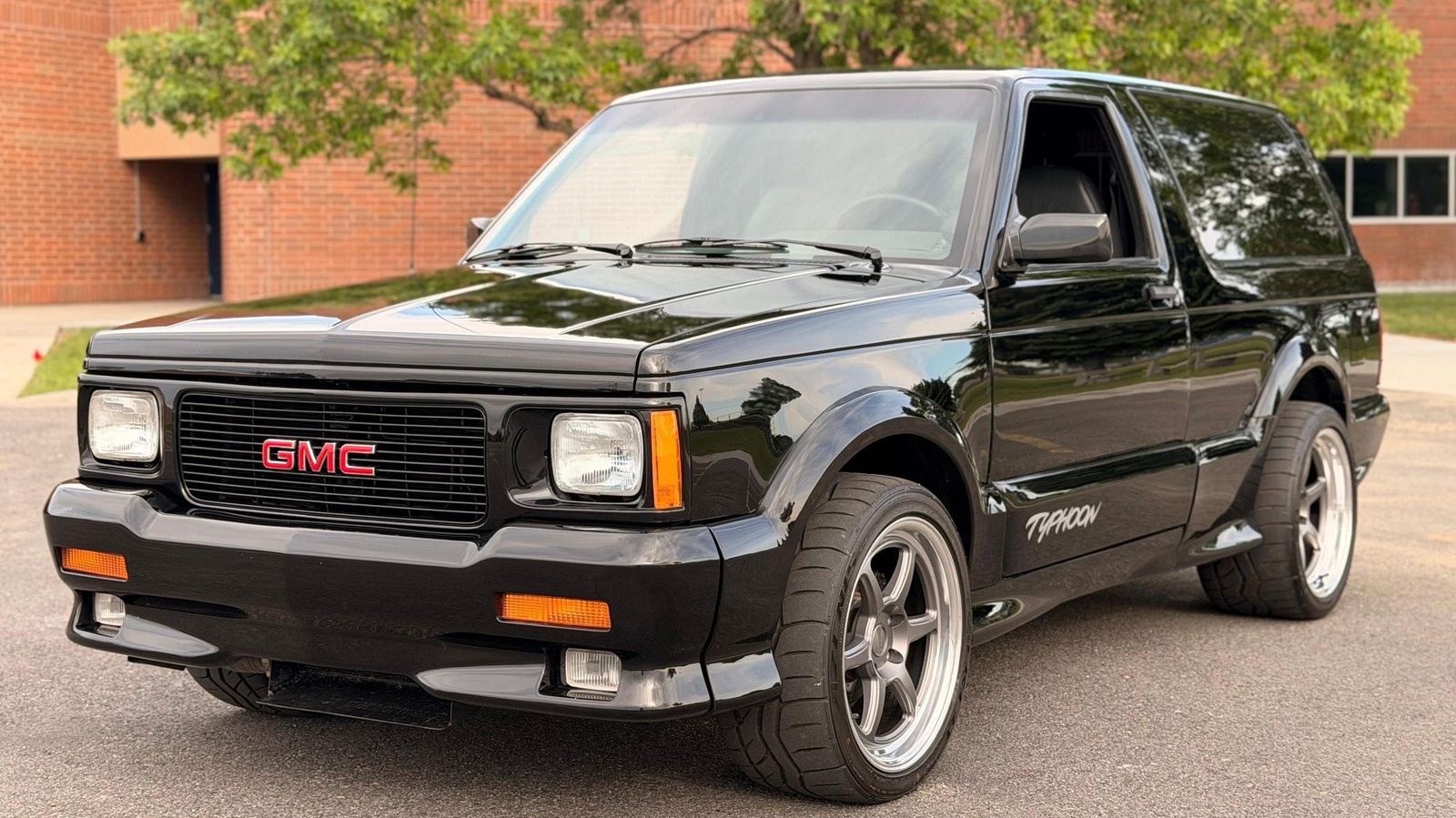
A 1993 GMC Typhoon, originally a 280-horsepower SUV, has been modified to produce 682 horsepower at the wheels — equivalent to roughly 800 horsepower at the crank — using a turbocharged V6 and nitrous oxide injection. This build directly challenges the 710-horsepower Dodge Durango Hellcat, proving that a 33-year-old platform can outperform modern muscle SUVs with the right engineering and a fraction of the cost.
What Happened
A 1993 GMC Typhoon — a rare, turbocharged, all-wheel-drive SUV from the early 1990s — has been modified to deliver 682 horsepower at the wheels, a figure that eclipses the factory output of Dodge's current Durango Hellcat. The build, reported by Jalopnik on June 14, 2026, relies on a combination of forced induction and nitrous oxide to transform the aging platform into a pavement-ripping machine that would likely embarrass the modern Hellcat in a straight line.
Key Facts
- The 1993 GMC Typhoon originally produced 280 horsepower and 350 lb-ft of torque from its turbocharged 4.3-liter V6 engine.
- The modified Typhoon now generates 682 horsepower at the wheels, which typically translates to approximately 800 to 820 horsepower at the crank after accounting for drivetrain loss in the all-wheel-drive system.
- The build uses nitrous oxide injection in addition to the factory turbocharger to achieve the power increase — a combination that produces significant thermal and mechanical stress.
- The Dodge Durango Hellcat, which the Typhoon is implicitly challenging, produces 710 horsepower from its supercharged 6.2-liter Hemi V8 and retails for roughly $110,000 new.
- The Typhoon was only produced for two model years, 1992 and 1993, with approximately 2,200 units built in total, making it a rare collector vehicle.
- The 682-horsepower figure was recorded at the wheels — meaning the engine is likely producing significantly more power than the Durango Hellcat's crank rating, once corrected for drivetrain losses.
- The build was reported by Jalopnik on Sunday, June 14, 2026, highlighting the ongoing trend of modifying 1990s-era performance SUVs to compete with modern hardware.
Breaking It Down
The headline "Durango Hellcat, Who?" is not just clickbait — it is a mathematically defensible statement. The Durango Hellcat is rated at 710 horsepower at the crank. The Typhoon is making 682 horsepower at the wheels. In a typical all-wheel-drive vehicle, drivetrain losses range from 15 to 20 percent. Applying that to the Hellcat suggests its wheel horsepower is roughly 570 to 600 horsepower. The Typhoon's 682 wheel horsepower therefore represents a genuine advantage of 80 to 110 horsepower at the contact patch — the only number that matters during acceleration.
682 wheel horsepower from a 4.3-liter V6 is a specific output of roughly 159 horsepower per liter — more than double the Hellcat's 114 horsepower per liter, and achieved with technology from the early 1990s.
This specific output is remarkable because the GM 4.3-liter V6 is essentially a small-block V8 with two cylinders removed — a design that was never intended to handle sustained high boost levels. The factory Typhoon engine used a Mitsubishi TD06-17C turbocharger and 8.35:1 compression ratio to produce its original 280 horsepower. To reach 682 wheel horsepower, the builder has likely upgraded the turbocharger, intercooler, fuel system, and engine internals — and added nitrous oxide as a supplemental oxidizer. Nitrous injection provides a temporary oxygen-rich charge that allows the engine to burn significantly more fuel, but it also introduces extreme cylinder pressures and temperatures that can quickly destroy pistons and rings if the tune is even slightly aggressive.
The choice of nitrous over a larger single turbo or a twin-turbo setup is telling. Nitrous is a relatively inexpensive way to add 100 to 200 horsepower on demand, but it is also a consumable — the bottle must be refilled after each use. This suggests the builder prioritized peak power claims over daily drivability. The Typhoon likely runs on a conservative turbo tune for street driving and reserves the nitrous for dyno pulls or track passes. This is a common strategy in the enthusiast community, but it means the 682-horsepower figure is a maximum, not a sustained capability.
What Comes Next
The emergence of this build signals a broader shift in the performance SUV market. While manufacturers like Dodge, Jeep, and Ford continue to release high-horsepower SUVs with factory warranties, the enthusiast community is demonstrating that older, lighter platforms can be more effective performance vehicles when properly modified. The GMC Typhoon weighs approximately 3,800 pounds — roughly 1,000 pounds less than the Durango Hellcat — meaning its power-to-weight ratio is superior even before accounting for the wheel-horsepower advantage.
- Public track testing: The builder or a third party will likely take this Typhoon to a drag strip within the next 30 to 60 days to produce a quarter-mile time. Expect a trap speed in the 120–130 mph range and an elapsed time in the 11-second range — or faster if the all-wheel-drive system can handle the torque.
- Durability assessment: Enthusiast forums and automotive journalists will scrutinize how long the engine lasts under repeated nitrous use. The 4.3-liter V6's cylinder walls and head gaskets are the weak points at this power level.
- Market valuation impact: Rare Typhoons in good condition currently trade for $40,000 to $70,000. A documented 682-wheel-horsepower build could push values higher for modified examples, or it could decrease value for collectors who prefer originality.
- Hellcat response: Dodge may release a higher-performance variant of the Durango Hellcat — possibly a Durango Hellcat Redeye or Super Stock — to reclaim the power crown, though no such announcement has been made as of June 2026.
The Bigger Picture
This story connects to two broader trends in automotive technology: Retro-Mod Performance and ICE Swansong Engineering.
Retro-Mod Performance is the practice of taking a 1990s or early 2000s vehicle — often a niche or forgotten model — and upgrading its powertrain, suspension, and electronics to outperform modern equivalents. The Typhoon is a perfect candidate: it was already a performance outlier in its era, with a turbocharged V6 and full-time all-wheel drive, but its technology was primitive by today's standards. Modern engine management, turbocharger technology, and fuel systems allow builders to extract power levels that were impossible when the vehicle was new. This trend is accelerating as modern vehicles become heavier, more complex, and more expensive to modify due to encrypted ECUs and software locks.
ICE Swansong Engineering refers to the final wave of internal combustion engine development before the widespread transition to electric vehicles. Enthusiasts are pushing gasoline engines to extreme outputs — often using forced induction and nitrous — precisely because the ICE era is ending. The Typhoon's 682 wheel horsepower from a 33-year-old V6 is a demonstration of what was always possible but rarely attempted. As EV adoption grows, these modified ICE vehicles will become increasingly rare and culturally significant — not as daily drivers, but as monuments to the internal combustion engine's ultimate potential.
Key Takeaways
- [Power Differential]: 682 wheel horsepower from a 1993 Typhoon likely exceeds the Durango Hellcat's crank-rated 710 horsepower by 80–110 horsepower at the wheels, making the older SUV genuinely faster in a straight line.
- [Nitrous Strategy]: The use of nitrous oxide indicates the 682-horsepower figure is a peak output, not a sustained capability — the engine likely runs at significantly lower power without the bottle engaged.
- [Platform Advantage]: The Typhoon's 3,800-pound curb weight gives it a power-to-weight advantage over the 4,800-pound Durango Hellcat, amplifying the impact of its higher wheel horsepower.
- [Collector Impact]: This build challenges the collector car orthodoxy that originality preserves value — it demonstrates that targeted modification can create a vehicle with objectively superior performance to modern factory offerings.