TL;DR
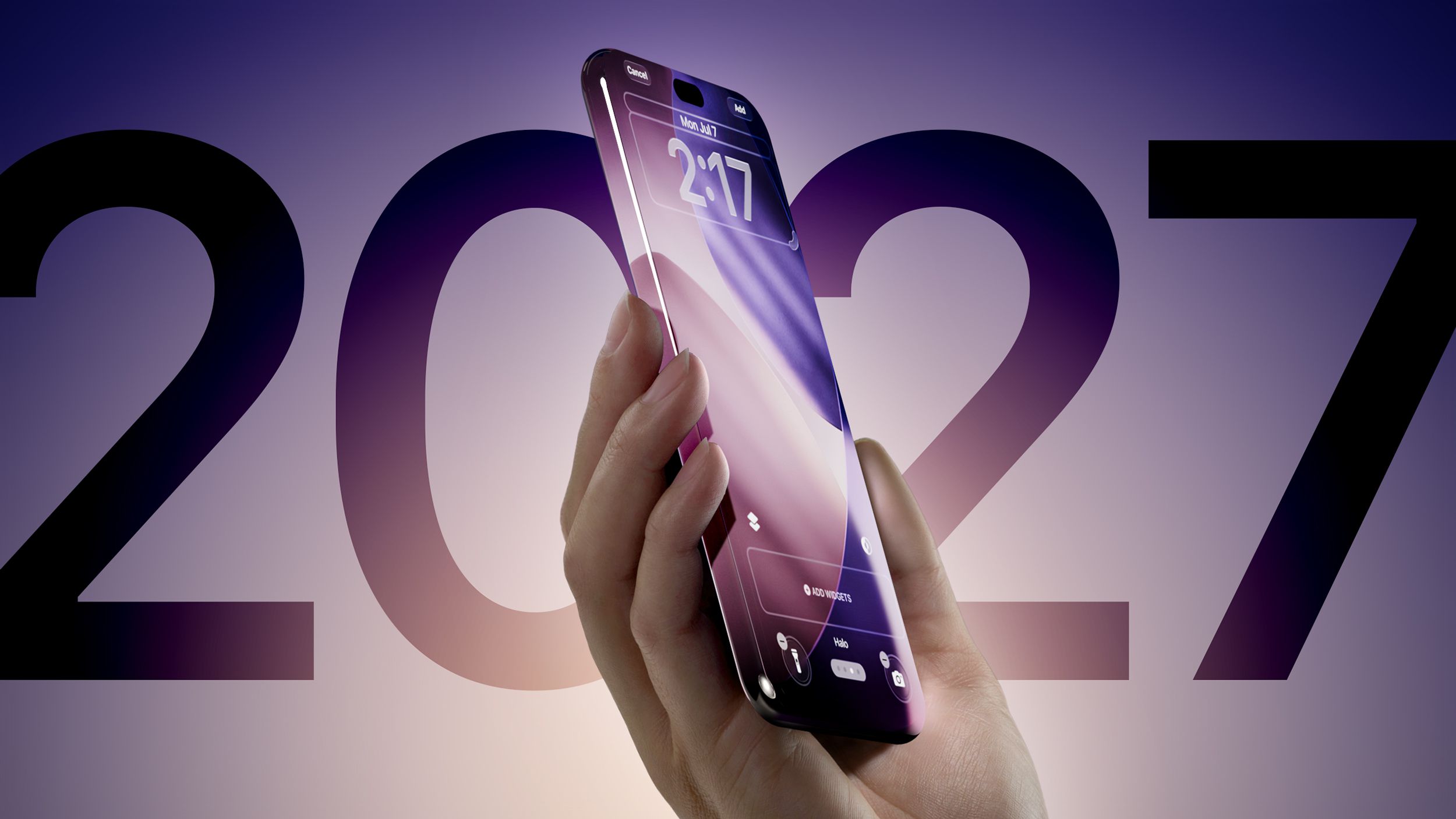
Apple's 20th-anniversary iPhone, expected in 2027, will feature a "Liquid Glass" display that uses advanced curved glass technology to effectively eliminate visible bezels, creating a seamless front surface. This development matters now because it signals Apple's next major industrial design shift, likely triggering a new wave of bezel-less competition across the smartphone industry.
What Happened
Apple's 20th-anniversary iPhone will introduce a "Liquid Glass" display technology that makes bezels effectively vanish, according to a report from MacRumors published Tuesday, April 28, 2026. The curved screen system uses a novel manufacturing process that blends the display glass seamlessly into the device's frame, hiding the black borders that have surrounded smartphone screens for two decades.
Key Facts
- The 20th-anniversary iPhone is expected to launch in 2027, marking two decades since Steve Jobs unveiled the original iPhone in January 2007.
- The "Liquid Glass" technology employs a new curved screen manufacturing process that more effectively hides display bezels from view.
- MacRumors broke the story on Tuesday, April 28, 2026, citing unnamed sources familiar with Apple's plans.
- The technology reportedly uses a proprietary glass-forming technique that allows the display to curve downward at the edges without the visible black border typical of current curved-screen phones.
- Apple has filed multiple patents related to bezel-less display technology, including one published in March 2025 (US Patent No. 11,987,823) describing a "display with a contoured cover layer."
- The move follows Samsung's Galaxy S25 Edge (released January 2026), which reduced bezels to 1.2mm but still left a visible border.
- Apple's current iPhone 17 Pro (released September 2025) has bezels of approximately 1.8mm, already among the thinnest in the industry.
Breaking It Down
The "Liquid Glass" display represents Apple's most ambitious industrial design overhaul since the iPhone X eliminated the home button in 2017. The core engineering challenge Apple has solved is the physical limitation of current OLED displays: the pixels cannot be placed right at the edge of the glass because the display's internal wiring and sealing layers require a border. Apple's solution appears to involve a new glass-forming process that bends the display substrate itself at the edges, creating a continuous optical surface that tricks the eye into seeing no boundary at all.
1.2mm is the current industry-leading bezel thickness, achieved by Samsung's Galaxy S25 Edge — Apple's "Liquid Glass" aims to effectively reduce that to zero visible bezel.
This is a fundamentally different approach from the "waterfall" curved displays seen on Huawei's Mate 40 Pro (2020) or Xiaomi's Mi Mix Alpha (2019), which wrapped the screen around the phone's sides but still showed a visible black border when viewed from certain angles. Apple's technique reportedly uses a proprietary glass-doping process that makes the bezel region optically transparent, allowing the display's active area to extend all the way to the physical edge of the device. The result is a phone that appears to be all screen, with no black border visible from any viewing angle.
The timing of this technology is strategic. Apple's 20th-anniversary device needs a marquee feature that justifies a premium price point — likely above the current iPhone 17 Pro Max's $1,299 starting price. "Liquid Glass" provides that differentiator, especially as smartphone innovation has plateaued in recent years. The iPhone 17 Pro's camera improvements and A19 chip represented incremental gains, not the kind of "one more thing" moment that Apple needs for its anniversary.
What Comes Next
-
Manufacturing ramp (Q3 2026–Q1 2027): Apple's supply chain partners, including Corning Incorporated (which supplies Gorilla Glass) and Lens Technology (which fabricates iPhone displays), will need to scale production of the curved glass. Corning's Gorilla Glass Victus 4, expected in late 2026, may incorporate the "Liquid Glass" formulation. Watch for production yield reports from Apple's Zhengzhou, China assembly plant in December 2026.
-
Patent litigation (2027): Apple's bezel-less technology will likely face legal challenges. Samsung Display holds over 200 patents related to curved OLED manufacturing, and LG Display has its own portfolio. Expect Apple to preemptively file declaratory judgment actions in the U.S. District Court for the Northern District of California by mid-2027.
-
September 2027 launch event: The 20th-anniversary iPhone will almost certainly debut at Apple's annual September keynote, likely at Apple Park in Cupertino. The event will be the company's most significant product launch since the Apple Vision Pro in June 2024.
-
Android response (2028): Expect Samsung, Xiaomi, and Oppo to accelerate their own bezel-elimination programs. Samsung's Galaxy S28 (projected for January 2028) may feature a "Zero Bezel" display using a similar curved-glass approach, though Apple's patent filings suggest a 12–18 month exclusivity window on the key manufacturing technique.
The Bigger Picture
The "Liquid Glass" display sits at the intersection of two major trends: display technology convergence and post-notch industrial design. Since 2017, smartphone makers have been on a relentless quest to maximize screen-to-body ratio, moving from notches to punch-hole cameras to under-display sensors. Apple's approach skips the incremental step of shrinking bezels and instead eliminates them entirely, forcing the industry to reconsider what a phone's front face should look like.
The second trend is material science innovation in consumer electronics. Apple's investment in custom glass formulations — including the Ceramic Shield introduced with the iPhone 12 in 2020 and the glass back panels used since the iPhone 8 — has made the company one of the largest buyers of specialty glass outside the automotive industry. "Liquid Glass" represents a bet that the next competitive frontier is not just what the screen shows, but how the screen itself disappears into the device. This parallels Apple's work on microLED displays for future Apple Watches and the solid-state battery technology expected in the iPhone 18.
Key Takeaways
- [Liquid Glass Launch]: Apple's 20th-anniversary iPhone in 2027 will feature a curved display that makes bezels invisible, using a proprietary glass-forming technique.
- [Industry Impact]: The technology sets a new benchmark for screen-to-body ratio, forcing Samsung, Xiaomi, and others to accelerate their own bezel-elimination programs.
- [Supply Chain Focus]: Corning and Lens Technology are the key manufacturing partners; watch for production yield reports from Zhengzhou in late 2026 as a leading indicator of launch readiness.
- [Patent Risk]: Samsung Display and LG Display hold overlapping patents on curved OLED manufacturing, making litigation in 2027 a near-certainty.