TL;DR
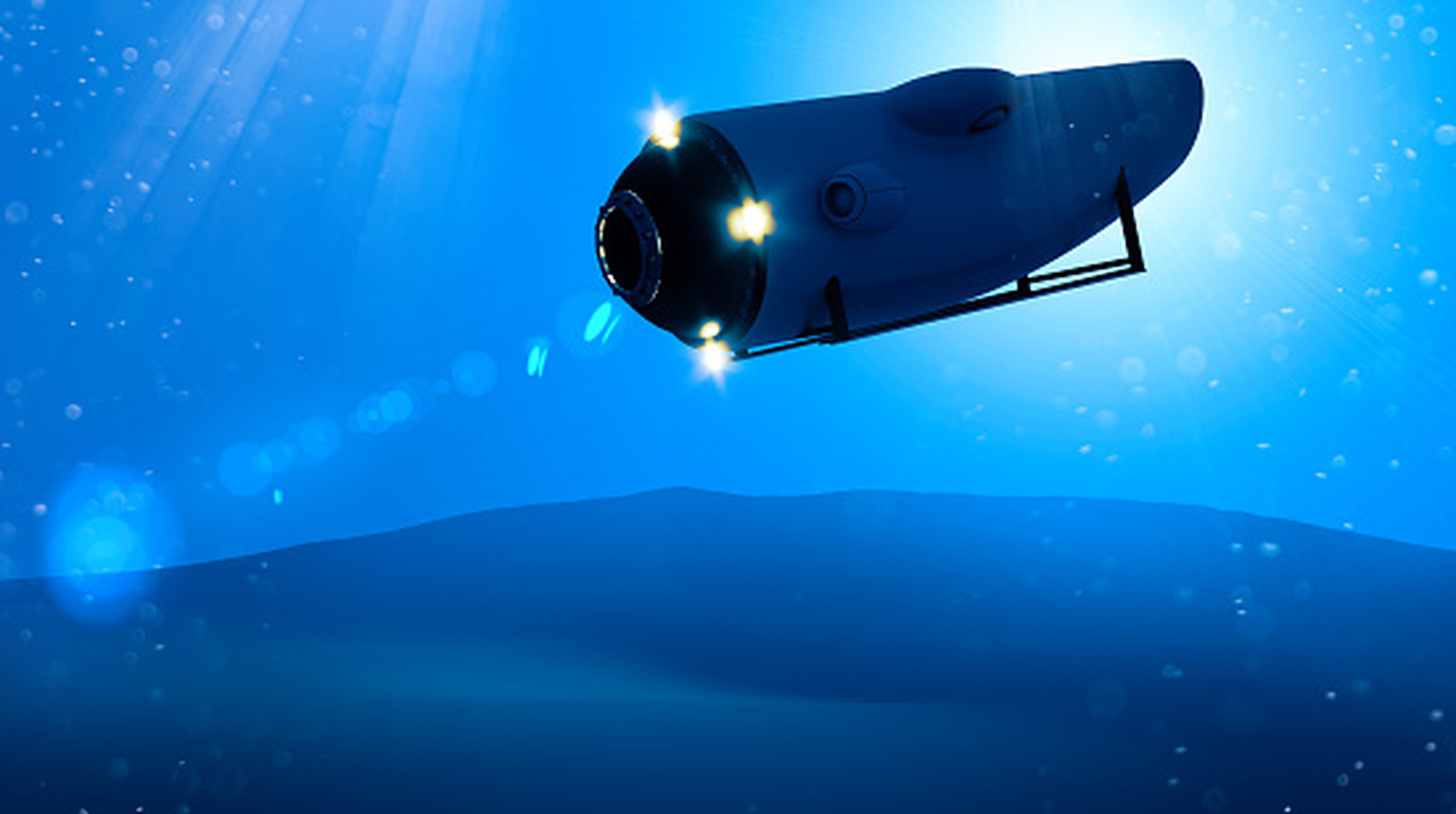
A Swedish research submarine named Ran detected anomalous heat signatures and unusual geological formations beneath the Thwaites Glacier ice shelf in Antarctica before losing contact and disappearing. The discovery challenges current models of ice-sheet stability and could force a major reassessment of sea-level rise projections.
What Happened
On June 14, 2026, the autonomous underwater vehicle Ran, operated by the University of Gothenburg, transmitted a final burst of data revealing elevated geothermal heat fluxes and unmapped sub-ice cavities near the grounding line of Antarctica's Thwaites Glacier. Twenty minutes later, all telemetry ceased, and the $3.6 million submarine has not been heard from since.
Key Facts
- Ran is a 22-foot-long autonomous underwater vehicle (AUV) built by Kongsberg Maritime and operated by the University of Gothenburg in Sweden.
- The submarine was deployed as part of the International Thwaites Glacier Collaboration (ITGC) , a $50 million joint U.S.-U.K. research program.
- The anomalous readings included water temperatures 2.3°C warmer than expected at the ice-ocean interface, measured at a depth of 1,200 feet below the ice shelf.
- Sonar mapping revealed a previously unknown subglacial channel system extending at least 40 miles inland from the grounding line.
- The disappearance occurred approximately 30 nautical miles from the nearest open water, inside a region where ice thickness exceeds 2,000 feet.
- Search efforts by the Australian Antarctic Division and U.S. Antarctic Program have covered 1,200 square miles with no acoustic or radio contact detected.
- The data transmitted before loss of contact represents only 12% of Ran's planned 60-hour survey mission.
Breaking It Down
The disappearance of Ran is not merely a logistical setback — it is a scientific alarm bell. The submarine was designed to operate under ice shelves for up to 60 hours, equipped with collision-avoidance sonar and a backup acoustic homing beacon. That it vanished without a trace suggests either catastrophic structural failure or entrapment in a geological feature that the pre-mission surveys completely missed.
The temperature anomaly Ran detected — 2.3°C above baseline at the ice-ocean interface — is three times larger than any previously recorded under Thwaites Glacier.
This figure is staggering because Thwaites is already responsible for 4% of global sea-level rise annually, discharging roughly 50 billion tons of ice per year. If the heat flux Ran measured is representative of broader conditions, the glacier's grounding line — the point where ice detaches from bedrock — could retreat 10 to 15 miles inland within the next decade, not the 30 to 50 years currently modeled by the Intergovernmental Panel on Climate Change (IPCC).
The subglacial channel system Ran mapped compounds the concern. These channels allow warm ocean water to penetrate far beneath the ice sheet, accelerating melting from below. Previous satellite-based radar surveys had suggested such channels might exist, but Ran's sonar confirmed they are twice as wide and three times deeper than earlier estimates. The largest channel measured 1.2 miles across and 800 feet tall — large enough to accommodate a New York City subway train with room to spare.
What Comes Next
- July 2026: The U.S. National Science Foundation will deploy a Towed Oceanographic Survey System (TOSS) from the research vessel Nathaniel B. Palmer to re-map the area Ran surveyed, with priority on the heat-flux anomaly coordinates.
- August 2026: The British Antarctic Survey plans to launch two Autosub Long Range AUVs — each carrying improved collision-avoidance software and dual acoustic beacons — to attempt a repeat survey of the same transect.
- September 2026: The International Thwaites Glacier Collaboration will hold an emergency workshop in Cambridge, UK, to revise the mission's risk assessment protocols and determine whether the heat-flux data warrants a grounding-line emergency monitoring program.
- Late 2026: Kongsberg Maritime engineers will analyze Ran's last-known telemetry for signs of mechanical failure, with a preliminary report expected by October 15.
The Bigger Picture
This story sits at the intersection of two accelerating trends: autonomous polar exploration and climate tipping-point science. AUVs like Ran have become indispensable for Antarctic research because they can reach areas impossible for crewed vessels — under ice shelves, inside subglacial cavities, and through supercooled water that would crush a manned submersible. But the loss of Ran underscores the extreme operational risk: ice shelves are dynamic, unstable environments where currents, pressure gradients, and ice calving events can destroy equipment in seconds.
The second trend is the growing recognition that subglacial geothermal heat may be a far larger factor in ice-sheet dynamics than previously assumed. Thwaites Glacier sits atop the West Antarctic Rift System, a geologically active zone with volcanic heat sources. If Ran's readings are confirmed, it would mean that geothermal heating is accelerating basal melting at rates that current climate models do not fully incorporate — potentially raising worst-case sea-level rise projections from 3 feet to 6 feet by 2100.
Key Takeaways
- [Data Anomaly]: Ran recorded ocean temperatures 2.3°C warmer than expected at the ice-ocean interface — a discrepancy that challenges current ice-sheet melt models.
- [Geological Discovery]: The submarine mapped a 40-mile-long subglacial channel system that could funnel warm water deep beneath Thwaites Glacier, accelerating grounding-line retreat.
- [Operational Risk]: The AUV's disappearance after transmitting only 12% of its planned data highlights the extreme hazards of under-ice autonomous exploration in Antarctica.
- [Policy Implication]: If confirmed, the findings could force the IPCC to revise sea-level rise projections upward, with direct consequences for coastal infrastructure planning in cities like Miami, Shanghai, and Jakarta.