TL;DR
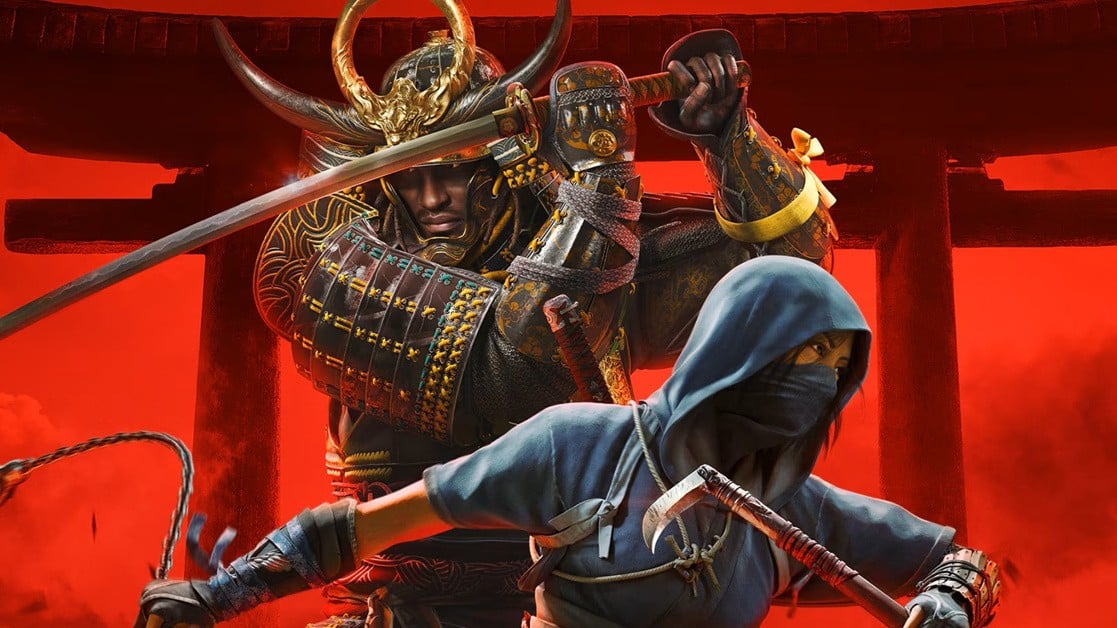
Ubisoft has announced that the upcoming Assassin's Creed Shadows will support mouse and keyboard input on the Nintendo Switch 2. This marks a significant strategic shift for Nintendo, directly targeting the PC gaming audience and positioning its next console as a versatile, performance-oriented platform from day one.
What Happened
In a move that recalibrates expectations for its next-generation hardware, Nintendo has greenlit a feature set previously alien to its ecosystem. Ubisoft confirmed on Tuesday that its flagship open-world title, Assassin's Creed Shadows, will launch on the Nintendo Switch 2 with full mouse and keyboard support. This announcement, embedded within a broader game update, signals a profound evolution in Nintendo's hardware philosophy just months before the successor to the Switch is expected to hit the market.
Key Facts
- Ubisoft confirmed mouse and keyboard support for Assassin's Creed Shadows on the Nintendo Switch 2 in a game update published Tuesday, April 7, 2026.
- This is the first official confirmation of native mouse and keyboard functionality for a major first-party-supported title on an upcoming Nintendo console.
- The support will be available at the game's launch, which is widely anticipated for late 2026, aligning with the expected release window for the Switch 2.
- The update confirms the feature for Assassin's Creed Shadows specifically, but its implementation suggests system-level support on the new console.
- This development follows years of third-party accessory workarounds for similar input on the original Switch, which Nintendo never officially endorsed.
- The announcement was reported by Nintendo Life, a primary outlet for Nintendo-related news and reviews.
- Assassin's Creed Shadows is a next-generation title previously confirmed for PlayStation 5, Xbox Series X/S, and PC, indicating the Switch 2 is targeting technical parity with current-gen systems.
Breaking It Down
Ubisoft's confirmation is not merely a quality-of-life feature for a single game; it is a strategic bomb dropped on the traditional console market segmentation. For decades, Nintendo consoles have been synonymous with innovative, proprietary controllers—from the Wii Remote to the Joy-Con—catering to a distinct, often more casual or family-oriented audience. By officially embracing the quintessential PC gaming control scheme, Nintendo is explicitly courting a demographic it has historically ceded to Sony, Microsoft, and gaming PCs. This move suggests the Switch 2 is being positioned not as a quirky alternative, but as a direct competitor in the core gaming hardware space.
This represents the most significant convergence of PC and Nintendo console ecosystems in the company's history.
The implications for game design and porting are substantial. Developers working on multi-platform titles, particularly first-person shooters, real-time strategy games, and precise action RPGs, now have a compelling reason to ensure their Nintendo Switch 2 ports are not afterthoughts. A game like Assassin's Creed Shadows, which will likely offer both stealth and combat mechanics benefiting from precise camera control, can now be designed with a unified control philosophy across PC and Switch 2. This lowers the porting barrier and could lead to more simultaneous, feature-complete releases on Nintendo's platform, ending the era of compromised "cloud version" or severely downgraded ports for demanding titles.
Furthermore, this decision is a clear hardware tell. Native mouse and keyboard support at the system level requires robust USB or Bluetooth driver integration and a user interface designed to accommodate cursor navigation. It strongly implies that the Nintendo Switch 2 will have a more traditional operating system layer, akin to its competitors, and the raw processing power to support the low-latency input expected by PC gamers. This aligns with rumors of the console utilizing NVIDIA's next-generation architecture, capable of modern feature sets like ray tracing and DLSS, which are staples of the PC gaming world.
What Comes Next
The confirmation of this single feature opens the floodgates for a series of pivotal announcements and decisions that will define the Switch 2's launch window and long-term trajectory.
- Nintendo's Official Hardware Reveal: All eyes now turn to Nintendo for its formal unveiling of the Switch 2, expected by mid-2026. The presentation must now address how mouse and keyboard support is integrated, whether special first-party peripherals will be offered, and how the system UI accommodates this new input method.
- Third-Party Publisher Reactions: The industry will watch for announcements from other major publishers. Will Activision commit to a native Call of Duty port with optimized mouse input? Will strategy giants like Paradox Interactive or Firaxis Games bring their catalogues to the platform? Ubisoft's move has set a new precedent that others will be pressured to follow.
- The Launch Title Lineup: The holiday 2026 launch window just became more critical. Nintendo will need to showcase not only its marquee first-party titles but also a strong slate of third-party games that leverage this new capability to justify the console's expanded identity.
- Market and Consumer Response: Pre-order patterns and early adopter demographics will be intensely scrutinized. A surge in interest from traditional PC gamers or lapsed Nintendo fans seeking a hybrid device would validate the strategy, while tepid response could see Nintendo quietly de-emphasize the feature.
The Bigger Picture
This development is a direct manifestation of the Convergence of Gaming Platforms. The walls between PC, console, and mobile continue to crumble, with cross-play, cross-progression, and unified ecosystems becoming the expectation. Nintendo, long a walled garden, is now planting a gate that opens directly to the PC arena, acknowledging that the modern gamer's library and preferred play style are not confined to a single device.
Simultaneously, it highlights the industry's shift toward Hardware Agnosticism and Service-Based Gaming. As cloud streaming and subscription services like Xbox Game Pass and Ubisoft+ grow, the value of a hardware platform is increasingly defined by its flexibility and accessibility. By supporting mouse and keyboard, the Switch 2 becomes a more viable endpoint for these services, a portable and TV-bound device that can deliver a service-based PC game experience without requiring a gaming rig. This positions Nintendo not just as a hardware maker, but as a versatile node in a broader gaming network.
Key Takeaways
- Strategic Pivot: Nintendo is aggressively pursuing the core PC/console gamer market with the Switch 2, moving beyond its family-friendly niche.
- Developer Catalyst: Official mouse and keyboard support lowers the barrier for high-fidelity PC and multi-platform ports, potentially revolutionizing third-party support on a Nintendo console.
- Hardware Revelation: The feature strongly implies the Switch 2 will have a more powerful, PC-like architecture and OS, confirming its aim for technical competitiveness.
- Market Redefinition: This blurs the line between console and PC gaming, forcing competitors to respond and changing consumer expectations for what a "Nintendo console" can be.


