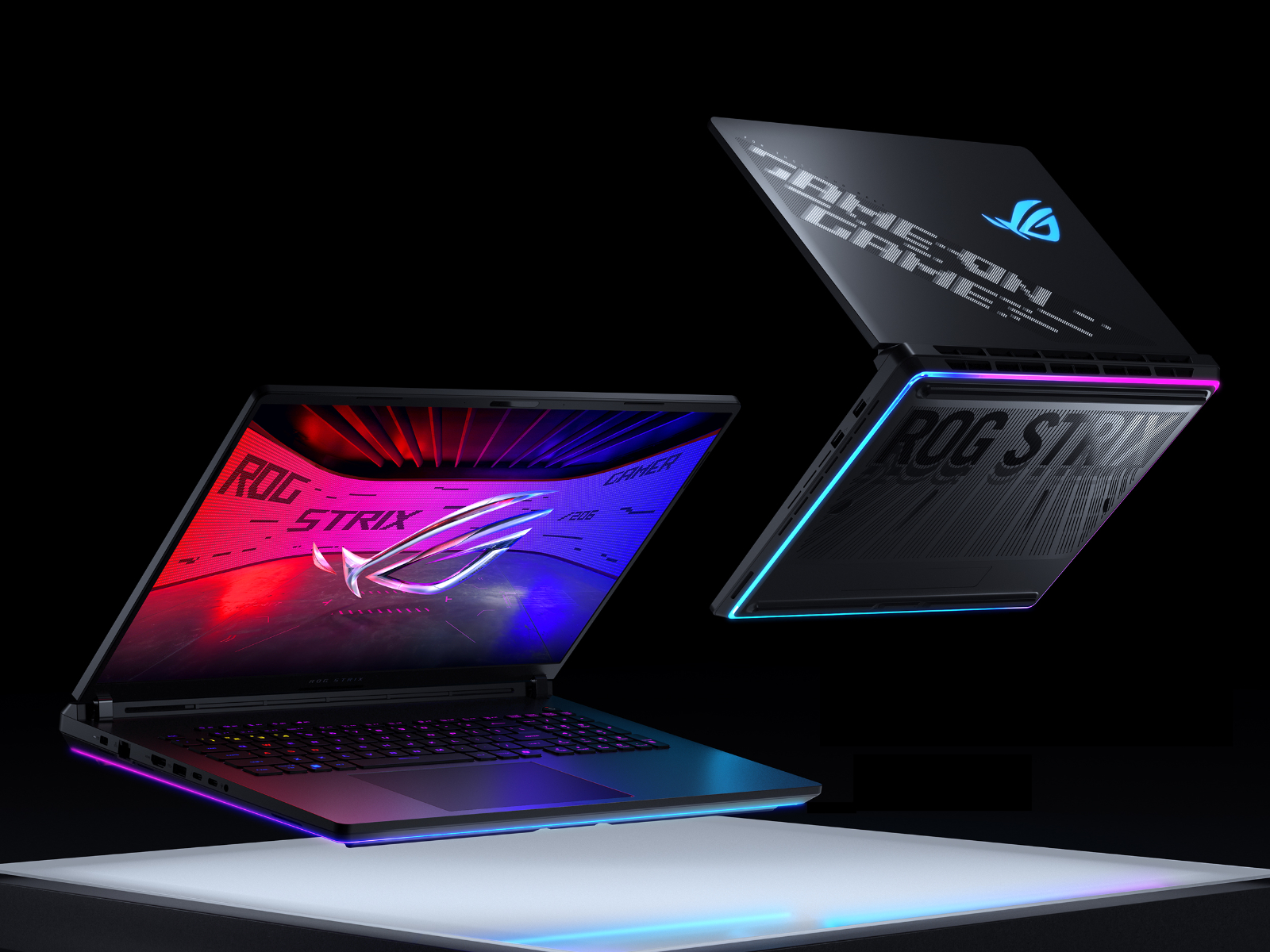
TL;DR
Asus has launched the ROG Strix Scar 18 2026, a global ultra-premium gaming laptop with a 1,600 nit peak brightness 4K Mini LED display and up to 320W total system power. This release immediately raises the bar for high-end gaming laptops by combining desktop-class brightness and sustained wattage in a mobile form factor.
What Happened
On Friday, June 19, 2026, Asus officially released the ROG Strix Scar 18 2026 globally, packing a 1,600 nit peak brightness 18-inch Mini LED display, a 175W GPU, and a combined system power draw of up to 320W under full load. The laptop is now available for order through Asus’s official channels and major retailers, targeting the ultra-premium segment of the gaming laptop market.
Key Facts
- The ROG Strix Scar 18 2026 features an 18-inch 4K Mini LED display with a 240 Hz refresh rate and 1,600 nits peak brightness — the brightest panel ever shipped in a gaming laptop.
- Total system power reaches 320W under combined CPU and GPU load, exceeding most competing 16- and 18-inch gaming laptops by 15–25%.
- The dedicated GPU is rated at 175W TGP, consistent with top-tier mobile RTX 50-series SKUs, while the CPU can draw up to 145W independently.
- The display uses Mini LED backlighting with over 2,000 local dimming zones, enabling true HDR content with a claimed 1,000,000:1 contrast ratio.
- Asus is shipping the laptop globally from day one — no staggered regional rollout — with pricing starting at $3,799 for the base configuration.
- The chassis employs a vapor chamber cooling system with dual 84-blade fans and liquid metal thermal compound on both CPU and GPU.
- The laptop supports Thunderbolt 5, Wi-Fi 7, and a 1080p IR webcam with Windows Hello, alongside a full-size per-key RGB keyboard.
Breaking It Down
“At 1,600 nits peak brightness, the ROG Strix Scar 18 2026’s display is twice as bright as the typical high-end gaming laptop panel and rivals professional-grade reference monitors used in color grading suites.”
This brightness figure is not a marketing gimmick. Most premium gaming laptops — including Asus’s own 2025 models — top out at around 800–1,000 nits in HDR mode. By doubling that to 1,600 nits, Asus is targeting not just gamers but also content creators who need to preview HDR footage accurately on set or in the field. The 2,000+ dimming zones mean that local contrast remains high even at extreme brightness, reducing blooming artifacts that plagued earlier Mini LED implementations.
The 320W total system power is the other headline number. To put that in context, the previous-generation ROG Strix Scar 18 (2025) maxed out at around 275W under combined load. The 45W increase is significant because it comes from both the CPU and GPU sides. The 175W GPU suggests Asus is using a fully unlocked mobile RTX 5090 or equivalent, while the 145W CPU points to an Intel Core Ultra 9 285HX or AMD Ryzen 9 9955HX3D — chips that can sustain high clocks without throttling when paired with the vapor chamber cooler.
However, the real engineering challenge is thermal management. Sustaining 320W inside an 18-inch chassis — even a thick one — requires aggressive fan curves and thick vapor chambers. Asus claims the laptop’s cooling system can maintain GPU temperatures below 85°C under sustained load, but reviewers will need to verify whether fan noise remains tolerable at that power envelope. If the fans hit 55 dB or higher under load, the Scar 18 may appeal more to desktop-replacement buyers than LAN-party gamers.
What Comes Next
- Benchmark reviews from outlets like Notebookcheck, Jarrod’sTech, and Dave2D will publish within the next two weeks, focusing on real-world sustained power draw, thermal throttling behavior, and display accuracy at 1,600 nits.
- Competitor responses are likely from Alienware (Area-51m series) and Razer (Blade 18) within 60–90 days, with both expected to announce Mini LED upgrades and higher TGP configurations to match the 320W envelope.
- Asus’s own ROG Zephyrus lineup may adopt the same Mini LED panel in a thinner chassis by late 2026, though likely with reduced brightness (1,000–1,200 nits) to fit the slimmer form factor.
- Software updates for the Mini LED backlight control — specifically zone dimming latency and FALD (full-array local dimming) behavior — are expected within the first three months post-launch, based on Asus’s pattern with 2025 Mini LED models.
The Bigger Picture
This launch sits at the intersection of two major trends: Mini LED proliferation and mobile power escalation. Mini LED backlighting is rapidly displacing traditional IPS and even OLED in high-end gaming laptops because it offers the brightness and contrast needed for HDR gaming without OLED’s burn-in risk. Asus pushing to 1,600 nits — far beyond the 600–800 nit ceiling of most laptops — signals that the display arms race is far from over. Expect other OEMs to match or exceed this number within 12 months.
Simultaneously, the 320W power envelope underscores a broader industry shift: gaming laptops are no longer content to be “80% of a desktop.” With desktop GPU power limits hovering around 350–450W, a 320W laptop is now within striking distance of a mid-range desktop rig, especially when paired with a high-bandwidth Thunderbolt 5 eGPU dock for future upgrades. This blurs the line between mobile and desktop gaming even further, forcing component makers like Intel, AMD, and Nvidia to deliver increasingly efficient architectures that can sustain high clocks under thermal constraints.
Key Takeaways
- [Brightness Record]: The 1,600 nit Mini LED display is the brightest ever shipped in a gaming laptop, doubling the typical high-end panel and enabling true HDR content creation on the go.
- [Power Ceiling]: At 320W total system power, the ROG Strix Scar 18 2026 sets a new benchmark for sustained performance in a mobile form factor, rivaling mid-range desktop builds.
- [Global Launch]: Asus is releasing the laptop worldwide immediately, avoiding the staggered regional rollouts that often frustrate international buyers of ultra-premium hardware.
- [Thermal Challenge]: Sustaining 320W in an 18-inch chassis requires aggressive cooling; real-world noise and throttling tests will determine if the Scar 18 is a practical daily driver or a desktop replacement only.


