TL;DR
Konami has unveiled a new trailer for Castlevania: Belmont's Curse, revealing a radical historical pivot for the franchise. The game will feature Joan of Arc as a central antagonist and allow players to explore a fully realized 15th-century Paris, including Notre-Dame, signaling a major evolution for the 40-year-old series.
What Happened
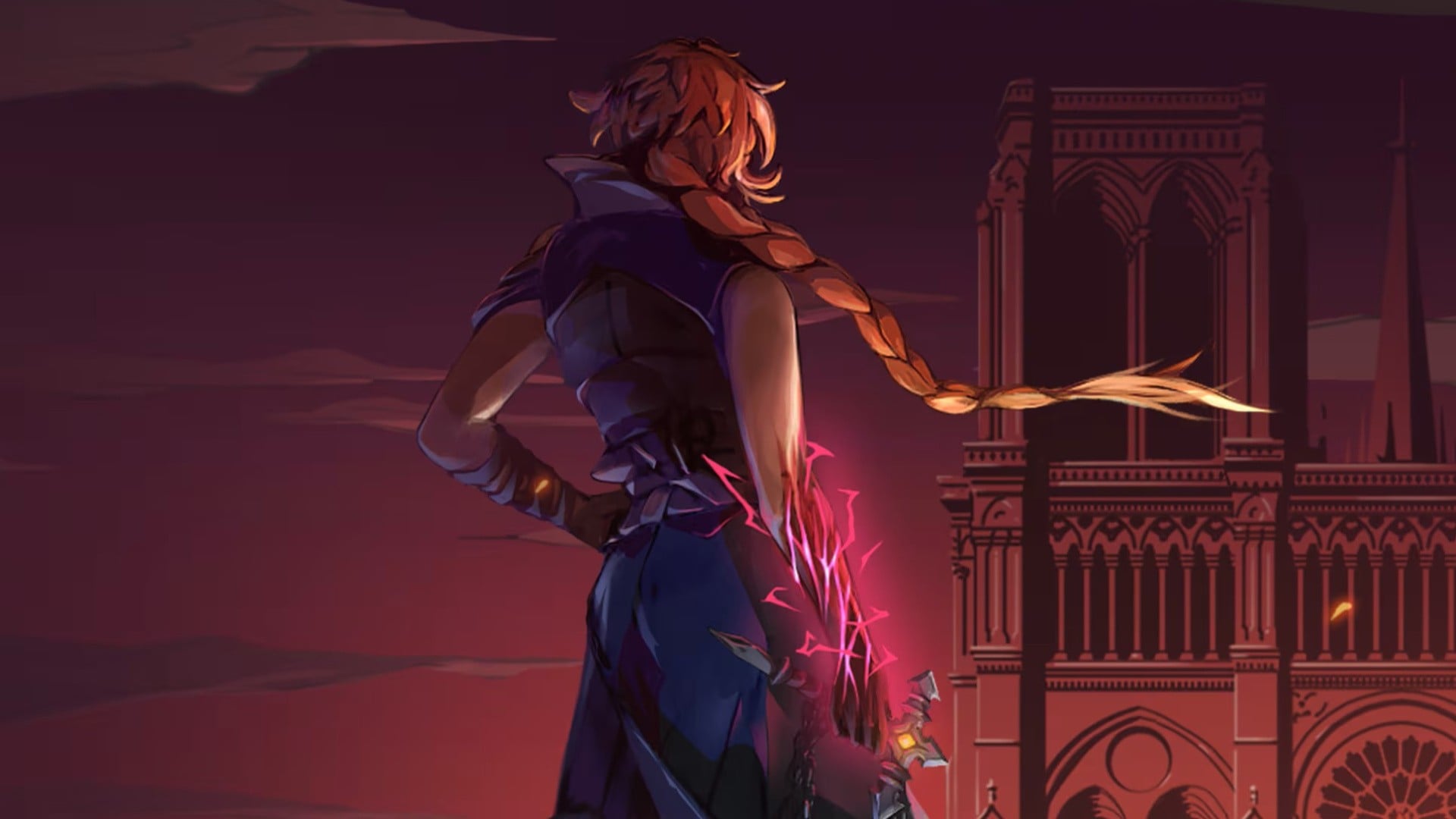
A new trailer for Castlevania: Belmont’s Curse has shattered expectations, transporting the gothic horror series from its traditional Transylvanian castles to the heart of medieval France. The footage, released by Konami on April 9, 2026, confirms players will battle a corrupted version of the historical saint Joan of Arc and navigate a sprawling, monster-infested rendition of 15th-century Paris.
Key Facts
- The official reveal trailer was published by Konami on Thursday, April 9, 2026, via gaming outlet Nintendo Life.
- The game’s setting shifts from Wallachia to 15th-century Paris, with iconic locations like Notre-Dame Cathedral serving as key explorable areas.
- A central antagonist is a corrupted, monstrous version of the French national heroine and Catholic saint, Joan of Arc.
- The title continues the narrative of the Belmont clan, the franchise’s legendary vampire-hunting family, now confronting a new curse in a foreign land.
- This entry, Belmont’s Curse, represents a significant historical and geographical departure for the core Castlevania series, which debuted in 1986.
- The trailer’s tagline, “Bonjour, evildoers,” directly signals the game’s new French setting and tonal confidence.
Breaking It Down
Konami’s decision to reimagine Castlevania by integrating a figure as monumental as Joan of Arc is a high-risk, high-reward narrative gambit. For decades, the series’ lore has been built upon a foundation of fictional vampires, Dracula, and Eastern European mythology. Introducing a real, venerated historical figure—and casting her as a primary foe—fundamentally alters the stakes. It moves the conflict from a purely supernatural realm into a twisted reflection of history and faith, potentially exploring themes of corruption, martyrdom, and how legends are perverted. This requires delicate handling to avoid trivializing history while serving the series’ signature gothic-horror action.
The relocation from Transylvania to Paris is the most drastic setting shift in the franchise’s 40-year history.
This geographical leap is not merely aesthetic; it is a complete overhaul of the series’ environmental language. The claustrophobic, stone-walled corridors of Dracula’s castle are replaced with the open courtyards, winding Seine riverbanks, and towering Gothic architecture of medieval Paris. Notre-Dame, in particular, offers a perfect Castlevania analogue: a sacred, labyrinthine structure ripe for haunting. This shift forces the game’s designers at Konami to reinvent the iconic “Metroidvania” exploration mechanics for an entirely new type of urban and architectural space, challenging them to make Paris feel as organically explorable and secret-filled as any castle.
The move also reflects a strategic effort to revitalize the flagship series following years where its presence was maintained primarily through the successful Netflix animated adaptations and the retro-inspired Bloodstained series from former producer Koji Igarashi. By taking such a bold creative swing, Konami is signaling that Belmont’s Curse is intended to be a definitive, generation-defining entry, not a safe nostalgia play. It aims to capture the audience that grew up with the classic games while also appealing to new players drawn to its fresh historical-horror premise.
What Comes Next
The trailer release kicks off the game’s official marketing cycle, with several key milestones and questions now looming for Konami and the gaming community.
- Platform and Release Date Confirmation: The trailer was revealed via Nintendo Life, strongly suggesting Nintendo Switch involvement, but official confirmation of all target platforms (PlayStation 5, Xbox Series X/S, PC) and a specific 2026 release window is the immediate next step.
- Gameplay Deep Dive: Fans will demand a detailed showcase of the combat and exploration systems. How will the whip-based combat adapt to new enemy types inspired by French folklore? Will the game retain the RPG-like leveling and equipment systems of seminal entries like Symphony of the Night?
- Lore and Story Exposition: Konami must elaborate on how Joan of Arc’s corruption fits into the broader Castlevania canon. Is Dracula involved, or is this an entirely new source of evil? How did the Belmonts arrive in France?
- Pre-Order and Special Edition Details: Following the initial hype, Konami will likely announce collector’s editions, potentially including physical artifacts like a map of Paris or a soundtrack, to capitalize on dedicated fan interest.
The Bigger Picture
Castlevania: Belmont’s Curse exemplifies the broader industry trend of Historical Fantasy Reinterpretation, where developers mine real-world history and mythology to create fresh narratives within established franchises. This approach, seen in titles like Assassin’s Creed and Sekiro: Shadows Die Twice, offers rich, pre-built settings that resonate with global audiences while providing creative latitude for supernatural or alternate-history twists.
Furthermore, the game’s development is a case study in Legacy Franchise Evolution. For long-running series, the choice is often between faithful iteration and radical reinvention. Konami is clearly opting for the latter, betting that a dramatic shift in setting and antagonist will inject new life into the Castlevania formula. This mirrors similar pivotal moments for other franchises, such as The Legend of Zelda with Breath of the Wild or God of War (2018), where foundational gameplay and narrative pillars were reimagined to critical and commercial success.
Key Takeaways
- Franchise Pivot: Castlevania: Belmont’s Curse is executing the most significant setting and antagonist shift in the series’ four-decade history, moving the action to medieval Paris against Joan of Arc.
- Narrative Ambition: By incorporating a corrupted real-world saint, Konami is elevating the series’ storytelling into the realm of historical fantasy, with higher conceptual stakes and potential for deeper thematic exploration.
- Strategic Revival: This bold direction represents Konami’s attempt to re-establish the core Castlevania series as a major, innovative AAA franchise, distinct from its successful animated and indie spiritual successor offshoots.
- Design Challenge: The development team faces the monumental task of translating the beloved “Metroidvania” exploration and combat mechanics from a gothic castle environment to an open, urban landscape like 15th-century Paris.