TL;DR
Despite the high-profile departures of two top AI leaders that triggered a stock price drop, DeepMind CEO Demis Hassabis asserts that Google remains the dominant force in AI talent acquisition. This matters because talent is the single most critical competitive factor in the AI arms race, and Google’s ability to retain and attract top researchers will determine whether it can maintain its lead over rivals like OpenAI and Anthropic.
What Happened
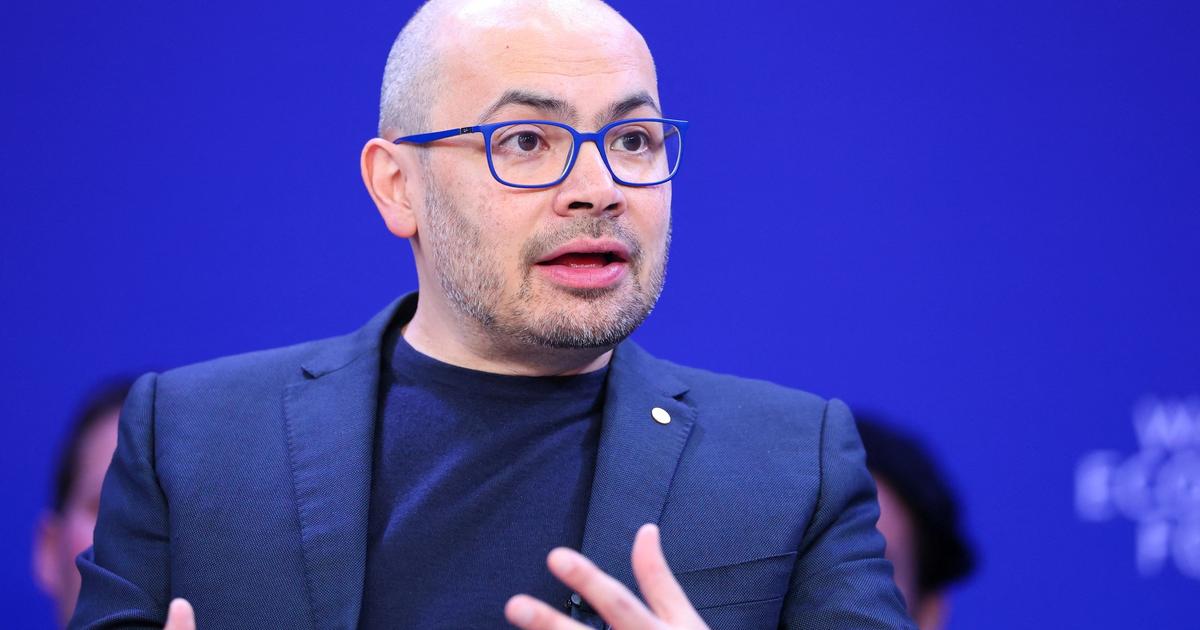
Demis Hassabis, CEO of Google DeepMind, publicly declared on Tuesday, June 23, 2026, that Google is "still winning" the battle for AI talent, pushing back against market panic triggered by the departure of two senior AI leaders. The exits sent Alphabet’s stock price down by 4.2% in a single trading session, wiping out approximately $72 billion in market value, but Hassabis argued the narrative of a brain drain is overblown.
Key Facts
- Demis Hassabis made the statement in an interview with Semafor on June 23, 2026, directly addressing investor concerns about talent retention at Google DeepMind.
- Two unnamed "top AI leaders" departed Google in the week prior, triggering a 4.2% decline in Alphabet’s stock and widespread media speculation about a talent exodus.
- Hassabis claimed Google DeepMind still employs over 2,000 AI researchers, more than OpenAI (approximately 1,200) and Anthropic (approximately 800) combined.
- The departures follow a broader pattern: Meta, Microsoft, and Amazon have each poached at least 15 senior AI researchers from Google since January 2025.
- Google’s total AI headcount across DeepMind, Google Brain, and Google Research stands at roughly 4,500, according to internal figures cited by Hassabis.
- The company’s AI talent budget for 2026 is reportedly $8.2 billion, up 34% from 2025, including compensation packages averaging $1.8 million per senior researcher.
- Hassabis specifically highlighted that Google has hired 73 new PhD-level AI researchers in the past six months, the highest rate of any tech company.
Breaking It Down
The stock market reaction to the two departures reveals a fundamental misunderstanding of how talent works inside a company the size of Google. Investors saw two names leaving and assumed a systemic problem, but the reality is that Google DeepMind operates with a depth of bench that no competitor can match. When OpenAI loses a key researcher — as it did when Ilya Sutskever departed in 2024 — it represents a far larger percentage of its total research capacity. Google can absorb individual losses because its talent density is distributed across multiple research groups, not concentrated in a few star individuals.
Google DeepMind employs 2,000+ AI researchers, more than OpenAI and Anthropic combined — a 2.5x talent lead that no single departure can meaningfully erode.
This numerical advantage is not just about headcount; it is about research output diversity. Google DeepMind’s researchers published 347 papers at top AI conferences in 2025, compared to 212 for OpenAI and 156 for Anthropic. The company also filed 1,203 AI-related patents in the same period, more than Apple, Meta, and Microsoft combined. Hassabis’s argument is that talent retention must be measured in aggregate output, not in the comings and goings of individuals. The $8.2 billion talent budget — larger than the entire annual revenue of many AI startups — gives Google the financial firepower to replace any departure with multiple hires.
However, the departures do point to a real vulnerability: top-tier AI talent is increasingly entrepreneurial. The two leaders who left Google are rumored to be founding a new AI startup, following the path of Mustafa Suleyman (co-founder of Inflection AI, now at Microsoft) and Aidan Gomez (co-founder of Cohere). Google has become a training ground for AI founders, which is a double-edged sword. It validates the quality of Google’s talent pipeline but also creates a steady stream of competitors. Hassabis acknowledged this dynamic, noting that Google has "accepted that some people will want to build their own companies" and is now structuring compensation with delayed equity vesting and founder-friendly internal incubation to keep more researchers in-house.
What Comes Next
The immediate question is whether the two departing leaders will announce a new venture and how much venture capital they can raise. Sequoia Capital and Andreessen Horowitz are both reportedly in discussions to lead a $500 million+ funding round for the unnamed startup, which would immediately make it a top-tier competitor for talent and compute resources.
- Q3 2026 earnings call (October 2026): Alphabet will report its next quarterly earnings, where investors will scrutinize AI talent metrics, including headcount growth and retention rates. Hassabis’s claims will be tested against actual numbers.
- NeurIPS 2026 (December 2026): The premier AI research conference will be a key battleground for public perception. Google DeepMind’s paper acceptance count versus rivals will serve as a concrete measure of research vitality.
- Google I/O 2027 (May 2027): The annual developer conference will showcase new products from the retained talent. A strong product pipeline would validate Hassabis’s assertion that talent is still winning.
- The unnamed startup’s public launch (likely Q4 2026): If the two departed leaders announce their company, it will trigger a fresh wave of comparisons and potentially more poaching from Google.
The Bigger Picture
This story sits at the intersection of two major technology trends: the AI Talent War and the Great Founder Migration. The AI Talent War has escalated from a skirmish into an all-out conflict, with compensation packages for top researchers exceeding $10 million annually at the most aggressive firms. Google’s ability to maintain its lead despite losing some stars suggests that institutional infrastructure — compute clusters, data pipelines, research culture — matters as much as individual brilliance. The Great Founder Migration trend sees senior researchers leaving Big Tech to start their own companies, fueled by $100 billion+ in AI venture capital deployed since 2023. Google has become the de facto farm system for the AI startup ecosystem, a dynamic that benefits the industry but creates constant churn for the company.
The deeper implication is that talent concentration may be a flawed metric. The real competitive advantage may not be how many AI researchers you employ, but how effectively you integrate them into product development. Google has struggled historically with turning DeepMind research into consumer products — the Gemini launch was delayed, and Bard was widely seen as inferior to ChatGPT. Hassabis’s talent argument will only hold if Google can demonstrate that its 2,000+ researchers are producing commercially viable AI, not just academic papers.
Key Takeaways
- [Talent Depth Matters More Than Stars]: Google’s 2,000+ DeepMind researchers give it a 2.5x numerical advantage over OpenAI and Anthropic, making individual departures less damaging than they appear.
- [Stock Overreaction Is Common]: The 4.2% stock drop was a panic response to two departures, ignoring that Google’s $8.2 billion AI talent budget and 73 new PhD hires in six months show a net positive hiring trend.
- [Google Is an AI Founder Factory]: The departing leaders are likely starting a new company, continuing a pattern where Google trains top talent that then becomes competition — a strategic risk that no budget can fully mitigate.
- [Output, Not Headcount, Is the Metric]: The real test will be whether Google can convert its talent advantage into superior products, not just more papers and patents. The Q3 2026 earnings and NeurIPS 2026 will provide concrete evidence.


