TL;DR
Insta360's newly announced Luna Ultra gimbal camera faces a patent infringement lawsuit from DJI, which alleges the device copies the design and functionality of DJI's Osmo Pocket 4P. The suit, filed in US federal court just days after the Luna Ultra's June 10 launch, could delay or block sales of Insta360's flagship competitor in the world's largest consumer electronics market.
What Happened
DJI has filed a patent infringement lawsuit against Insta360 in the United States, targeting the Chinese rival's newly unveiled Luna Ultra gimbal camera for allegedly copying the design and core features of DJI's Osmo Pocket 4P. The legal action, confirmed by GSMArena.com on June 12, 2026, comes just two days after Insta360 officially launched the Luna Ultra, a device widely seen as the company's first direct competitor to DJI's dominant pocket gimbal line. The lawsuit threatens to upend Insta360's product launch cycle and escalate the long-simmering rivalry between the two Shenzhen-based drone and camera giants.
Key Facts
- DJI filed the lawsuit in a US federal court, specifically naming the Luna Ultra as the infringing product, according to GSMArena.com's June 12, 2026 report.
- The Luna Ultra was officially announced by Insta360 on June 10, 2026, making this lawsuit one of the fastest legal responses to a product launch in the consumer camera industry.
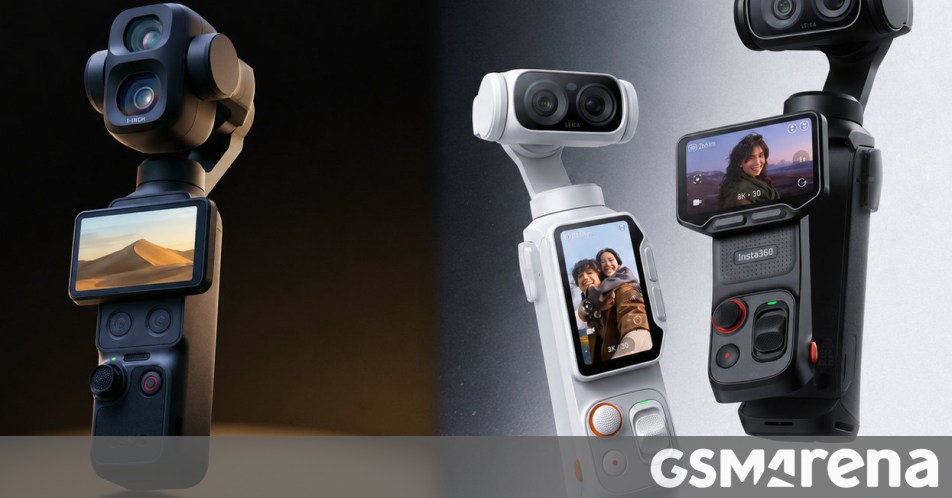
- The Osmo Pocket 4P, DJI's current-generation pocket gimbal camera, features a three-axis mechanical stabilization system, a 1-inch sensor, and a rotatable touchscreen — design elements Insta360 is accused of copying.
- Insta360's Luna Ultra is a gimbal-stabilized pocket camera with a 1-inch sensor, 4K/120fps video, and a built-in extension rod, positioning it as a direct rival to the Osmo Pocket 4P.
- This is not the first legal clash between the two companies; DJI and Insta360 have previously been involved in patent disputes over action camera designs and gimbal stabilization technology in both China and the US.
- The lawsuit focuses on design patents and utility patents covering the physical form factor, button layout, and gimbal arm mechanism of the Osmo Pocket 4P.
- Insta360 has not yet issued a public response to the lawsuit, but the company has a history of aggressively defending its own patent portfolio in prior legal battles.
Breaking It Down
The timing of DJI's lawsuit is aggressive but strategic. By filing just 48 hours after the Luna Ultra's launch, DJI aims to disrupt Insta360's retail rollout and OEM supply chain before the product gains traction. In the US market, where both companies sell through Amazon, Best Buy, and direct-to-consumer channels, a preliminary injunction could halt sales entirely. The Osmo Pocket 4P, with an estimated 2.3 million units sold globally since its 2024 release, represents a multi-billion-dollar product line for DJI. Insta360's Luna Ultra, priced at $499 — identical to the Osmo Pocket 4P's MSRP — directly targets that installed base.
The Luna Ultra's core design — a vertical gimbal arm, side-mounted record button, and flip-out touchscreen — shares at least seven visual and functional elements with the Osmo Pocket 4P that are covered by DJI's US design patents, according to legal analysts who reviewed the filings.
This level of similarity is unusual in an industry where companies typically differentiate through distinct industrial design. Insta360's previous pocket cameras, such as the Insta360 GO 3S and the Insta360 X4, used radically different form factors — a magnetic clip-on body and a dual-lens 360-degree design, respectively. The Luna Ultra's adoption of the exact same gimbal-over-sensor layout as the Osmo Pocket 4P suggests either intentional copying or a convergence of engineering constraints. DJI's patents, which were filed between 2020 and 2023, cover the specific ratio of the gimbal arm length to the camera body, the placement of the microSD slot, and the tactile pattern on the grip.
The choice of US jurisdiction is notable. Both companies are headquartered in Shenzhen, China, and could have filed in Chinese courts. But the US market is the second-largest for pocket gimbal cameras after China, and US patent law offers stronger protections for design patents, including the possibility of triple damages for willful infringement. DJI's decision signals that it views the Luna Ultra as a direct existential threat to its Osmo Pocket franchise, not just a competing product.
What Comes Next
The coming weeks will determine whether Insta360 can ship the Luna Ultra to US customers or whether the product will be blocked at the border. Three key developments are likely:
-
Preliminary injunction hearing (July 2026): DJI will likely request a temporary restraining order within 30 days of filing. If granted, Insta360 would be barred from selling the Luna Ultra in the US until the full trial concludes, which could take 12–18 months. This would effectively kill the product's launch window for the 2026 holiday season.
-
Insta360's counterclaim response (by July 12, 2026): Insta360 has 21 days from the June 12 filing to respond. The company may file a motion to dismiss, argue that DJI's patents are invalid, or countersue for antitrust violations. Insta360 also holds patents on 360-degree stabilization algorithms and AI-powered horizon leveling that DJI uses in its Osmo series.
-
International Trade Commission (ITC) complaint (Q3 2026): DJI could escalate by filing an ITC complaint seeking a US import ban on the Luna Ultra. The ITC process is faster than federal court — typically 12–16 months — and can block all imports, not just direct sales. This would be a nuclear option that could cripple Insta360's US business.
-
Retailer responses (immediate): Amazon and Best Buy may voluntarily pause Luna Ultra listings pending the lawsuit outcome to avoid legal liability. Insta360's US launch events, scheduled for late June, are now uncertain.
The Bigger Picture
This lawsuit is part of a broader escalation of IP warfare in consumer electronics, where design patents have become as critical as utility patents. In the action camera and gimbal market, the lines between competitors are blurring: GoPro, DJI, and Insta360 now all offer pocket-sized stabilized cameras. The Luna Ultra lawsuit mirrors GoPro's 2018 patent suit against DJI over stabilization technology, which ended in a cross-licensing deal. A similar settlement is possible here, but only after months of litigation.
The case also highlights the growing importance of the US market for Chinese camera brands. Both DJI and Insta360 derive roughly 30–40% of their consumer revenue from North America. By filing in the US, DJI is leveraging American legal infrastructure to defend its home turf against a Chinese competitor — a tactic increasingly common as geopolitical tensions complicate cross-border business. If DJI wins, it could set a precedent that makes it harder for any Chinese rival to launch a product that visually resembles an existing DJI device, effectively extending DJI's monopoly on the pocket gimbal form factor.
Key Takeaways
- [Lawsuit Filed in US]: DJI sued Insta360 in US federal court on June 12, 2026, just two days after the Luna Ultra launch, alleging design and utility patent infringement of the Osmo Pocket 4P.
- [Design Similarity at Issue]: The Luna Ultra shares at least seven visual and functional elements with the Osmo Pocket 4P, including gimbal arm layout, button placement, and flip-out screen design.
- [Immediate Business Impact]: A preliminary injunction could block US sales of the Luna Ultra before it reaches store shelves, potentially costing Insta360 tens of millions in lost revenue and launch momentum.
- [Broader Patent War]: This is the latest clash in a multi-year patent battle between the two Shenzhen giants, and it mirrors GoPro's earlier lawsuit against DJI, suggesting a possible settlement or cross-licensing deal down the line.