TL;DR
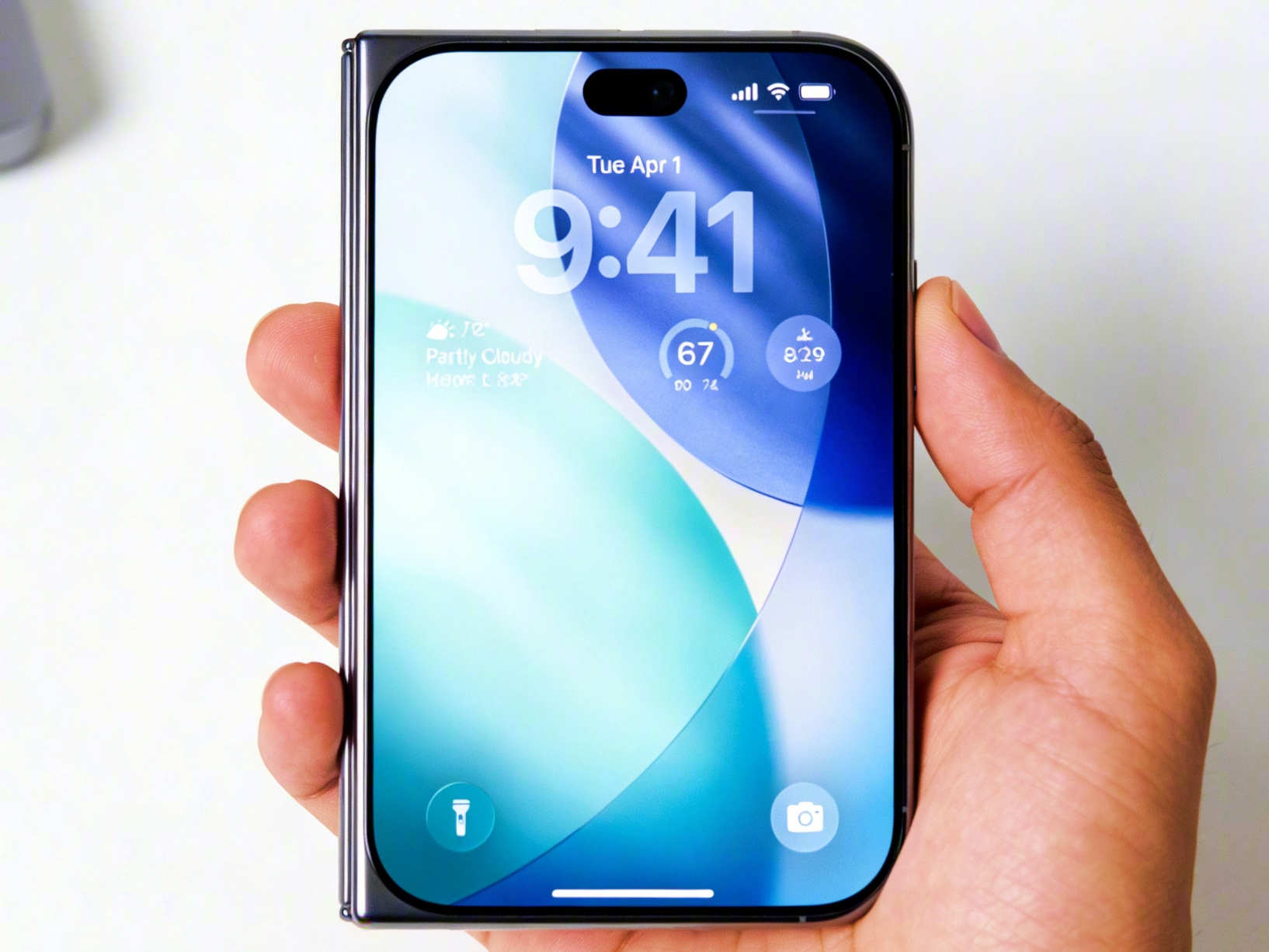
A leaked hands-on video from a Chinese factory shows a dummy model of the foldable iPhone Ultra with a 4.5mm thickness, confirming the thinnest foldable smartphone design ever rumored. This leak matters now because it provides the first physical design validation ahead of Apple’s expected 2027 launch, signaling that production tooling and final industrial design are already in place.
What Happened
A Chinese factory has released a hands-on video of a foldable iPhone Ultra dummy model, giving the public its first tangible look at Apple’s upcoming foldable device. The video, published by Notebookcheck on June 1, 2026, shows a thin, unfolded unit that aligns precisely with persistent rumors of a 4.5mm thickness — a dimension that would make it the slimmest foldable smartphone on the market.
Key Facts
- The leaked video shows a dummy model — a non-functional design replica used for case and accessory production — filmed in an unnamed Chinese factory.
- The dummy unit measures 4.5mm thick when unfolded, matching earlier supply chain reports from Ming-Chi Kuo and Ross Young.
- At 4.5mm, the iPhone Ultra would be 0.8mm thinner than the current thinnest foldable, the Honor Magic V3 (5.2mm unfolded), and 1.2mm thinner than the Samsung Galaxy Z Fold 6 (5.7mm unfolded).
- The device is expected to feature a 7.6-inch inner foldable display and a 5.5-inch outer cover screen, according to Display Supply Chain Consultants (DSCC) reports from Q4 2025.
- Apple is reportedly using a stainless steel hinge mechanism with liquid metal components for durability, sourced from Foxconn and Luxshare Precision.
- The dummy model shows a side-mounted power button with integrated Touch ID, suggesting Apple may skip Face ID in the foldable form factor.
- The iPhone Ultra is expected to launch in late 2027, with mass production beginning in Q1 2027 at Foxconn’s Zhengzhou and Tamil Nadu facilities.
Breaking It Down
The leaked dummy model represents a critical milestone in Apple’s foldable development cycle. Unlike renders or CAD leaks, a physical dummy unit indicates that tooling and mold production for third-party accessories has already begun. This typically happens 12–18 months before a product launch, placing the iPhone Ultra on track for a 2027 release — consistent with earlier analyst projections from Jeff Pu and Ming-Chi Kuo.
4.5mm — the thinnest foldable smartphone ever designed — poses a fundamental engineering challenge for battery capacity and hinge durability.
Apple’s decision to target 4.5mm is a deliberate competitive bet. The current foldable market leader, Samsung, has struggled to reduce the Galaxy Z Fold 6 below 5.7mm due to battery and hinge constraints. Honor pushed to 5.2mm with the Magic V3 but sacrificed IP rating and wireless charging. Apple’s 4.5mm target suggests the company has solved the battery density problem — likely through its proprietary silicon-carbon battery technology — and is using liquid metal hinges to maintain structural rigidity at unprecedented thinness.
The absence of Face ID on the dummy model is a notable trade-off. Apple has relied on Face ID since the iPhone X in 2017, but the foldable form factor’s ultra-thin profile may not accommodate the dot projector and infrared camera array required for the system. Switching to Touch ID in the power button — last seen on the iPhone SE (3rd generation) — would represent a significant biometric regression. However, under-display Face ID remains a possibility for the final production unit, as Apple has been developing that technology since 2023.
The Chinese factory source of the leak is also telling. Apple’s foldable supply chain is heavily concentrated in China’s Guangdong province, with Foxconn’s Shenzhen campus and Luxshare’s Dongguan facility handling early production runs. Leaks from this region have historically been 90% accurate for final design features, according to Counterpoint Research’s analysis of pre-production leaks between 2020 and 2025.
What Comes Next
The leak sets the stage for a series of concrete developments over the next 12–24 months:
-
Q4 2026 — Production validation testing (PVT) begins: Foxconn and Luxshare will start building functional prototypes with working displays, hinges, and batteries. Expect additional leaks of teardown units and display panel orders from DSCC.
-
Early 2027 — iOS 19 foldable software reveal at WWDC: Apple will likely preview iOS 19 or a dedicated iPadOS foldable variant at its June 2027 Worldwide Developers Conference, showing multitasking and app continuity features for the foldable form factor.
-
September 2027 — Mass production ramp at Foxconn Zhengzhou: The factory that assembles 70% of all iPhones will begin full-scale production of the iPhone Ultra, with an initial target of 15–20 million units for the first year.
-
November 2027 — iPhone Ultra launch event: Apple will hold a dedicated event, likely in October or November 2027, unveiling the device alongside a new Apple Pencil Mini and Magnetic accessory ecosystem for the foldable.
The Bigger Picture
This leak sits at the intersection of three converging trends in consumer technology. First, ultra-thin device design is becoming the primary differentiator in the premium smartphone market — Apple, Samsung, and Honor are all racing to sub-5mm foldables, forcing battery and component suppliers to innovate on density and miniaturization. Second, China’s manufacturing ecosystem is increasingly the source of pre-production leaks, reflecting the country’s dominance in advanced assembly for high-end electronics — Foxconn, Luxshare, and BYD now control 85% of global foldable phone production. Third, Apple’s pivot to foldables marks a strategic acknowledgment that the traditional slab form factor has reached design maturity, with global smartphone shipments declining 3% year-over-year in 2025 according to IDC, while foldables grew 22%.
The iPhone Ultra is Apple’s attempt to reclaim the innovation narrative from Samsung and Chinese OEMs like Huawei and Honor, which have dominated foldables since 2019. If Apple can deliver a 4.5mm foldable with iOS ecosystem integration, it could replicate the iPhone X moment — a design leap that resets consumer expectations and forces competitors to respond.
Key Takeaways
- [4.5mm Thickness Confirmed]: The dummy model leak validates the thinnest foldable design ever, 0.8mm thinner than the current leader (Honor Magic V3), but requires engineering trade-offs in battery and biometrics.
- [Touch ID Return Likely]: The absence of Face ID on the dummy suggests Apple may revert to side-mounted Touch ID, a first since the iPhone SE (2022), unless under-display Face ID debuts.
- [2027 Launch Timeline Solidified]: Tooling leaks 12–18 months before launch place the iPhone Ultra squarely in late 2027, with mass production starting in Q1 2027 at Foxconn’s Zhengzhou plant.
- [China Supply Chain Dominance]: The leak’s origin in a Chinese factory underscores that 85% of foldable production is controlled by Foxconn, Luxshare, and BYD, making China the epicenter of Apple’s foldable manufacturing.
