TL;DR
Google and Xreal have jointly developed "Project Aura," a pair of XR smart glasses that prioritize lightweight, all-day wearability over full immersion. This device marks Google's most serious return to consumer XR hardware since Google Glass, and it directly challenges Apple's Vision Pro strategy by betting that most users don't want a headset strapped to their face.
What Happened
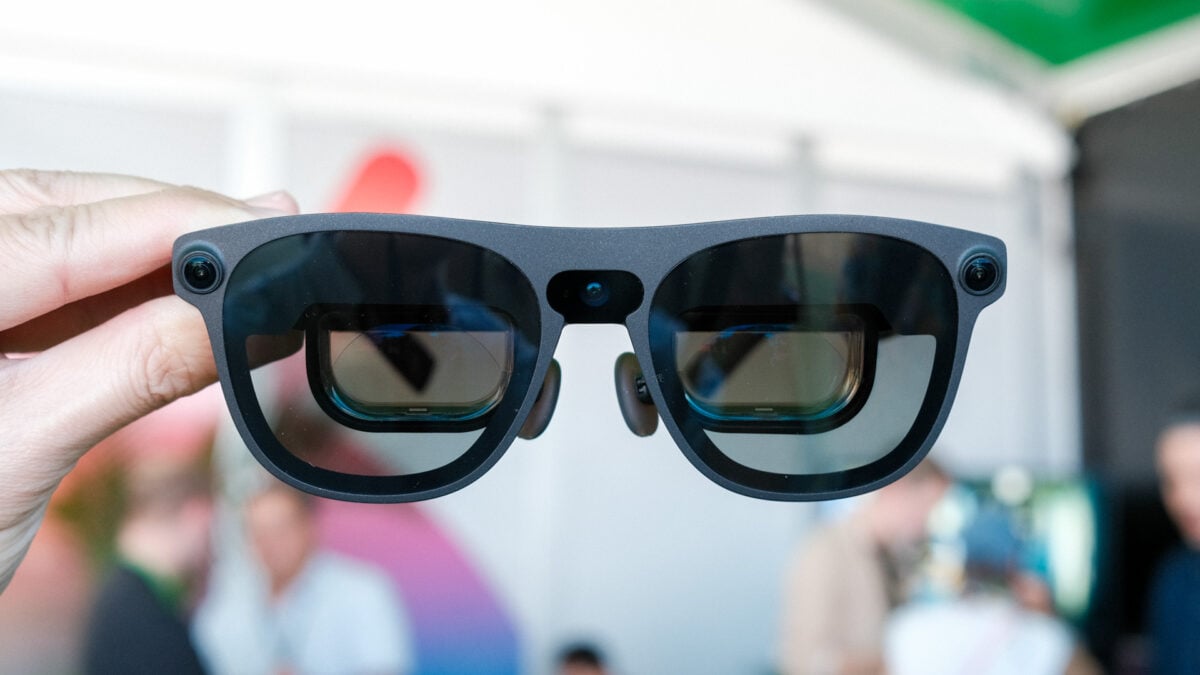
On May 19, 2026, Gizmodo confirmed that Google and Xreal's "Project Aura" XR smart glasses are a real, functioning product — not a prototype or a rumor. The device delivers a spatial computing experience that is deliberately less immersive than a full XR headset, positioning itself as a practical, everyday wearable rather than a workstation replacement.
Key Facts
- Google partnered with Xreal (formerly known as Nreal), the Chinese AR glasses maker that has shipped over 350,000 units of its consumer AR glasses globally as of early 2026.
- Project Aura is not a full augmented reality headset; it uses a birdbath optics design to project a 50-degree field of view display into the user's line of sight.
- The glasses weigh under 85 grams — roughly the same as a pair of thick-framed prescription glasses — compared to the Apple Vision Pro's 650 grams.
- The device is powered by a custom Google Tensor chip (the same silicon family used in Pixel phones) and runs a modified version of Android XR, a platform Google first previewed in late 2024.
- Battery life is rated at 8 hours of mixed use, with a charging case that provides an additional 24 hours of power.
- The glasses include stereo speakers embedded in the temples, dual 12MP cameras for hand tracking and environmental sensing, and no outward-facing display — meaning bystanders cannot see what the wearer is viewing.
- Pricing is expected to start at $599, with a $799 "Pro" model that adds prescription lens inserts and a higher-resolution MicroOLED display.
Breaking It Down
The critical insight from Project Aura is that Google and Xreal have explicitly chosen limitation over ambition. While Apple spent billions engineering the Vision Pro to replace laptops and monitors, Project Aura is designed to do one thing well: overlay contextual information onto the real world without demanding the user's full attention. The 50-degree field of view is roughly one-third of what a Vision Pro offers, but the weight savings are dramatic — 85 grams versus 650 grams. That 7.6x weight reduction is not a trade-off; it is the product's defining feature.
"The spatial computing experience isn't as immersive as an XR headset, but maybe it doesn't need to be." This single line from Gizmodo's report captures the entire strategic bet behind Project Aura. The XR industry has spent 2024 and 2025 chasing Apple's definition of "spatial computing" — high-resolution passthrough, hand-eye tracking, and virtual monitors. Google is betting that this definition is wrong for the mass market. The data supports this: Meta's Ray-Ban Stories and Ray-Ban Meta smart glasses have sold over 2 million units cumulatively, despite having no display at all. Consumers have proven they will wear head-mounted devices that are unobtrusive. They have not proven they will wear headsets.
The Tensor chip decision is particularly strategic. By using an in-house Google silicon design, Google gains two advantages: first, it can optimize the Android XR operating system for a specific thermal and power envelope — critical for a device that sits on your face for eight hours. Second, it decouples Project Aura from Qualcomm's Snapdragon XR roadmap, giving Google control over future generational improvements. This mirrors the logic behind the Pixel Visual Core and Tensor TPU in Google's phones: vertical integration for a specific use case.
What Comes Next
- Consumer launch in Q4 2026: Google and Xreal are expected to open pre-orders in October 2026, with retail availability in the US, UK, and Japan by November. A broader international rollout is planned for early 2027.
- Android XR SDK release: Google will release the final version of the Android XR software development kit at Google I/O 2026 in June, allowing third-party developers to build spatial apps for Project Aura. Key partners include Snapchat, Google Maps, and Spotify.
- Apple's response: Apple is reportedly developing a lower-cost, lighter-weight version of the Vision Pro — internally codenamed "Vision Lite" — targeting a $1,500 price point and a 300-gram weight. Whether that product ships in 2027 or 2028 will depend heavily on Project Aura's market reception.
- Regulatory scrutiny in Europe: The European Commission has signaled interest in examining whether Google's integration of Tensor silicon, Android XR, and Google Services violates Digital Markets Act rules on platform self-preferencing. A preliminary inquiry could begin as early as September 2026.
The Bigger Picture
Project Aura sits at the intersection of two broader trends: the commoditization of AR optics and the shift from immersive to ambient computing. Xreal's existing consumer products have already proven that birdbath optics are cheap enough and good enough for casual use — the company's Air 2 glasses sell for under $400. Google's contribution is the software stack and the brand credibility to push these devices beyond early adopters. If Project Aura succeeds, it will validate the thesis that ambient computing — information that exists at the periphery of your vision, not in a headset that blocks it — is the true mass-market form factor for XR.
The second trend is the unbundling of the smartphone. Google has spent the last three years building out a wearable ecosystem: Pixel Watch, Pixel Buds, and now Project Aura. Each device peels away a function from the phone — notifications, audio, and now visual overlays. The long-term goal is a future where the phone stays in your pocket or bag, and the glasses handle the glanceable interactions. This is the same vision that Meta is pursuing with its Ray-Ban partnership, but Project Aura adds a display, giving Google a functional advantage that Meta currently lacks.
Key Takeaways
- [Weight is the killer feature]: At under 85 grams, Project Aura is the lightest XR device with a display ever brought to market by a major technology company. This alone differentiates it from the Apple Vision Pro and Meta Quest Pro.
- [Google is back in consumer XR hardware]: After the failure of Google Glass in 2013 and the cancellation of the Daydream VR platform in 2019, Project Aura represents Google's third — and most serious — attempt at head-worn computing. The Tensor chip and Android XR integration signal long-term commitment.
- [$599 is a deliberate price point]: At roughly one-tenth the cost of a Vision Pro, Project Aura targets the mainstream consumer, not the professional or enthusiast. This pricing forces the entire XR industry to confront the question of whether immersion is worth the cost.
- [The field of view is a feature, not a bug]: Project Aura's 50-degree FOV is intentionally narrow. Google is betting that users prefer a small, always-available display over a large, immersion-blocking one. The Ray-Ban Meta's 2 million sales suggest this bet is rational.


