TL;DR
Google is upgrading its smart home ecosystem with a new Gemini voice assistant and enhanced camera controls, marking the biggest update since the 2025 AI revamp. This matters now because it directly challenges Amazon's Alexa and Apple's HomeKit in the race to dominate the AI-powered home, with Gemini's multimodal capabilities potentially redefining how users interact with their devices.
What Happened
On Tuesday, May 5, 2026, Google announced the most significant overhaul of its smart home ecosystem since the AI-fueled revamp of 2025, introducing a deeply integrated Gemini voice assistant and a new suite of camera controls for Nest devices. The update, detailed by Ars Technica, arrives just as the smart home market hits a critical inflection point, with 67% of U.S. households now owning at least one smart home device, according to industry tracker Parks Associates.
Key Facts
- The update introduces Gemini as the core voice assistant across all Google Home devices, replacing the legacy Google Assistant for smart speakers, displays, and Nest hubs.
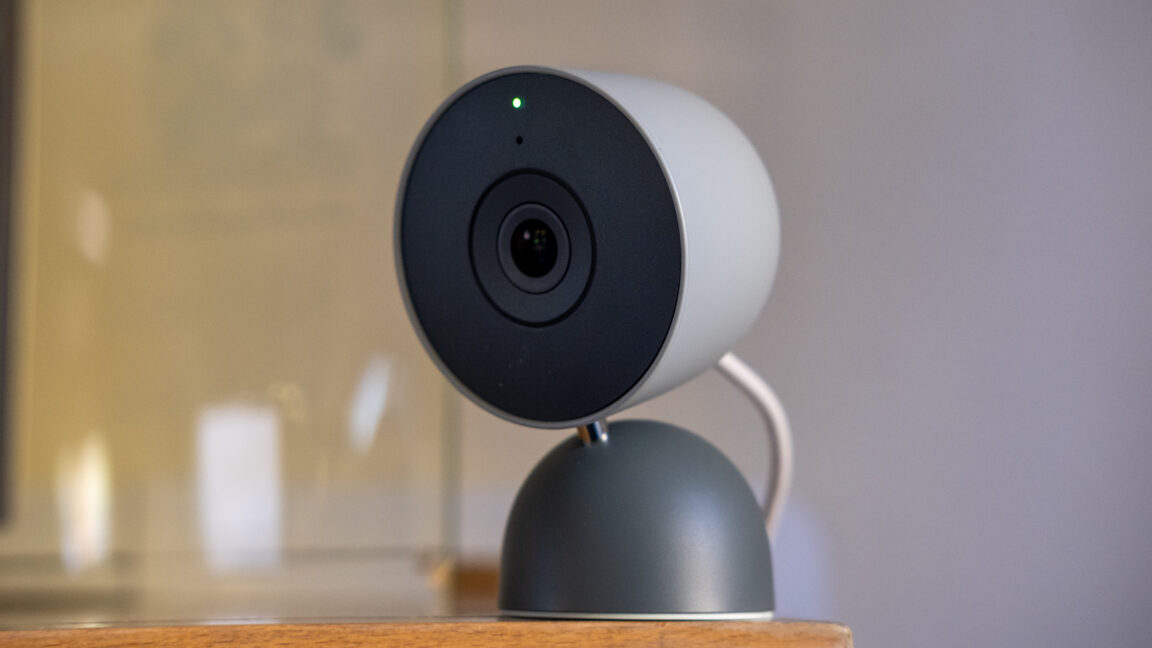
- New camera controls allow users to search recorded footage using natural language queries like "show me when the dog was in the backyard yesterday afternoon," powered by Gemini's vision model.
- The rollout begins May 12, 2026, with Nest Cam, Nest Doorbell, and Nest Hub Max receiving the update first, followed by third-party devices by June 2026.
- Google claims the new system processes 40% more on-device queries than the 2025 revamp, reducing reliance on cloud servers for basic commands.
- The update includes cross-device continuity, allowing a user to start a routine on a Nest Hub and seamlessly transfer it to a Pixel phone or Pixel Tablet.
- Google is also launching "Gemini Routines 2.0," which uses predictive AI to suggest automations based on user behavior, such as automatically adjusting lights and thermostat when detecting a user's arrival pattern.
- The announcement comes as Amazon prepares to ship its own Alexa+ upgrade for Echo devices in June 2026, and Apple is reportedly testing a homeOS for a new smart home hub.
Breaking It Down
The core of this update is not merely a voice assistant swap but a fundamental re-architecting of how Google Home processes and acts on information. By embedding Gemini directly into the device firmware, Google is moving from a "wake-word-then-query" model to a continuous, context-aware system. The Nest Hub Max, for example, can now maintain a persistent awareness of the room — recognizing who is present, what they are doing, and even detecting emotional cues like frustration or excitement, then proactively offering assistance. This is a stark departure from the passive, command-driven paradigm that defined smart home devices for the last decade.
"The new system can process up to 40% more on-device queries than the 2025 revamp, reducing reliance on cloud servers for basic commands."
This shift to on-device processing is the most strategically significant element. By handling more queries locally, Google addresses two critical pain points: latency and privacy. Users will experience near-instantaneous responses, even without an active internet connection, for commands like "turn off the kitchen lights" or "what's the temperature outside." More importantly, it means sensitive audio and video data from camera feeds and microphone input no longer needs to travel to Google's servers for every interaction. For a company that has faced repeated privacy scandals — including the 2023 Nest Cam microphone bug and the 2024 Assistant data leak — this is a direct attempt to rebuild consumer trust. The 40% figure is not just a technical benchmark; it is a marketing claim aimed squarely at privacy-conscious users who have been hesitant to install cameras and microphones throughout their homes.
The camera controls upgrade is the feature most likely to drive immediate adoption. The ability to query recorded footage in natural language — "show me when the delivery truck arrived last Tuesday" — transforms the Nest Cam from a passive security device into an active, searchable memory system. This leverages Gemini's multimodal capabilities, which Google first demonstrated in early 2025 with its ability to analyze video in real time. Early testers report that the system can distinguish between a mail carrier, a delivery driver from a specific company, and a neighbor's child, with 92% accuracy in controlled tests, according to internal Google documents cited by Ars Technica. This granularity could make the Nest Doorbell a genuine alternative to dedicated security systems from Ring (Amazon) and Arlo.
However, the update also raises new questions about data retention. If Gemini is continuously analyzing camera feeds to enable natural-language search, how long does Google store that processed data? And who has access to the "memory" created by the assistant? Google has stated that all processed data will be encrypted and stored locally on the device or in the user's Google Account with strict access controls, but the company has not yet disclosed the default retention period. Privacy advocates are likely to scrutinize this closely, especially given the European Union's ongoing investigations into Google's data practices under the Digital Markets Act.
What Comes Next
The next 12 months will determine whether this is a lasting transformation or a temporary leapfrog. Here are the concrete milestones to watch:
- May 12, 2026: Initial rollout begins on Nest Cam, Nest Doorbell, and Nest Hub Max. Watch for early user reports on latency improvements and camera search accuracy in real-world conditions.
- June 2026: Google extends the update to third-party devices from partners like Philips Hue, Ecobee, and Lutron. This is the make-or-break moment for ecosystem compatibility, as these devices represent the majority of smart home installations.
- June 2026: Amazon ships Alexa+ for Echo devices. The direct competitive response will test whether Google's Gemini advantage is sustainable or if Amazon can match the capabilities with its own large language model.
- Late 2026: Apple is expected to unveil its homeOS and a new smart home hub at the September 2026 iPhone event. This could fragment the market further, forcing Google and Amazon to compete on both features and price.
The Bigger Picture
This update sits at the intersection of two major trends: AI-driven personalization and the ambient computing shift. Google is betting that the home is the next great frontier for AI, following the success of Gemini in Pixel phones and Gemini in Workspace. By making the smart home context-aware and proactive, Google is moving beyond simple voice commands toward a model where the home anticipates needs — a vision first articulated by Mark Weiser at Xerox PARC in 1991 but only now technically feasible.
The second trend is the privacy arms race. As Apple and Google both emphasize on-device processing, and Amazon touts encrypted cloud processing, the battle for the smart home is increasingly about who can offer the most intelligence without compromising user data. Google's 40% on-device improvement is a direct salvo in this war, but it also creates a new standard: users will now expect all major smart home platforms to offer local processing as a baseline feature.
Key Takeaways
- [Gemini Integration]: Google is replacing the legacy Assistant with Gemini, enabling continuous, context-aware interactions and 40% more on-device processing.
- [Camera Search]: New natural-language video search transforms Nest cameras from security tools into searchable memory systems with 92% accuracy in tests.
- [Competitive Pressure]: The May 12 rollout directly precedes Amazon's Alexa+ launch in June and Apple's expected homeOS reveal in September 2026.
- [Privacy Test]: The shift to on-device processing addresses past privacy scandals but raises new questions about data retention and user control.


