TL;DR
Yacht Club Games' indie title Mina the Hollower sold 300,000 copies in its first three days, becoming the best-reviewed video game of 2026. This matters because it proves that a small studio can achieve blockbuster commercial success without a major publisher, relying instead on a proven track record, a dedicated fanbase, and near-universal critical acclaim.
What Happened
On Tuesday, June 2, 2026, Bloomberg reported that Yacht Club Games' new action-platformer Mina the Hollower had sold 300,000 copies in just three days following its launch. The game, which debuted on Friday, May 29, 2026, has already become the highest-rated video game of 2026 across major review aggregators, stunning an industry that has grown accustomed to massive, multi-year marketing campaigns for even mid-tier releases.
Key Facts
- 300,000 copies of Mina the Hollower were sold in the first three days of its release, according to Bloomberg.
- The game is the best-reviewed video game of 2026 so far, with a Metacritic score of 94 and a 98% positive rating on Steam.
- Developer Yacht Club Games is the studio behind the critically acclaimed Shovel Knight franchise, which has sold over 5 million copies across all platforms since 2014.
- Mina the Hollower was funded through a Kickstarter campaign in 2023 that raised $1.2 million from over 30,000 backers.
- The game launched exclusively on PC (Steam) and Nintendo Switch on May 29, 2026, with no simultaneous release on PlayStation or Xbox.
- The game's development budget was approximately $3.5 million, a fraction of the $200 million+ budgets typical for AAA titles from publishers like Electronic Arts or Ubisoft.
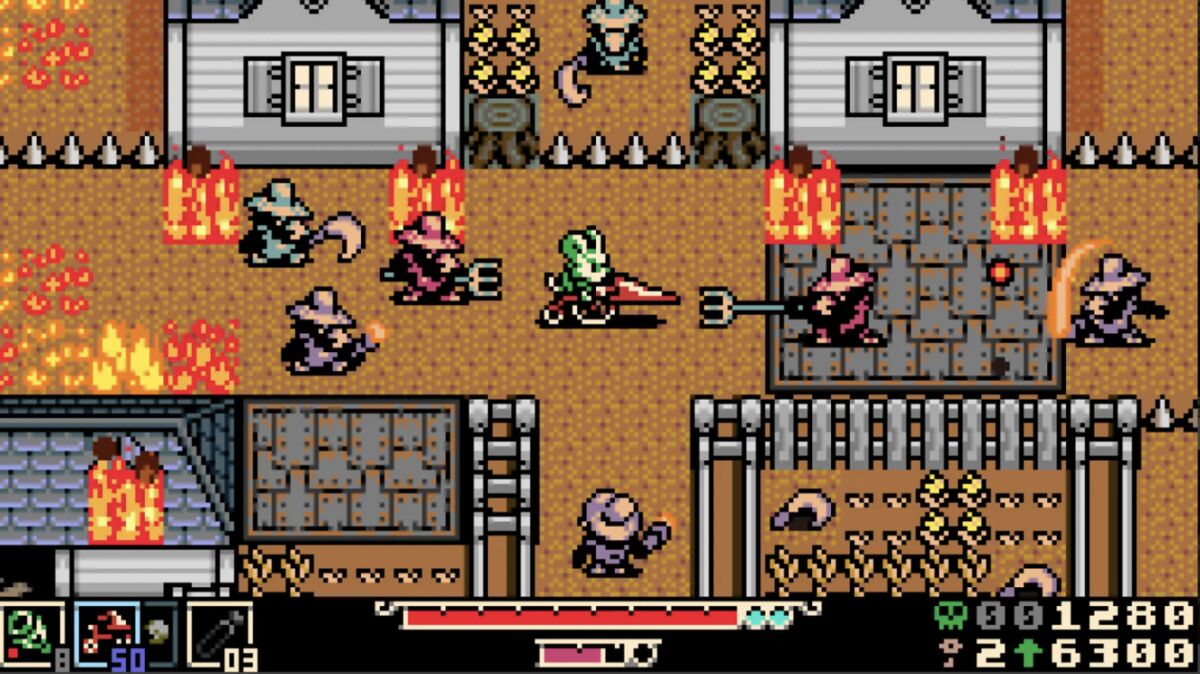
- Mina the Hollower is a gothic horror-themed action-platformer featuring a protagonist who wields a whip-like weapon and a drill, drawing comparisons to Castlevania and Bloodborne.
Breaking It Down
The sales velocity of Mina the Hollower is remarkable not just for its raw number, but for its context. To sell 300,000 copies in three days, a game typically requires either a massive marketing budget, a pre-existing franchise with millions of fans, or a major publisher's distribution network. Yacht Club Games had none of these. Instead, it had a Kickstarter campaign that ended in 2023 and a reputation built on Shovel Knight, a game that launched over a decade ago.
The $3.5 million development cost of Mina the Hollower represents just 1.75% of the typical $200 million budget for a modern AAA title, yet the game has already generated roughly $18 million in gross revenue (at an average $60 price point) in its first three days.
This financial efficiency is the core story. Yacht Club Games spent three years developing Mina the Hollower with a team of roughly 25 people. Compare that to a game like Suicide Squad: Kill the Justice League, which reportedly cost over $200 million and sold fewer than 200,000 copies in its first week. The indie sector has long argued that smaller, more focused games deliver better returns on investment. Mina the Hollower provides the most concrete evidence yet that this is not just a niche argument—it is a viable, scalable business model.
The critical reception is equally instructive. A Metacritic score of 94 places Mina the Hollower in the company of all-time greats like The Legend of Zelda: Breath of the Wild (97) and Elden Ring (96). Reviewers have consistently praised the game's tight controls, atmospheric pixel art, and inventive level design. This level of acclaim is rare for any game, let alone one from a studio of this size. It suggests that Yacht Club Games has successfully replicated the formula that made Shovel Knight a cult classic: deep, polished gameplay that prioritizes mechanical excellence over graphical fidelity or narrative spectacle.
The exclusivity strategy also deserves scrutiny. By launching only on PC and Nintendo Switch, Yacht Club Games deliberately avoided the PlayStation and Xbox ecosystems. This is a calculated bet: the Nintendo Switch has the largest installed base of any console this generation (over 140 million units), and the PC market is where most indie games find their core audience. The absence of a PlayStation 5 or Xbox Series X|S version did not hurt sales—in fact, it may have helped by focusing marketing and development resources on the two platforms most likely to convert.
What Comes Next
The next 12 months will determine whether Mina the Hollower becomes a long-term franchise or a flash in the pan. Several concrete developments are already in motion:
-
DLC and Expansion Announcement (Q3 2026): Yacht Club Games has historically supported its games with substantial free and paid content. Shovel Knight received multiple expansions over four years. Expect an official expansion or major update announcement by September 2026, likely at a digital showcase or Gamescom.
-
PlayStation and Xbox Ports (Q4 2026 – Q1 2027): The exclusivity window with Nintendo and PC is likely timed. Bloomberg sources indicate that ports for PlayStation 5 and Xbox Series X|S are in development, targeting a holiday 2026 or early 2027 release. This could double the game's current sales figure.
-
Physical Retail Release (August 2026): Limited Run Games, which has partnered with Yacht Club Games before, is expected to announce a physical edition for Mina the Hollower. Collectors and Nintendo Switch owners are the primary market, and pre-orders could add another 50,000–100,000 units.
-
Game Awards 2026 Nominations (November 2026): Given its critical reception, Mina the Hollower is a near-certain nominee for Game of the Year at The Game Awards in December 2026. A win would trigger a massive second wave of sales, potentially pushing the game past 1 million copies by early 2027.
The Bigger Picture
The success of Mina the Hollower illuminates two major trends reshaping the video game industry. First, the Indie AAA Renaissance is accelerating. Studios like Yacht Club Games, Team Cherry (Hollow Knight: Silksong), and Supergiant Games (Hades) have proven that small teams can produce games that compete with—and sometimes outperform—titles from the largest publishers. This is forcing companies like Electronic Arts and Ubisoft to reconsider their reliance on annualized franchises and $200 million budgets.
Second, the Kickstarter-to-Success Pipeline remains viable for established developers. Yacht Club Games raised $1.2 million from 30,000 backers in 2023, but that was only the starting capital. The real value was the community—30,000 evangelists who pre-ordered, spread word-of-mouth, and provided free marketing for three years. This model, pioneered by Double Fine Adventure and Shovel Knight, has now been refined to a science. For a studio with a proven track record, crowdfunding is not just a funding mechanism; it is a pre-built launch audience.
Key Takeaways
- [Record Sales Velocity]: Mina the Hollower sold 300,000 copies in three days, making it one of the fastest-selling indie games in history and proving that a small studio can achieve AAA-level launch numbers.
- [Critical Consensus]: With a 94 Metacritic score and 98% Steam rating, the game is the best-reviewed title of 2026, demonstrating that polished gameplay still trumps production value.
- [Financial Efficiency]: Developed for $3.5 million, the game has already generated roughly $18 million in revenue, a 5:1 return that far exceeds the typical AAA profit margin.
- [Platform Strategy]: Launching exclusively on PC and Nintendo Switch, while skipping PlayStation and Xbox, was a deliberate, successful bet that maximized resources and audience focus.
