TL;DR
Meccha Chameleon, a new multiplayer game blending social deduction with environment-based camouflage, has become Steam's latest breakout hit by letting creative players design their own elaborate hiding spots. Its rapid rise to concurrent player counts exceeding 50,000 within the first week signals a growing appetite for player-driven, low-stakes competitive experiences on PC.
What Happened
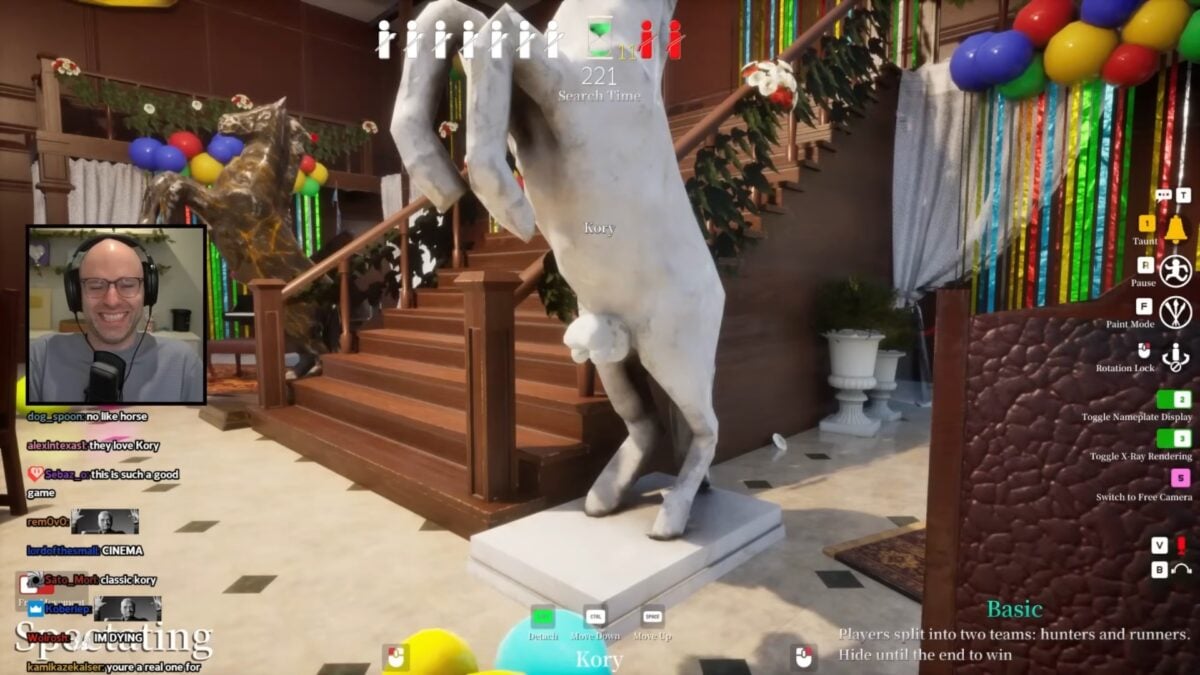
On Thursday, June 18, 2026, Kotaku reported that Meccha Chameleon, a multiplayer game described as "painted Prop Hunt," has exploded onto Steam's charts, driven entirely by its community's inventive use of a simple paint-and-hide mechanic. The game tasks one team of players with blending into a vibrant, messy environment while another team hunts them down, but the twist is that chameleons can literally paint themselves and their surroundings to create near-perfect concealment.
Key Facts
- Meccha Chameleon launched on Steam on June 11, 2026, and reached a peak concurrent player count of 52,000 by June 17.
- The game is developed by indie studio PixelCrest Games, a team of 12 people based in Osaka, Japan.
- Kotaku's report highlights that the game's core mechanic allows players to paint any surface — walls, floors, objects — and then blend into their own painted shapes.
- Creative players have been uploading custom "hide designs" to Steam Workshop, including optical illusions and 3D-shaped decoys that fool hunters.
- The game currently has a "Very Positive" rating on Steam, with 94% of over 8,000 reviews recommending it.
- PixelCrest Games has already shipped two patches in the first week, addressing balance issues with the hunter's "scan" ability.
- The game costs $14.99 on Steam, with a 10% launch discount that ended on June 18.
Breaking It Down
The core appeal of Meccha Chameleon lies not in its mechanics — which are straightforward — but in the emergent creativity it enables. Unlike traditional Prop Hunt where players hide as pre-set objects, Meccha Chameleon gives every player a brush and a palette. The result is a chaotic, user-generated gallery of hiding spots that range from a chameleon painting itself to look like a crack in the wall to constructing a fake cardboard box out of painted polygons.
In one widely shared clip, a player painted a 3D-rendered "invisible staircase" on a wall, then stood perfectly still on a step that didn't exist — fooling three hunters who walked right past.
This level of player expression has turned each match into a miniature performance art piece. The hunters are not just searching for a player; they are deciphering a puzzle left by another human. This dynamic creates a feedback loop of creativity: the more elaborate the hides, the more satisfying the hunts, and the more clips get shared on social media. Kotaku's reporting notes that the game's subreddit, r/MecchaChameleon, has gained 15,000 members in six days, almost entirely dedicated to sharing hide designs.
The commercial success is also a story of smart pricing and timing. At $14.99, Meccha Chameleon sits in the "impulse buy" sweet spot for Steam users. It launched just before the Steam Summer Sale (typically late June), meaning it captured early adopters at full price before the flood of discounts. Crucially, it filled a gap in the market for a non-violent, social party game — a category that has been underserved since Among Us and Fall Guys peaked in 2020-2021. Players are tired of battle royale stress and complex shooters; Meccha Chameleon offers low-stakes, high-laughs competition.
What Comes Next
The immediate challenge for PixelCrest Games is retaining momentum beyond the launch hype. The game's long-term health depends on a steady stream of content and community tools.
- Steam Workshop Integration (June 25, 2026): PixelCrest has confirmed a major update on June 25 that will allow players to import custom 3D models as hiding props, not just paint textures. This could dramatically expand the creative possibilities.
- Mobile Port Announcement (July 2026): Industry sources suggest PixelCrest is in talks with NetEase for a mobile version. A mobile Meccha Chameleon could replicate the viral success of Among Us on phones, but the touch-screen painting controls will be a significant design hurdle.
- First Competitive Season (August 2026): The developer has teased a "Season 1" with a ranked ladder and exclusive cosmetic rewards. This will test whether the game's casual charm can survive a competitive meta where players optimize hide spots rather than invent them.
- Console Release (Q4 2026): PixelCrest has filed trademark applications for Nintendo Switch and PlayStation 5 versions. The Switch, in particular, seems a natural fit for the game's party-game DNA.
The Bigger Picture
Meccha Chameleon's rise is a data point in two major industry trends. First, the "Cozy Competitive" movement: games that retain the tension of competition but remove the anxiety of permanent loss or toxic pressure. Players want to win but not at the cost of their sanity. The game's 10-minute matches and focus on laughter over sweat fit perfectly into this growing subgenre alongside PlateUp! and Pico Park.
Second, the game exemplifies the power of User-Generated Content (UGC) as a retention engine. Unlike Fortnite or Roblox, which require massive developer teams to build UGC ecosystems, Meccha Chameleon proves that a simple, expressive tool — a paintbrush — can generate infinite replayability. The game's success suggests that the next wave of indie hits may not be about new genres, but about giving players better tools to play with the game itself.
Key Takeaways
- [Launch Success]: Meccha Chameleon hit 52,000 concurrent players on Steam within its first week, with a 94% positive review rating, proving strong demand for creative social deduction games.
- [Core Mechanic]: The game's paint-and-hide system allows player-generated hiding spots, creating a user-driven content loop that keeps matches fresh and shareable.
- [Developer Strategy]: PixelCrest Games, a 12-person indie studio, executed a priced-right launch ($14.99) just before the Steam Summer Sale, maximizing early revenue.
- [Future Risk]: The game's biggest threat is competitive optimization — if ranked modes encourage players to use only the most effective hides, the creative spark that drives the game could be snuffed out.