TL;DR
Microsoft is developing a wearable AI access badge and a desktop device that could fundamentally change how office workers interact with AI assistants. The company's own employees are currently testing the hardware, signaling a potential shift from software-only AI products to a hardware-first strategy for the workplace.
What Happened
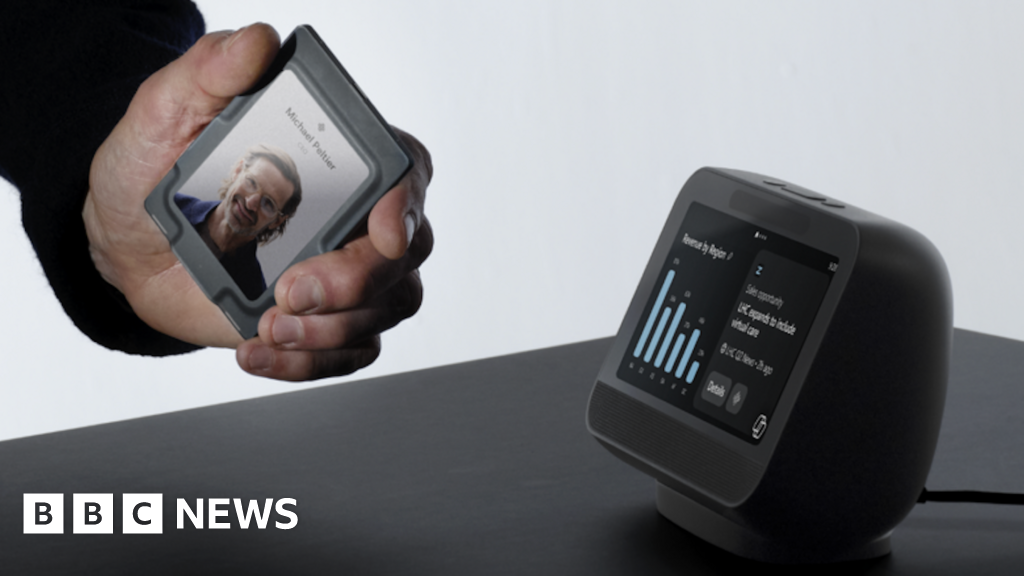
Microsoft confirmed on Tuesday that its employees are testing a wearable AI-powered "access badge" and a companion desktop device, both designed to give office workers persistent, ambient access to the company's AI assistants. The move marks Microsoft's first foray into dedicated AI hardware for the workplace, directly competing with emerging wearable AI categories pioneered by startups like Humane and Rabbit.
Key Facts
- Microsoft is testing the wearable badge and desktop device with its own employees as of June 2, 2026.
- The wearable is described as an "access badge" — a form factor familiar to office workers — that likely integrates sensors, microphones, and AI processing capabilities.
- A companion desktop device will serve as a stationary AI hub, possibly handling heavier compute tasks or acting as a secure local processing node.
- The initiative positions Microsoft against Humane's AI Pin ($699, launched 2024) and Rabbit's R1 ($199, launched 2024), though Microsoft targets enterprise users rather than consumers.
- Microsoft already has a $13 billion investment in OpenAI and integrates GPT-4 into its Copilot product line across Office 365, Azure, and Windows.
- The "wearable access badge" name suggests Microsoft is leveraging a security credential form factor that is already required in most corporate offices, reducing adoption friction.
- The company has not disclosed a public launch date, pricing, or specific technical specifications for either device.
Breaking It Down
Microsoft's decision to build custom hardware for AI interaction represents a strategic bet that software alone cannot deliver the ambient, always-on AI experience the company envisions for knowledge workers. The wearable badge form factor is particularly clever: by piggybacking on existing security badge infrastructure, Microsoft solves the "why would I wear this?" problem that has plagued consumer AI wearables.
Over 80% of Fortune 500 companies already require employees to wear security badges — Microsoft is turning a compliance requirement into a distribution channel for AI hardware.
The desktop companion device suggests Microsoft is thinking about compute partitioning in a way that consumer wearables have not. While the badge handles lightweight interactions — quick questions, meeting summaries, voice commands — the desktop device could run larger language models locally, reducing latency and addressing enterprise data privacy concerns. This two-device architecture mirrors how Apple approaches the iPhone-Watch ecosystem, but applied to the office.
The timing is aggressive. Humane's AI Pin received mixed reviews for battery life and response latency, while Rabbit's R1 struggled with reliability. Microsoft has the advantage of existing enterprise relationships, Azure's cloud infrastructure, and Copilot's software ecosystem. The company can afford to iterate on hardware while leveraging its software moat — a luxury startups lack.
However, the privacy implications are enormous. A wearable microphone that is always listening, even in "badge mode," will face scrutiny from corporate IT departments, labor unions, and privacy regulators. Microsoft must demonstrate that the device processes audio locally by default and only transmits data with explicit user consent, or risk repeating the Cortana privacy scandals of the 2010s.
What Comes Next
Microsoft is expected to provide more details at its Build developer conference in July 2026, where the company typically unveils hardware roadmaps. The testing period with employees will likely last 3–6 months, gathering telemetry on usage patterns, battery performance, and security vulnerabilities.
- Build 2026 (July): Microsoft will likely announce a public beta program for select enterprise customers, possibly including pricing tiers tied to Microsoft 365 E5 subscriptions.
- Q4 2026 Commercial Launch: If employee testing succeeds, a limited enterprise rollout could begin, targeting financial services, healthcare, and legal firms where hands-free AI access has the highest ROI.
- Regulatory Filings: Microsoft must file FCC compliance documents in the U.S. and CE marking in Europe, which will reveal technical specifications like radio frequency, battery capacity, and processing chips.
- Competitor Response: Expect Google to accelerate its own enterprise wearable AI efforts, and Apple to position the Vision Pro as the premium alternative for spatial AI interaction in the office.
The Bigger Picture
This story sits at the intersection of three converging trends: Ambient AI Interfaces, Enterprise Hardware Renaissance, and Privacy-First Computing. Microsoft is betting that the office is the ideal proving ground for always-on AI because the environment is controlled, the use cases are predictable, and the data security requirements are already established.
The Enterprise Hardware Renaissance is particularly telling. After a decade where companies like Cisco and Poly dominated office hardware with video conferencing gear, the next wave is AI-native devices that don't just transmit data but process it. Microsoft's badge-and-desktop combo could make the smart speaker model — always listening, always ready — finally viable in the corporate world, provided the privacy architecture holds up.
Key Takeaways
- [Ambient AI Hardware]: Microsoft is building dedicated hardware to make AI assistants always available in the office, moving beyond the smartphone app model.
- [Enterprise-First Strategy]: Unlike consumer AI wearables, Microsoft's badge leverages existing corporate security infrastructure to reduce adoption barriers.
- [Privacy Hurdle]: The always-on microphone in a badge form factor will face intense scrutiny from corporate IT and regulators; local processing is essential.
- [Competitive Landscape]: Microsoft enters a market where consumer AI wearables have struggled, but its enterprise distribution and software ecosystem give it a unique advantage.
