TL;DR
Motorola has shrunk its flagship Edge display to 6.3 inches for the 2026 US and Canada model, reversing a multi-year trend of screen size increases. This move signals a strategic bet on compact flagship demand in a market dominated by 6.7-inch-plus devices.
What Happened
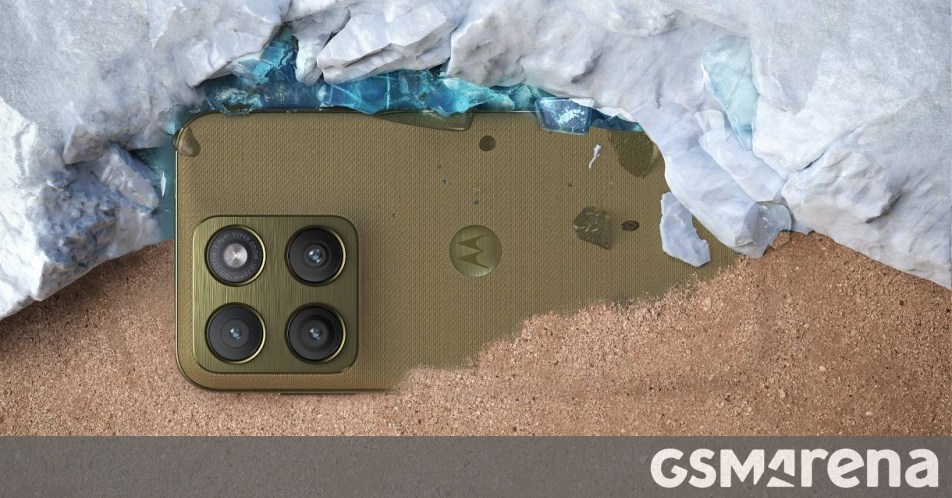
Motorola unveiled the Edge (2026) for the US and Canadian markets on Tuesday, June 2, 2026, featuring a 6.3-inch display — a sharp departure from the 6.6-inch panel on the 2024 model and the 6.7-inch screen on last year's 2025 edition. The device also introduces a 10MP 3x telephoto camera, marking the return of optical zoom to Motorola's mid-premium lineup.
Key Facts
- The 6.3-inch display is the smallest on a Motorola Edge flagship since the 2023 model, which used a 6.55-inch panel.
- The 2024 Edge had a 6.6-inch display; the 2025 Edge grew to 6.7 inches — a 0.4-inch reduction year-over-year for 2026.
- The main camera uses a 50MP 1/1.56-inch sensor, likely the same Sony IMX906 or Samsung GN5 class sensor found in recent Motorola flagships.
- The telephoto module is a 10MP 3x optical zoom unit — the first dedicated telephoto on a non-Edge+ Motorola phone since the Edge 2022.
- The device is launching exclusively for US and Canada markets first, with no immediate global availability announced.
- The Edge (2026) retains Motorola's Gentle Notification LED edge lighting system, first introduced on the 2024 model.
- Pricing has not been announced, but the 2025 Edge launched at $599 USD in the US.
Breaking It Down
Motorola's decision to shrink the Edge display by 0.4 inches in a single generation is a calculated risk. The smartphone market has spent the last five years pushing screen sizes past 6.7 inches, with even "compact" models like the Galaxy S24 landing at 6.2 inches. Motorola is betting that a significant segment of North American buyers actively wants a smaller phone — and that they will pay flagship prices for it.
0.4 inches of screen reduction in one generation — the largest single-year display size decrease for any major US flagship phone since Apple shrunk the iPhone from 6.7 to 6.1 inches in the iPhone 14 Pro series.
The telephoto addition is equally strategic. Motorola's Edge series has lacked optical zoom since the Edge 2022, which had a 2x telephoto. In the interim, competitors like Samsung (Galaxy A54 5G) and Google (Pixel 7a) have added telephoto or super-resolution zoom capabilities. The 10MP 3x module brings Motorola back into parity with the Pixel 8a and Galaxy A55, both of which offer 2x–3x optical zoom in the same $500–$600 price bracket.
However, the sensor choice raises questions. A 10MP 3x telephoto on a 1/4.5-inch class sensor — typical for such modules — will struggle in low light compared to the larger main sensor. Motorola is prioritizing reach over quality, a tradeoff that worked for the Pixel 7 Pro but disappointed on the OnePlus 11. The company will need strong computational photography to make this work.
The 50MP 1/1.56-inch main camera is unchanged from the 2025 Edge, suggesting Motorola is iterating on software rather than hardware for primary image quality. This is a conservative move that prioritizes cost control over innovation — the sensor is now two generations old.
What Comes Next
- Pricing announcement — Expected within two weeks. If Motorola prices the Edge (2026) at $599 or below, it will undercut the Galaxy S24 FE ($649) and Pixel 8a ($499 but with inferior zoom). A price above $649 would put it in direct competition with the iPhone 15 — a fight Motorola cannot win on brand alone.
- Global rollout — Motorola typically launches US/Canada models first, then brings the Edge to Europe, India, and Latin America within 3–4 months. Watch for announcements at IFA Berlin in September 2026.
- Carrier availability — The 2025 Edge was sold unlocked and through T-Mobile and Verizon. Expect the 2026 model to add AT&T support, given Motorola's expanding carrier relationships in the US.
- Competitor response — Samsung and Google will likely respond with smaller variants of their own mid-range phones for 2027. If the Edge (2026) sells well, expect a "Mini" wave from OnePlus and Nothing within 12 months.
The Bigger Picture
Motorola's display shrink is part of a broader Compact Phone Revival trend. After years of "bigger is better," consumers are showing renewed interest in sub-6.5-inch flagships. The iPhone 15 Pro (6.1 inches) and Galaxy S24 (6.2 inches) both saw strong sales in 2024–2025, proving that premium performance in a smaller chassis commands a premium price. Motorola is the first Android OEM to apply this logic to the $500–$650 mid-premium segment, rather than the $800+ flagship tier.
The telephoto addition also aligns with the Computational Zoom Race — every major Android OEM is now competing on optical zoom capability in mid-range devices. Google's Pixel 8a uses a 64MP main sensor with 2x super-res zoom; Samsung's Galaxy A55 has a 50MP main with 3x digital zoom. Motorola's dedicated 3x optical module gives it a hardware advantage that software cannot replicate, potentially positioning the Edge (2026) as the best zoom phone under $600.
Key Takeaways
- [Display Downsizing]: The 6.3-inch screen is a 0.4-inch reduction from 2025, making the Edge (2026) the smallest Motorola flagship in three years — a direct bet on compact phone demand.
- [Telephoto Return]: A 10MP 3x optical zoom camera returns after a four-year absence from the non-Edge+ lineup, targeting Samsung and Google's mid-range zoom capabilities.
- [Camera Conservatism]: The 50MP 1/1.56-inch main sensor is unchanged from 2025, indicating Motorola is prioritizing cost control and software improvements over hardware upgrades.
- [Market Timing]: Launching in June 2026, the Edge (2026) arrives before Samsung's Galaxy S25 FE and Google's Pixel 9a, giving Motorola a first-mover advantage in the compact mid-premium segment.
