TL;DR
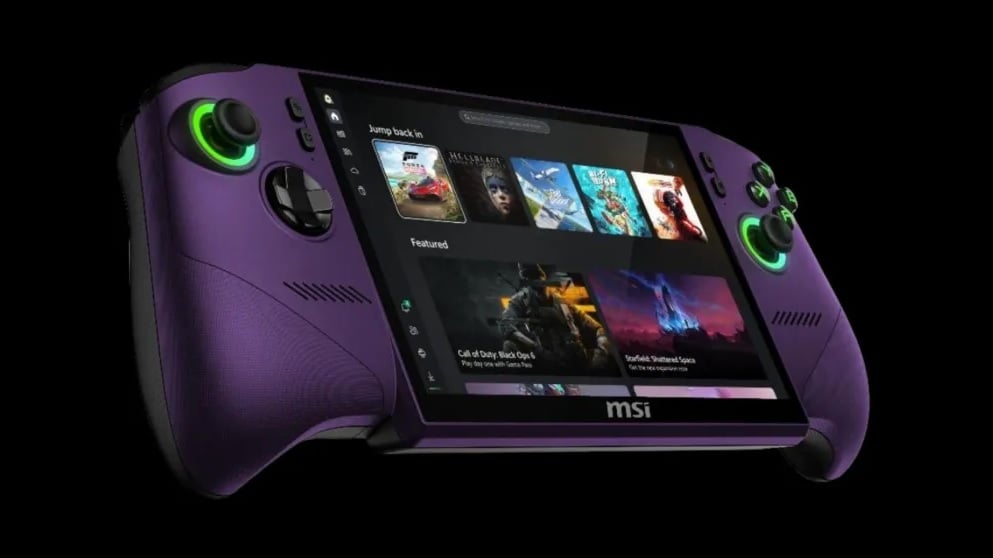
The MSI Claw handheld gaming PC has shocked the industry with a starting price of $1,800, and MSI executives have warned that future models could cost even more. This marks a dramatic escalation in the handheld gaming market, forcing consumers to weigh portability against the cost of a high-end gaming desktop.
What Happened
At a press briefing on Thursday, June 18, 2026, MSI executives unveiled the pricing for their next-generation Claw gaming handheld, setting the base model at $1,800 — a figure that immediately drew sharp reactions from analysts and gamers alike. The company’s gaming division head openly acknowledged that rising component costs and R&D investment could push future iterations even higher, signaling a fundamental shift in how hardware makers view the handheld category.
Key Facts
- The MSI Claw base model starts at $1,800, making it the most expensive mainstream handheld gaming PC ever launched.
- MSI executives stated during the briefing that future models could cost even more, citing rising silicon and display costs.
- The device is powered by an Intel Core Ultra 7 258V "Lunar Lake" processor, a significant upgrade from the previous Claw's Meteor Lake chip.
- The Claw features a 7-inch 1080p 120Hz IPS display, with an optional OLED upgrade expected to add another $200–$300 to the price.
- MSI’s announcement comes as competitors like Asus (ROG Ally X) and Lenovo (Legion Go) have kept their handhelds in the $700–$900 range.
- The Steam Deck OLED, the market leader, currently retails for $549–$649, making the Claw roughly three times more expensive.
- Pre-orders for the Claw open on July 1, 2026, with shipping expected by late August 2026.
Breaking It Down
The $1,800 price point represents a 3x premium over the Steam Deck OLED and a 2x premium over the Asus ROG Ally X. For that money, a consumer could build a solid mid-range gaming desktop with an RTX 4060 and still have cash left over for a monitor and peripherals. The question MSI must answer is: what justifies that gap?
The MSI Claw’s $1,800 price tag is 230% higher than the average handheld gaming PC sold in 2025, according to market data from IDC.
The answer lies in MSI’s bet on premium components and brand positioning. The Lunar Lake processor offers significantly better battery life and AI performance than previous Intel mobile chips, and the 120Hz display targets competitive gamers who demand high refresh rates. But MSI is also betting that a segment of buyers will pay a premium for the MSI brand name and its ecosystem of gaming peripherals, software, and support.
However, this strategy carries substantial risk. The handheld PC market has grown rapidly precisely because it offered affordable, portable gaming — a middle ground between a Nintendo Switch and a full desktop. By pricing the Claw at $1,800, MSI is effectively positioning it as a luxury niche product, not a mass-market device. Early reactions on social media and gaming forums have been overwhelmingly negative, with many users questioning the value proposition.
Another factor is component supply. Intel’s Lunar Lake chips are manufactured on a new process node, and yields are reportedly lower than expected. MSI may be passing those costs directly to consumers, a strategy that could backfire if competing handhelds using AMD Ryzen Z2 or Qualcomm Snapdragon X chips offer comparable performance at half the price.
What Comes Next
- Pre-order launch on July 1, 2026 — MSI will face its first real test as consumers vote with their wallets. Early sales figures will determine whether the $1,800 price is sustainable or if MSI must offer discounts.
- OLED model announcement expected in Q4 2026 — If the base model sells poorly, MSI may accelerate the OLED version as a premium halo product, potentially pushing the price above $2,100.
- Competitor responses from Asus and Lenovo — Both companies are expected to announce their 2026 handheld refreshes at Gamescom in August 2026. If they maintain sub-$1,000 pricing, MSI’s position becomes untenable.
- Intel’s Lunar Lake supply and pricing — Intel’s quarterly earnings call in July 2026 will reveal whether chip costs are likely to decrease, which could give MSI room to adjust pricing.
The Bigger Picture
This story is part of two converging trends. First, Handheld PC Inflation — component costs for premium mobile hardware (high-refresh displays, advanced cooling, latest-gen silicon) are rising faster than consumer willingness to pay. The MSI Claw may be the canary in the coal mine for a market that has enjoyed rapid growth but now faces margin pressure.
Second, Brand Tier Stratification — the handheld market is splitting into three tiers: budget (Steam Deck, Ayaneo Next Lite at $400–$600), mainstream (Asus ROG Ally X, Lenovo Legion Go at $700–$900), and luxury (MSI Claw, OneXPlayer at $1,200+). MSI is attempting to own the luxury tier, but that requires delivering a truly premium experience — not just a higher price tag. If the Claw’s performance doesn’t justify the cost, MSI may find itself isolated in an empty market segment.
Key Takeaways
- [Price Shock]: The MSI Claw’s $1,800 starting price is more than double the cost of competing handhelds and three times the Steam Deck OLED, with further increases possible.
- [Lunar Lake Gamble]: MSI is betting heavily on Intel’s new chip to deliver performance and battery life that justifies the premium, but supply constraints may force continued high prices.
- [Market Risk]: By pricing itself into a luxury niche, MSI risks alienating the core handheld audience that values affordability and portability over raw specs.
- [Competitive Window]: Asus and Lenovo are expected to announce competing devices in August 2026, and if they maintain sub-$1,000 pricing, MSI will face enormous pressure to cut prices.