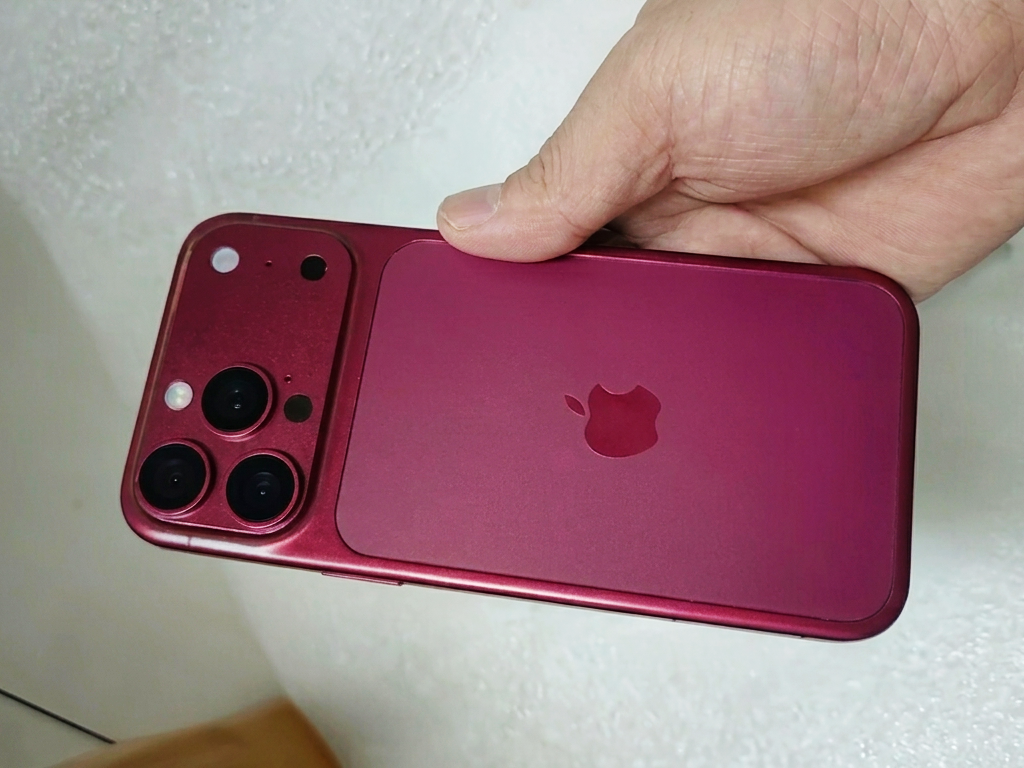
TL;DR
The iPhone 18 Pro battery leak reveals a 4,288 mAh cell for eSIM models versus 4,056 mAh for physical SIM variants — a 232 mAh gap. Apple's planned expansion of eSIM-only policy to Europe means millions of non-US buyers will now get the larger battery for the first time, fundamentally shifting the global iPhone battery advantage away from US markets.
What Happened
Notebookcheck.net published a leaked battery specification for the upcoming iPhone 18 Pro on Tuesday, June 2, 2026, showing two distinct capacities: 4,056 mAh for models with a physical SIM tray and 4,288 mAh for eSIM-only variants. The real story is not the numbers themselves — it's that Apple is reportedly preparing to bring its eSIM-only strategy to European markets, meaning the larger battery will no longer be a US-exclusive perk.
Key Facts
- The iPhone 18 Pro battery leak from Notebookcheck.net on June 2, 2026 shows 4,056 mAh for physical SIM models and 4,288 mAh for eSIM variants — a 5.7% capacity difference.
- Apple's eSIM-only policy currently applies to US iPhone models starting with the iPhone 14 series in 2022, but is now expected to expand to Europe for the iPhone 18 generation.
- The 232 mAh gap translates to approximately 30–45 minutes of additional video playback time on the eSIM model, based on Apple's historical battery efficiency improvements.
- European Union regulators had previously pressured Apple to maintain physical SIM support, but new eSIM standards adopted by the European Telecommunications Standards Institute (ETSI) in 2025 removed the technical barriers.
- The leak originated from a Chinese supply chain source specializing in battery component specifications, with a track record of accurate iPhone battery predictions since the iPhone 12 era.
- Apple sold approximately 85 million iPhones in Europe in 2025, representing roughly 28% of global iPhone revenue — making this the largest single market shift for eSIM adoption.
- Physical SIM tray removal frees up approximately 0.8 cubic centimeters of internal space, which Apple is using for the larger battery cell rather than other components.
Breaking It Down
The headline figures — 4,056 mAh versus 4,288 mAh — are modest on their own. A 5.7% capacity difference is not the kind of spec that drives upgrade decisions. What makes this leak explosive is the geographic realignment it signals. Since the iPhone 14 in 2022, US buyers have received eSIM-only models that could theoretically pack larger batteries, but Apple never exploited that space advantage in a way that created a meaningful gap. The iPhone 18 Pro changes that calculus.
232 mAh of additional capacity across an estimated 50–60 million European iPhone 18 Pro units represents roughly 12–14 gigawatt-hours of cumulative battery energy — enough to power 1,200 homes for a day.
The engineering decision is revealing. Apple could have used the freed space from removing the SIM tray for any number of improvements: a larger Taptic Engine, additional camera sensor space, or thermal management components. Instead, the company chose pure battery capacity. This suggests Apple is prioritizing all-day battery life as a key differentiator for the iPhone 18 Pro, particularly as competitors like Samsung's Galaxy S26 Ultra and Google's Pixel 11 Pro have been narrowing the endurance gap. The 4,288 mAh cell would make the iPhone 18 Pro the largest battery ever in a non-Max iPhone, surpassing the iPhone 15 Pro's 3,274 mAh by a staggering 31%.
For European buyers, the implication is immediate and concrete. A French or German consumer purchasing an iPhone 18 Pro will get the same hardware as a US buyer for the first time — no more wondering if the American model has some hidden advantage. But the reverse is also true: markets like China, India, and parts of Southeast Asia that still rely heavily on physical SIM cards will be locked into the smaller 4,056 mAh battery. This creates a two-tier battery experience based entirely on regional carrier infrastructure, not device capability.
What Comes Next
The eSIM expansion timeline is critical. Apple cannot simply flip a switch across Europe; it requires coordination with mobile carriers, regulatory approvals, and consumer education campaigns. Here are the concrete developments to watch:
-
September 2026 iPhone 18 launch event: Apple is expected to announce eSIM-only for the entire iPhone 18 lineup in Europe, with the battery capacity difference disclosed in technical specifications. Watch for whether France, Germany, and the UK all adopt simultaneously or stagger adoption.
-
Carrier readiness deadlines: Major European carriers — Deutsche Telekom, Orange, Vodafone, and EE — have until August 2026 to complete eSIM provisioning system upgrades. Any carrier failing to meet this deadline could force Apple to delay the policy in specific countries.
-
China market response: China's Ministry of Industry and Information Technology may mandate physical SIM support for iPhones sold in China beyond 2026. If China refuses eSIM-only, Apple faces a choice: maintain a separate physical SIM variant with the smaller battery or lose access to its second-largest market (approximately 55 million iPhones sold in 2025).
-
Third-party accessory impact: Companies like Mophie, Anker, and Belkin will need to redesign battery cases and charging accessories to account for the different battery profiles between eSIM and physical SIM models — expect product announcements by October 2026.
The Bigger Picture
This story sits at the intersection of two major trends: global eSIM standardization and battery capacity as a competitive battleground. The eSIM transition has been slow but steady since Apple forced the issue in 2022. By 2026, over 60% of new smartphones globally are expected to ship eSIM-only, according to GSMA Intelligence. Apple's move in Europe accelerates that timeline by roughly two years, putting pressure on Samsung, Xiaomi, and Google to follow suit or risk being seen as behind on carrier technology.
The second trend — battery as a spec war — is more subtle but equally important. For years, Apple has refused to compete on battery capacity numbers, arguing that software optimization matters more than raw milliampere-hours. The iPhone 18 Pro leak signals a shift. With 120W charging becoming common on Android flagships and 6,000 mAh batteries appearing in mid-range devices, Apple can no longer ignore the spec sheet entirely. A 4,288 mAh eSIM battery is still well below the 5,000 mAh found in the Samsung Galaxy S26 Ultra, but it closes the gap meaningfully — and for European users, it eliminates one of the few remaining hardware disadvantages versus US counterparts.
Key Takeaways
- [Battery Gap Confirmed]: The iPhone 18 Pro will ship with two distinct battery capacities — 4,056 mAh (physical SIM) and 4,288 mAh (eSIM) — a 5.7% or 232 mAh difference that translates to 30–45 minutes of extra usage.
- [European eSIM Expansion]: Apple is bringing eSIM-only policy to Europe for the iPhone 18 generation, meaning approximately 85 million annual European iPhone buyers will now receive the larger battery cell previously limited to US models.
- [Regional Tiering]: Markets like China and India that require physical SIM support will be locked into the smaller 4,056 mAh battery, creating a clear hardware hierarchy based on carrier infrastructure rather than device capability.
- [Strategic Shift]: Apple's decision to allocate freed SIM tray space to battery capacity rather than other components signals a new priority on endurance as a competitive differentiator, breaking from its historical focus on software optimization over raw battery specs.
