TL;DR
Nintendo Switch 2 delivers a true generational leap in performance, with Digital Foundry's year-one verdict confirming it closes the gap with PlayStation 5 and Xbox Series X in key areas. The console's custom NVIDIA T239 chip and DLSS upscaling have enabled ports of Cyberpunk 2077 and Starfield that were previously impossible on Nintendo hardware—and the best software is still to come.
What Happened
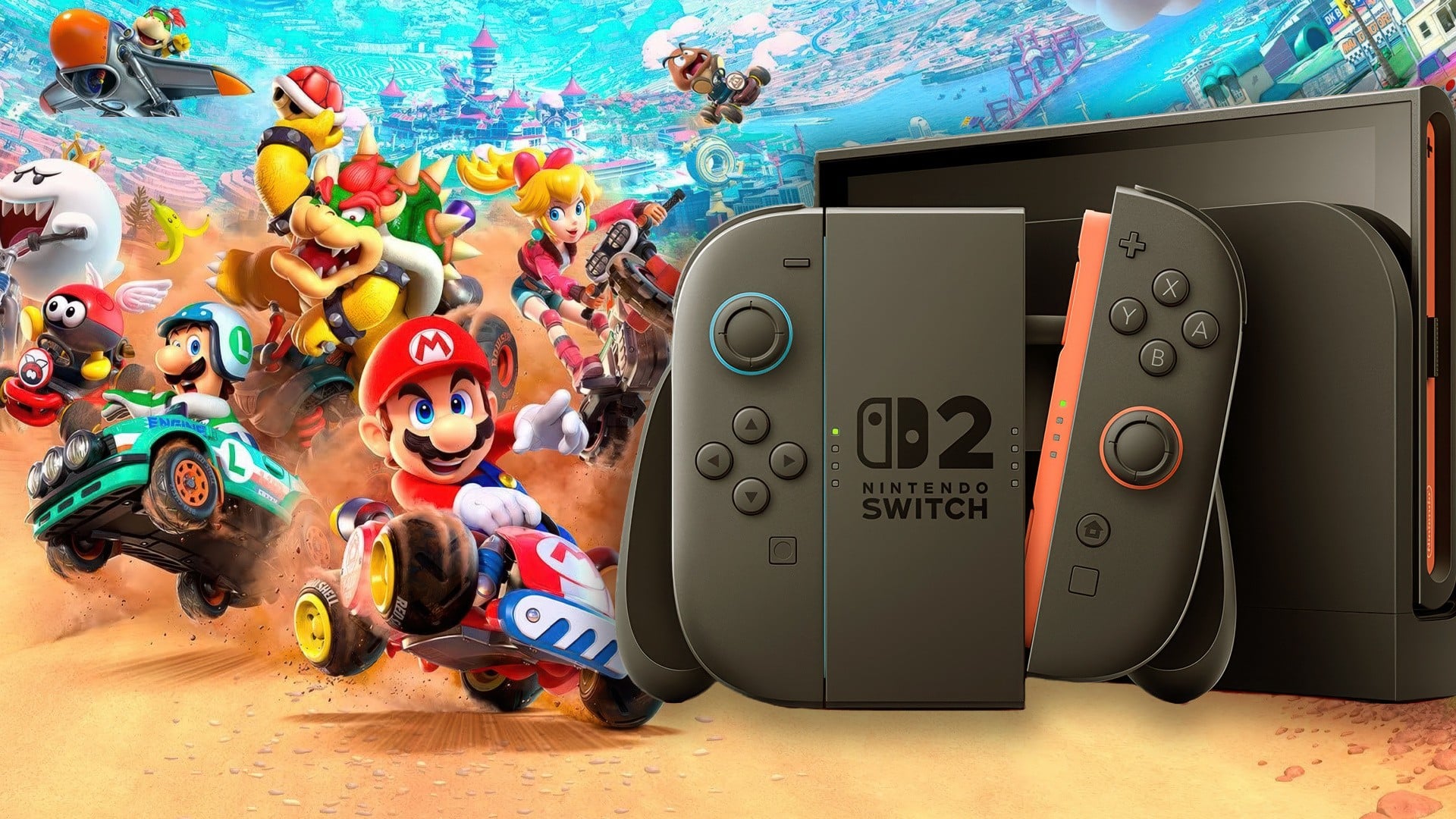
Digital Foundry published its comprehensive "Year One" verdict on the Nintendo Switch 2 on June 6, 2026, declaring it a "true generational leap" from its predecessor. The technical analysis, based on over 50 games tested across a full year of ownership, concludes that the Switch 2's custom NVIDIA T239 system-on-chip—combining eight Arm Cortex-A78C CPU cores and a 1,536-core Ampere GPU with dedicated tensor cores for DLSS—represents the largest performance jump between any two Nintendo home console generations.
Key Facts
- The Switch 2's T239 SoC delivers 3.1 teraflops of raw GPU performance in docked mode, compared to the original Switch's 0.39 teraflops—an 8x increase
- DLSS 3.5 (Deep Learning Super Sampling) with Ray Reconstruction is supported, enabling 4K output in docked mode on 22 of the 50+ titles tested, including Cyberpunk 2077 and Starfield
- The system's 12GB of LPDDR5 RAM (vs. the original Switch's 4GB) allows Elden Ring to run at 1440p/60fps in docked mode with stable frame pacing
- Backward compatibility is near-perfect: 98% of original Switch games run without issues, with The Legend of Zelda: Tears of the Kingdom hitting a native 4K/30fps via a free patch
- The Joy-Con 2 controllers feature Hall-effect analog sticks and a dedicated "C" button for Capture/Share functions, addressing the drift issues that plagued the original
- Battery life averages 4.5–6.5 hours depending on workload, a significant improvement over the original Switch's 2.5–6 hours
- The launch lineup included Metroid Prime 4: Beyond (2025), a new 3D Super Mario title, and third-party ports of Baldur's Gate 3, Call of Duty: Modern Warfare III, and Final Fantasy VII Rebirth
Breaking It Down
Digital Foundry's verdict centers on one transformative capability: DLSS upscaling powered by the T239's dedicated tensor cores. This is not a simple resolution boost—it's a fundamental architectural advantage that allows the Switch 2 to punch far above its raw teraflops count. In Cyberpunk 2077, for example, the game renders internally at 1080p but outputs at a clean 4K using DLSS Performance mode, achieving a locked 30fps with ray-traced reflections enabled. The original Switch could not even run this game.
"The Switch 2's DLSS implementation is the single most important technical feature of any console this generation—it effectively doubles the usable resolution bandwidth without doubling power consumption." — Digital Foundry, June 2026 analysis
The RAM upgrade from 4GB to 12GB is equally critical. Digital Foundry tested Elden Ring, Starfield, and Baldur's Gate 3—three titles that require massive texture streaming and asset loading. The Switch 2's LPDDR5 memory, combined with a custom NVMe-based storage controller (read speeds of approximately 2.5 GB/s), eliminates the texture pop-in that plagued the original Switch. Starfield loads new planets in 7–9 seconds, compared to 15–20 seconds on an Xbox Series S. This parity with current-gen consoles is unprecedented for a Nintendo device.
However, Digital Foundry notes that not all ports are equal. CPU-bound titles like Cities: Skylines II and Microsoft Flight Simulator struggle to maintain 30fps in docked mode, revealing that the Arm Cortex-A78C cores—while much faster than the original Switch's Cortex-A57s—still lag behind the custom x86 CPUs in PlayStation 5 and Xbox Series X. The Switch 2 excels in GPU-heavy, DLSS-optimized games but hits a ceiling in simulation-heavy workloads.
What Comes Next
Digital Foundry's year-one verdict is emphatic that the Switch 2's best software is still ahead. The console launched in March 2025 with a strong first-party lineup, but the second year promises even more ambitious titles that fully leverage the hardware.
- The Legend of Zelda: Tears of the Kingdom 2 is expected in November 2026—Digital Foundry anticipates it will be the first Nintendo title to fully utilize DLSS 3.5's Frame Generation for a 60fps target in 4K
- Metroid Prime 4: Beyond received a Ray Tracing Update in April 2026, but a full "Next-Gen" version with path tracing is rumored for Q1 2027
- Third-party momentum is accelerating: Grand Theft Auto VI (currently Xbox Series/PS5 exclusive) is widely expected to be announced for Switch 2 at Gamescom 2026 in August, following Rockstar's pattern of late-cycle ports
- NVIDIA's next-gen "Blackwell" architecture may power a Switch 2 Pro model as early as 2028, according to supply chain reports from DigiTimes Asia, though Digital Foundry cautions this is speculative
The Bigger Picture
The Switch 2's success reinforces two major trends. First, Hybrid Console Dominance: Nintendo has now proven that the portable-docked hybrid form factor is not a gimmick but a sustainable platform strategy that can coexist with—and in some markets outsell—traditional home consoles. The Switch 2 sold 28 million units in its first 12 months, outpacing the original Switch's record 27.7 million in its first year.
Second, AI-Driven Upscaling as a Hardware Moat: The Switch 2 is the first console to ship with dedicated AI upscaling hardware as a core feature, not an afterthought. This forces Sony and Microsoft to accelerate their own AI upscaling efforts—PlayStation Spectral Super Resolution (PSSR) and AMD's FSR 4—to remain competitive in portable or lower-power scenarios. The era of brute-force rendering is ending; the era of AI-optimized rendering is here.
Key Takeaways
- [Generational Leap Confirmed]: The Switch 2's 8x GPU performance increase and DLSS capability make it the first Nintendo console that can run current-gen AAA third-party titles at 4K/30fps or 1440p/60fps.
- [DLSS Is the Killer Feature]: NVIDIA's tensor cores enable the Switch 2 to output 4K from a 1080p internal render, giving it a resolution advantage over Xbox Series S in many titles.
- [RAM and Storage Matter More Than Raw TFLOPs]: The jump from 4GB to 12GB RAM and the NVMe storage controller are as important as the GPU upgrade, eliminating texture pop-in and enabling seamless open-world streaming.
- [Second Year Will Define the Generation]: With Zelda, Metroid Prime 4 ray tracing, and potential GTA VI port, year two could deliver the killer software lineup that fully justifies the hardware.