TL;DR
Ask.com, the pioneering 1990s search engine, will shut down its search business after nearly 30 years as its parent company IAC refocuses operations. The closure marks the end of an early internet search brand that once rivaled Yahoo and AltaVista but failed to compete with Google's dominance.
What Happened
Ask.com is shutting down its search business after nearly 30 years, parent company IAC announced on Monday, May 4, 2026. The decision ends a long decline for the once-popular search engine that peaked in the early 2000s but never recovered from Google's market dominance.
Key Facts
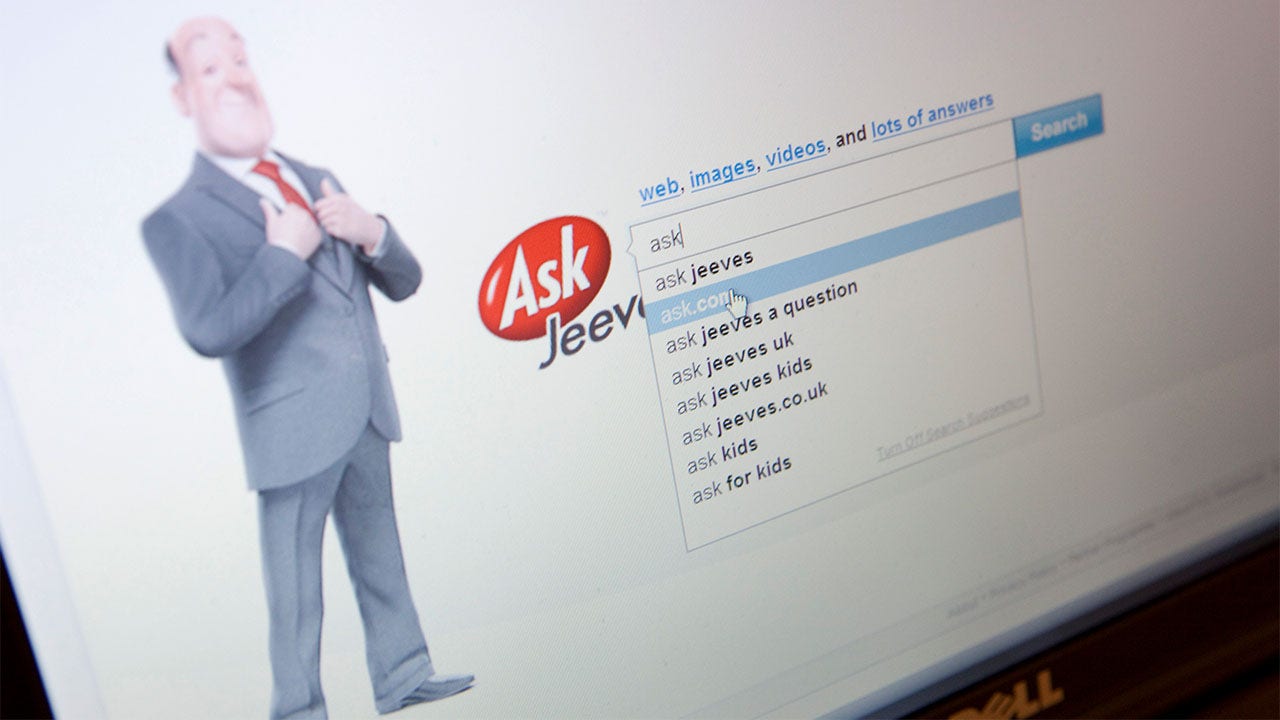
- Ask.com launched in 1996 as AskJeeves.com, featuring a butler mascot and natural language query processing
- The site commanded roughly 13% of the U.S. search market in 2003, trailing only Yahoo and Google
- IAC acquired Ask.com in 2005 for $1.85 billion in a stock deal that combined the search engine with other IAC properties
- The search business has generated less than $50 million in annual revenue for the past three fiscal years, according to IAC filings
- Ask.com's global market share had fallen to 0.02% by 2025, per StatCounter data
- The shutdown will affect approximately 120 employees across IAC's operations, with most eligible for severance or reassignment
- The ask.com domain will redirect to IAC's About.com (now Dotdash) content network starting June 1, 2026
Breaking It Down
Ask.com's shutdown is the final chapter of a search engine that defined the early consumer internet. Founded as Ask Jeeves in 1996 by Garrett Gruener and David Warthen, the service pioneered natural language search — allowing users to type full questions like "Where can I find a good Italian restaurant?" rather than keyword strings. The butler mascot, Jeeves, became one of the most recognizable brand icons of the dot-com era, appearing in Super Bowl ads and on magazine covers.
Ask.com's peak market share of 13% in 2003 represented roughly 40 million monthly users at a time when the total U.S. internet population was about 170 million. Today, that same user base would be less than one week's worth of Google's global traffic.
The decline was swift after Google's IPO in 2004. Ask.com's technology, which relied on human editors to curate answers alongside algorithmic results, could not scale against Google's PageRank system. IAC's 2005 acquisition was intended to combine Ask with its network of content sites like Match.com and Expedia, but the search product never integrated meaningfully. By 2010, IAC had laid off 130 employees and outsourced Ask's search technology to a third-party provider, effectively ending in-house development.
The search business became a legacy asset generating minimal revenue. IAC's 2025 annual report listed Ask.com under "Other" alongside aging properties like Dictionary.com and The Daily Beast, with combined revenue of $112 million against operating losses of $34 million. The decision to shut down rather than sell reflects the impossibility of reviving a brand whose market share is statistically indistinguishable from zero.
What Comes Next
IAC will redirect Ask.com traffic to its Dotdash Meredith content network, which includes brands like Verywell, Investopedia, and People.com. The transition is expected to retain some search functionality but will prioritize article-based results over traditional web search.
- June 1, 2026: The ask.com domain redirect goes live. Users typing queries will see Dotdash content results instead of web search results.
- Q3 2026: IAC will report its first quarterly earnings without Ask.com search revenue, providing clarity on the financial impact of the shutdown.
- Late 2026: IAC may sell or license the Ask.com trademark and domain to another company, though no buyer has emerged. The brand's residual value is estimated at under $5 million.
- 2027: Expect a wave of nostalgia-driven retrospectives as the 30th anniversary of Ask Jeeves' launch approaches in 2026, potentially driving a short-lived traffic spike to archived versions of the site.
The Bigger Picture
Ask.com's death is part of a larger Search Engine Extinction trend. Over the past decade, Yahoo Search (now powered by Bing), AOL Search, and AltaVista have all effectively ceased to exist as independent products. The search market has become a duopoly: Google commands 91% of global search traffic, while Microsoft's Bing holds 3.5%, according to StatCounter. No third player has sustained above 1% market share since 2015.
The shutdown also reflects Corporate Portfolio Rationalization at IAC. Chairman Barry Diller has been aggressively pruning the company's portfolio of legacy internet brands, selling off Match Group and spinning out Vimeo. Ask.com was the last major property from IAC's 2000s-era acquisition spree that had not been divested or shut down. The company now focuses on digital publishing (Dotdash Meredith) and service businesses like Angi and Care.com.
Key Takeaways
- [Market Reality]: Ask.com's 0.02% market share made it economically unsustainable; the shutdown was inevitable once IAC stopped investing in search technology in 2010.
- [Corporate Strategy]: IAC is completing a two-decade pivot from a search and portal company to a digital publishing and services conglomerate, shedding its last search asset.
- [Historical Marker]: Ask.com's closure ends the era of the "second wave" search engines that launched between 1995-1998 — only Google, Yahoo (as a brand), and Bing remain.
- [User Impact]: Approximately 120 employees lose jobs, and the redirect to Dotdash content will frustrate the small but loyal user base that still relied on Ask.com for simple Q&A queries.