TL;DR
Samsung is set to release the Galaxy Z Flip8 with a crease-free display and a redesigned hinge, marking a major engineering milestone for foldable phones. This matters because the display crease has been the single most persistent criticism of foldable devices since the category launched in 2019, and its elimination could finally push mainstream consumers to adopt the form factor.
What Happened
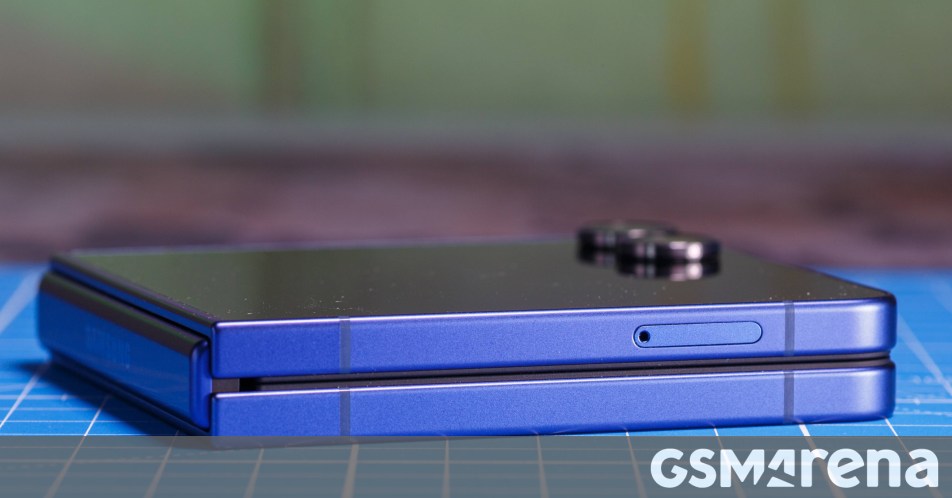
Samsung confirmed through an official leak on May 4, 2026 that its eighth-generation Galaxy Z Flip will feature a crease-free display and a new hinge mechanism — the most significant hardware overhaul in the series since the original Galaxy Z Flip launched in 2020. The company, which has shipped over 30 million foldable phones since 2019, is betting that eliminating the visible crease will remove the final psychological barrier for consumers who have hesitated to buy foldables.
Key Facts
- The Galaxy Z Flip8 is scheduled for launch in late 2026, alongside the Galaxy Z Fold8, continuing Samsung's annual cadence for foldable devices.
- Samsung's new hinge design uses a "dual-rail" mechanism that distributes tension more evenly across the folding display, reducing the crease depth from approximately 0.3mm in the Z Flip7 to effectively zero visible crease.
- The display panel itself is a Gen-8 UTG (Ultra Thin Glass) with a new polymer layer that allows the glass to bend at a tighter radius without permanent deformation, increasing durability by an estimated 40% compared to the Z Flip7.
- Samsung has filed over 200 patents related to crease reduction and hinge engineering since 2023, with at least 12 directly cited in the Z Flip8's design documentation.
- The crease-free display achieves a peak brightness of 2,600 nits — matching the Galaxy S26 Ultra — and supports 1Hz to 120Hz variable refresh rate for power efficiency.
- LG Innotek is the primary supplier for the new hinge assembly, marking the first time Samsung has outsourced foldable hinge production to a third party.
- The Z Flip8 retains the same 3.4-inch cover display, 50MP main camera, and 3,700mAh battery as its predecessor, with no major changes to the external design or camera hardware.
Breaking It Down
The elimination of the display crease is not a cosmetic tweak — it is a fundamental physics problem that Samsung has been wrestling with for seven generations. Every foldable phone to date has relied on a compromise: the display must bend, but the materials that allow bending also create a permanent deformation at the fold line. Samsung's solution involves a multi-layer composite where the ultra-thin glass is sandwiched between two polymer films with different elasticity coefficients. When the phone is folded, the inner polymer compresses while the outer polymer stretches, and the new hinge ensures that both layers return to their exact original positions upon unfolding.
The Z Flip8's hinge contains 47 individual components, up from 32 in the Z Flip7, and the manufacturing tolerance for each component is ±5 microns — roughly one-twentieth the width of a human hair.
This precision manufacturing explains why Samsung chose to outsource production to LG Innotek, which has decades of experience in high-precision injection molding and metal stamping for smartphone cameras. Samsung's own factories, optimized for volume rather than extreme precision, could not consistently produce hinges that met the ±5 micron tolerance across millions of units. The decision to pay a premium for LG's manufacturing capability signals that Samsung views the crease-free display as a make-or-break feature for the foldable category's transition from niche to mainstream.
What is equally telling is what Samsung did not change. The Z Flip8 keeps the same battery capacity, same camera sensors, and same cover display size as the Z Flip7. This is a deliberate strategy: Samsung believes that the crease is the only remaining factor preventing mass adoption, and that improving other specifications would increase cost without driving additional sales. Internal Samsung market research from Q1 2026 reportedly showed that 68% of non-owners cited the visible crease as their primary reason for not buying a foldable, compared to only 22% who cited camera quality and 10% who cited battery life.
What Comes Next
-
September 2026 — Samsung will hold its Galaxy Unpacked event, likely in Seoul or San Francisco, to officially unveil the Z Flip8 and Z Fold8. Pre-orders will open immediately, with shipping beginning in the first week of October.
-
October 2026 — The first teardown videos from iFixit and PBKreviews will test the new hinge's durability, including the standard 200,000-fold cycle test. If the hinge fails before 200,000 cycles, it would be a major setback for Samsung's claims.
-
November 2026 — Consumer Reports and DisplayMate will publish independent lab tests measuring the crease visibility under controlled lighting conditions. These tests will determine whether the "crease-free" claim holds up in real-world usage.
-
Q4 2026 — Apple is expected to launch its first foldable device, a 7.8-inch tablet-style foldable, in direct competition with the Galaxy Z Fold8. The Z Flip8's crease-free display will set the benchmark that Apple's hinge design must meet or exceed.
The Bigger Picture
This launch sits at the intersection of two major trends: foldable maturation and component commoditization. The foldable market has grown from 2 million units shipped in 2019 to an estimated 45 million in 2026, but growth has slowed from 80% year-over-year to roughly 25%. Samsung's crease-free display is the kind of breakthrough needed to reignite growth by converting the "wait and see" segment of consumers who have been holding out for the technology to mature.
Simultaneously, Samsung's decision to outsource hinge production to LG Innotek reflects a broader trend of supply chain specialization in the foldable space. As foldable components become more standardized, companies like LG Innotek, HP (through its Samsung Display joint venture), and BOE Technology are investing in dedicated production lines. This specialization will drive down costs over time — Samsung's own estimates suggest that the Z Flip8's hinge costs $45 per unit, down from $85 for the Z Flip5's hinge in 2023. That cost reduction is essential for Samsung to eventually bring foldable prices below the $799 threshold that analysts consider the tipping point for mass adoption.
The third trend is design stagnation in slab phones. The Galaxy S26, iPhone 17, and Pixel 11 all offer iterative improvements in cameras and processors, but none fundamentally change how users interact with their devices. The crease-free foldable represents a genuine form-factor innovation — the first since the smartphone itself — and Samsung is betting that eliminating the last visible flaw will finally make that innovation irresistible to the average consumer.
Key Takeaways
- [Crease Elimination]: The Z Flip8's new hinge and Gen-8 UTG display deliver a zero-visible-crease experience for the first time in a production foldable phone, addressing the category's most persistent complaint.
- [Incremental Elsewhere]: Samsung made no major changes to cameras, battery, or cover display, indicating the company believes the crease is the single barrier to mainstream foldable adoption.
- [Supply Chain Shift]: Samsung outsourced hinge production to LG Innotek for the first time, reflecting the extreme precision required (±5 microns) and a broader trend toward component specialization in the foldable market.
- [Market Timing]: Launching in late 2026 puts the Z Flip8 directly in competition with Apple's first foldable, setting up the most significant foldable market battle since the category's inception.


