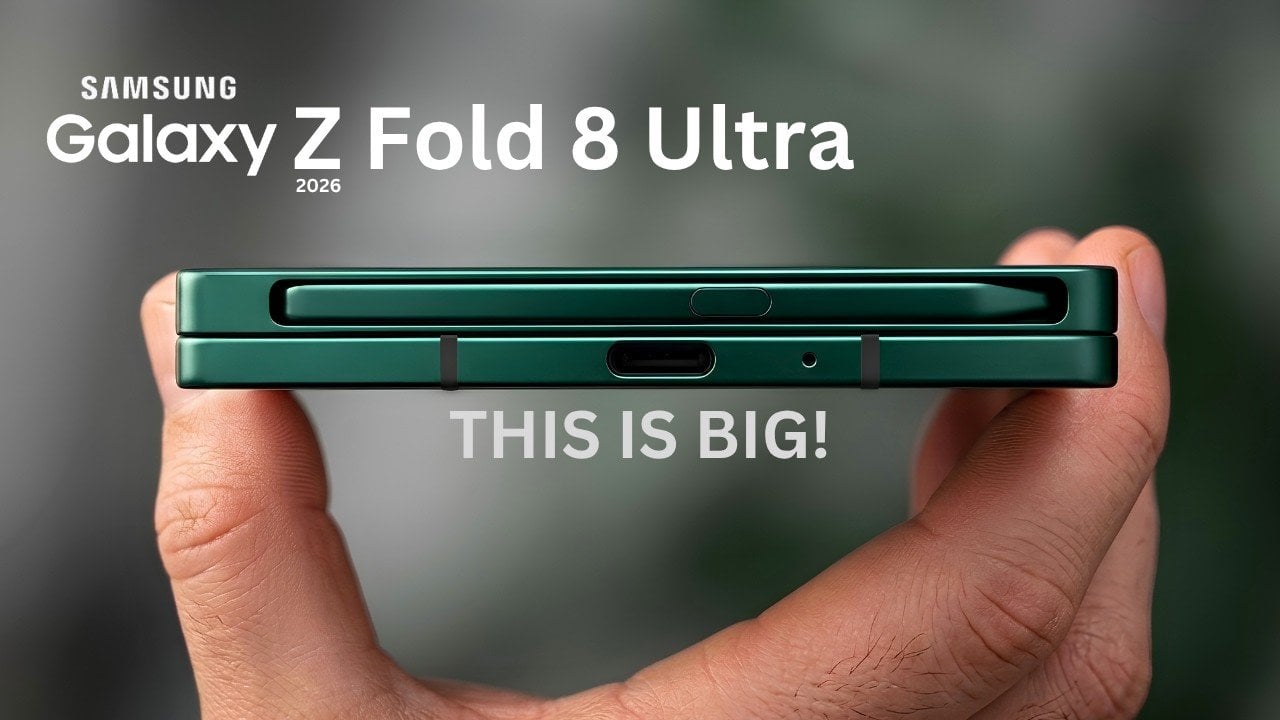
TL;DR
Samsung's FCC filings confirm a three-model Galaxy Z Fold 8 lineup for 2026, headlined by a new "Wide" variant with a larger cover display. This marks the first time Samsung has offered multiple foldable form factors in a single generation, directly challenging competitors like Google and OnePlus on screen real estate.
What Happened
Geeky Gadgets reported on Wednesday, June 17, 2026, that Samsung's Galaxy Z Fold 8 series has appeared in FCC filings, revealing not one but three distinct models: the standard Z Fold 8, a Z Fold 8 Ultra, and a new "Wide" variant with a significantly broader cover screen. The filings, which include model numbers SM-F958U, SM-F956U, and SM-F957U, indicate that Samsung is abandoning its single-flagship approach in favor of a tiered foldable strategy.
Key Facts
- The FCC filings list three Galaxy Z Fold 8 models: the standard Fold 8 (SM-F956U), the Fold 8 Ultra (SM-F958U), and the Fold 8 Wide (SM-F957U).
- The "Wide" variant is described as having a larger cover display than the standard Fold 8, likely exceeding the current 6.2-inch outer screen.
- The Ultra model is expected to feature improved camera hardware and a larger main display, possibly 8.0 inches or more.
- All three models are confirmed to support mmWave 5G, Wi-Fi 7, and UWB (Ultra-Wideband) connectivity.
- The filings were submitted to the U.S. Federal Communications Commission on June 15, 2026, with an expected launch window of late August 2026.
- This is the first time Samsung has offered more than two foldable models in a single generation since the Z Fold series began in 2019.
- The Z Fold 8 series will run One UI 7.0 based on Android 16, with Samsung's Galaxy AI suite deeply integrated.
Breaking It Down
The FCC filings reveal a strategic pivot for Samsung. For years, the company has offered a single premium foldable (the Z Fold) alongside a clamshell (the Z Flip). Now, with the Z Fold 8 lineup, Samsung is fragmenting its own flagship line into three distinct price and feature tiers. The "Wide" variant is the most intriguing addition: it directly targets a key complaint from users who found the narrow 22.5:9 aspect ratio of previous Z Fold cover screens impractical for typing and media consumption.
The "Wide" variant's cover display is expected to measure 6.5 to 6.7 inches — a 15-20% increase over the current 6.2-inch panel, bringing it closer to the dimensions of a standard slab phone like the Galaxy S25 Ultra. This could be the single most impactful change to the foldable form factor since the original Z Fold's launch.
The Ultra model, meanwhile, appears to be Samsung's answer to the Google Pixel Fold 2 and the OnePlus Open 2, both of which have pushed camera quality and display size in 2025–2026. By adding a dedicated Ultra tier, Samsung can now charge a premium — likely $2,199 or more — for the best camera system and largest screen, while keeping the standard Fold 8 at $1,799 and positioning the Wide variant somewhere in between.
This three-pronged approach carries risks. Samsung must manage inventory across three SKUs, each with different display assemblies and hinge mechanisms. The FCC filings show separate battery cell configurations for each model, suggesting different internal layouts. That means higher manufacturing complexity and potential supply chain bottlenecks. However, if executed well, it could allow Samsung to capture a wider range of foldable buyers — from productivity-focused professionals (Ultra) to mainstream upgraders (Wide) to value-conscious early adopters (standard).
What Comes Next
The FCC filings are a strong signal of an imminent launch, but several key details remain unconfirmed. Here is what to watch:
-
Official Samsung Unpacked Event (August 2026): Samsung typically holds its foldable launch event in late July or early August. Expect invitations to go out in mid-July, with the Z Fold 8 series, Z Flip 8, and Galaxy Watch 8 lineup all likely to debut together.
-
Pricing and Model Differentiation: The biggest open question is how Samsung will price the Wide variant. If it slots between the standard Fold 8 ($1,799) and Ultra ($2,199), it would land around $1,999. But if Samsung wants to undercut the competition, a $1,899 price point would put pressure on Google and OnePlus.
-
Carrier Exclusivity and Promotions: FCC filings often reveal carrier-specific variants. The SM-F957U (Wide) may launch as a T-Mobile or Verizon exclusive initially, similar to how previous Ultra models had limited distribution. Pre-order trade-in deals could reach $1,000 for older Z Fold devices.
-
Galaxy AI Features at Launch: Samsung's One UI 7.0 is expected to introduce new on-device AI features for the foldable form factor, including multi-window AI assistants and real-time translation optimized for the larger cover screen on the Wide model.
The Bigger Picture
This launch sits at the intersection of two major smartphone market trends: foldable diversification and AI-driven hardware differentiation. The foldable market is no longer a single "premium" category — it is splitting into sub-segments: ultra-premium (Ultra), mainstream foldable (standard), and format-optimized (Wide). Samsung's three-model strategy mirrors what Apple has done with the iPhone Pro lineup since 2020: offering a base model, a larger "Plus" variant, and a maxed-out "Pro Max" for the highest spenders.
At the same time, Galaxy AI is becoming the core differentiator for Samsung's hardware. The Z Fold 8 series will ship with on-device generative AI features that require the larger screens and improved thermal management of these new models. This creates a virtuous cycle: better hardware enables better AI, and better AI justifies the premium pricing. Competitors like Google with Tensor G5 and Qualcomm with Snapdragon 8 Gen 5 are racing to match this integration, but Samsung's head start in foldable AI features — such as real-time document translation across split-screen apps — gives it a tangible lead for at least one more generation.
Key Takeaways
- [Three-Model Strategy]: Samsung is launching the Z Fold 8, Z Fold 8 Ultra, and Z Fold 8 Wide, offering distinct screen sizes and features for the first time.
- [Wide Variant Focus]: The new "Wide" model addresses the long-standing criticism of narrow cover displays, with a likely 6.5–6.7 inch outer screen.
- [August 2026 Launch]: FCC filings point to a late August release, with official Unpacked invitations expected in mid-July.
- [AI as Differentiator]: Galaxy AI features in One UI 7.0 will be deeply integrated across all three models, leveraging the larger screens for multi-window productivity.