TL;DR
SanDisk has released an officially licensed 8TB NVMe SSD for the PS5 priced at $3,800 — more than the cost of six standard PS5 consoles combined. This price point signals that high-capacity internal storage for current-gen consoles remains a luxury market, even as game file sizes continue to balloon past 200GB per title.
What Happened
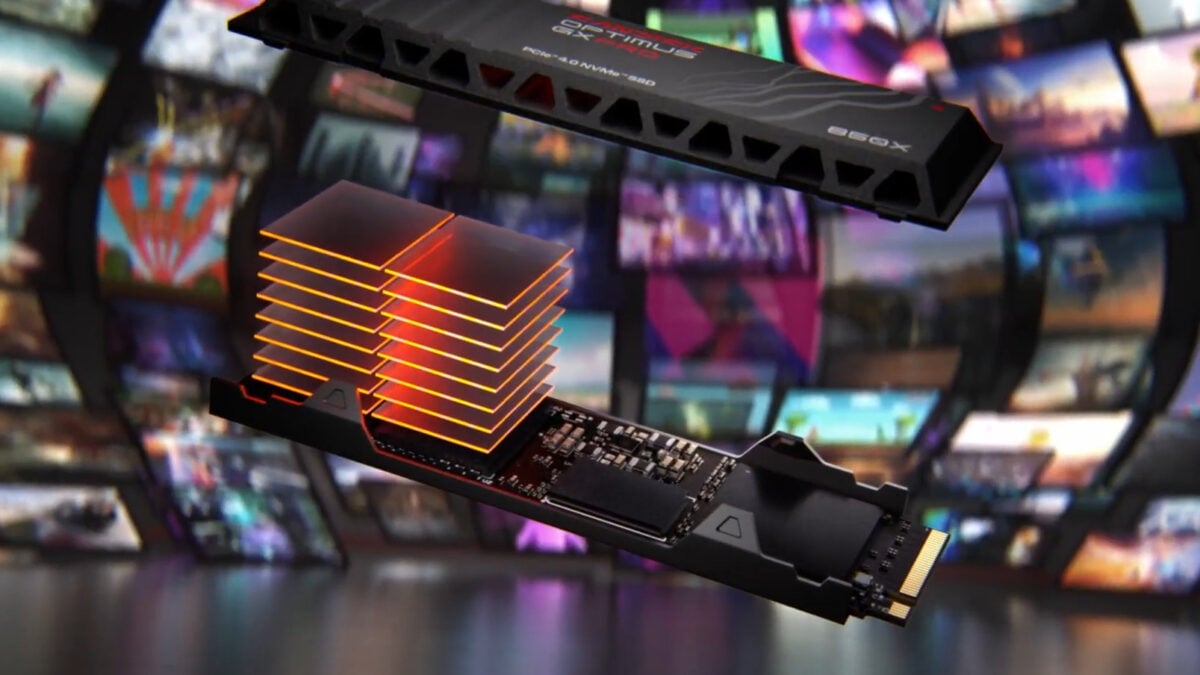
On Tuesday, June 16, 2026, SanDisk announced the immediate availability of its officially licensed 8TB PS5 SSD — a massive internal storage upgrade that costs $3,800, or roughly $475 per terabyte. The drive, which carries official PlayStation licensing and a heatsink designed specifically for the PS5's expansion bay, is the highest-capacity internal SSD ever released for Sony's console, but its price has drawn sharp criticism from gamers and industry analysts alike.
Key Facts
- The 8TB SanDisk SSD is an officially licensed PS5 accessory, meaning it is guaranteed to meet Sony's speed and compatibility requirements for the internal M.2 expansion slot.
- The $3,800 price tag is $900 more than buying six standard $480 PS5 consoles and combining their internal storage.
- SanDisk's drive uses PCIe Gen 4 technology with read speeds of 7,300 MB/s, exceeding Sony's minimum requirement of 5,500 MB/s.
- The SSD includes a pre-installed heatsink designed to fit the PS5's expansion bay dimensions — a necessity that many third-party drives lack.
- For comparison, a 4TB officially licensed PS5 SSD from Seagate currently retails for approximately $800, making SanDisk's 8TB drive 4.75x more expensive for double the capacity.
- The drive is available for purchase immediately through SanDisk's website and select retailers, with no announced production limits.
- Game file sizes on PS5 now routinely exceed 200GB for major titles, with some games like Call of Duty installs requiring over 300GB of storage.
Breaking It Down
The core question this product raises is not whether 8TB of storage is useful — it absolutely is, given that a fully loaded PS5 can hold only about a dozen modern AAA games on its standard 825GB drive. The question is whether $3,800 is a defensible price for a storage device that costs less than $200 in raw NAND flash components.
$3,800 buys you a PS5, a 4TB SSD, a 65-inch 4K TV, and still leaves $1,000 for games — yet SanDisk is asking that same sum for a single internal drive.
The premium pricing reflects three factors. First, official PlayStation licensing adds a significant markup — Sony takes a cut of every licensed accessory, and SanDisk passes that cost to consumers. Second, 8TB single-sided M.2 drives remain difficult to manufacture at high yields, especially when they must hit PCIe Gen 4 speeds. Third, SanDisk is capitalizing on zero competition at this capacity tier: no other company has yet announced an 8TB drive with official PS5 licensing.
The market dynamics here are instructive. Seagate's 4TB licensed drive costs roughly $800, or $200 per terabyte. SanDisk's 8TB drive costs $3,800, or $475 per terabyte — a 2.4x price premium per gigabyte over the 4TB option. This is not a linear scaling of manufacturing costs; it is a scarcity premium for the highest-capacity product in the category.
For context, a Samsung 990 Pro 8TB (an unlicensed, PC-focused drive) retails for approximately $1,800 — less than half SanDisk's price. The difference is entirely in the licensing, heatsink integration, and guaranteed compatibility that SanDisk offers. Whether that premium is worth $2,000 to a PS5 owner is an open question.
What Comes Next
The immediate fallout will likely be a wave of negative consumer sentiment, but the long-term trajectory depends on several factors:
-
Competitive response from Seagate and Western Digital: Both companies have licensed PS5 SSD lines. If Seagate announces an 8TB drive within the next 6–12 months at a price closer to $2,500, SanDisk will be forced to cut prices or face irrelevance in the premium tier.
-
Sony's own storage strategy: Sony has not released a first-party internal SSD for the PS5. If the company begins offering larger-capacity official drives through its PlayStation Direct store, it could undercut licensed third-party products entirely.
-
PCIe Gen 5 adoption in the PS5 Pro: Rumors persist of a PS5 Pro model arriving in late 2027. If that console supports faster Gen 5 drives, the entire current generation of Gen 4 SSDs — including SanDisk's 8TB — could face obsolescence within 18 months.
-
Price drops on raw NAND: The global NAND flash market has seen oversupply in 2025–2026, with spot prices falling. If this trend continues, SanDisk's $3,800 price will become increasingly indefensible as component costs decline.
The Bigger Picture
This story sits at the intersection of two major technology trends. The first is Storage Inflation — the relentless expansion of game file sizes driven by 4K textures, high-fidelity audio, and uncompressed assets. Where a PS4 game averaged 40GB, a PS5 game now routinely exceeds 150GB. This creates a structural demand for larger SSDs that manufacturers are only beginning to address.
The second trend is Licensing as a Tax — the practice of hardware makers charging premiums for "official" accessories that offer no technical advantage over unlicensed alternatives. SanDisk's $3,800 drive is functionally identical to a $1,800 Samsung 990 Pro, except for the PlayStation logo and a heatsink. The $2,000 difference is a licensing tax that Sony and SanDisk are splitting. As consumers become more price-sensitive in a post-pandemic economy, this model faces growing resistance from savvy buyers who will simply install an unlicensed drive and accept the risk of occasional compatibility warnings.
Key Takeaways
- [Price Shock]: At $3,800, SanDisk's 8TB PS5 SSD costs more than six PS5 consoles, making it a luxury product for the wealthiest enthusiasts only.
- [Capacity vs. Cost]: The drive costs $475 per terabyte, more than double the per-TB price of Seagate's 4TB licensed drive, reflecting a scarcity premium for the highest-capacity tier.
- [Licensing Premium]: The official PlayStation license adds roughly $2,000 to the price versus an equivalent unlicensed SSD, raising questions about the value of "official" accessories.
- [Market Vulnerability]: The product's pricing is defensible only until a competitor releases an 8TB licensed drive at a lower price — which is likely within 12 months given NAND oversupply trends.