TL;DR
Researchers have developed a new method to recycle lead from bullets and other waste into high-purity lead iodide, a critical compound for next-generation perovskite solar panels. This innovation addresses a dual crisis: the growing toxic waste from spent ammunition and a looming supply chain bottleneck for a material essential to the clean energy transition.
What Happened
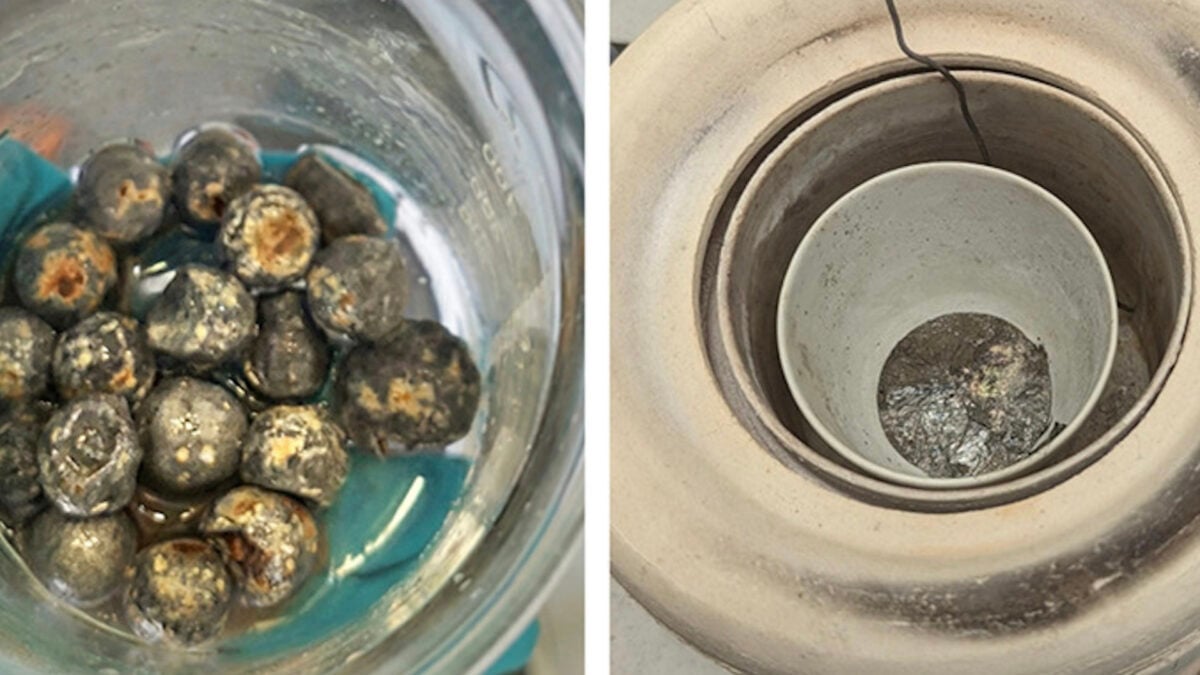
In a laboratory at the University of Michigan, a team led by materials scientist Stephen Maldonado has successfully transformed a centuries-old environmental hazard into a cornerstone of future green technology. Their newly published process extracts and purifies lead from spent bullets and other waste sources to synthesize lead iodide, the high-purity precursor required for manufacturing efficient perovskite solar cells. This breakthrough directly confronts two pressing issues: the persistent problem of lead contamination and the urgent need for scalable, sustainable materials for renewable energy.
Key Facts
- The research team is led by Professor Stephen Maldonado at the University of Michigan, with their findings detailed in a recent paper in the Journal of the American Chemical Society.
- The core innovation is a closed-loop electrochemical process that converts lead (Pb) from waste into pure lead iodide (PbI₂), a compound with a market value approximately 60 times higher than raw lead.
- The primary waste feedstock is spent bullets and shotgun pellets, which contribute an estimated 60,000 metric tons of lead to the environment annually in the United States from hunting and shooting ranges alone.
- The resulting perovskite solar cells are a next-generation photovoltaic technology that has achieved lab efficiencies over 26%, rivaling traditional silicon, but their mass production is constrained by raw material supply.
- Current global production of new, high-purity lead iodide is limited, creating a critical supply chain vulnerability for the rapidly scaling perovskite industry.
- The process also successfully recycles lead from historical industrial waste, including samples from the Superfund site in Herculaneum, Missouri, a town formerly dominated by a lead smelter.
- This method represents a significant shift from traditional, often polluting, pyrometallurgical lead smelting, offering a cleaner, more targeted recycling pathway.
Breaking It Down
The University of Michigan team’s work is more than a clever recycling trick; it is a strategic intervention at the nexus of environmental remediation and advanced manufacturing. By targeting spent ammunition, the research tackles a diffuse and logistically challenging waste stream. Unlike lead-acid batteries, which have a mature recycling industry, bullets and pellets are often scattered, buried, or left in the environment, slowly leaching toxic metal into soil and groundwater. This process creates a compelling economic incentive to recover that lead, transforming a clean-up cost into a high-value commodity.
The team’s electrochemical method produces lead iodide with a purity exceeding 99.99%, a grade essential for high-performance perovskite films.
This purity level is non-negotiable for the semiconductor-grade materials used in photovoltaics. Even minute impurities can drastically reduce the efficiency and stability of perovskite solar cells, which is why manufacturers currently rely on expensively synthesized lead iodide from virgin sources. By proving that waste-derived lead can meet this exacting standard, Maldonado’s team has de-risked a major feedstock concern for the solar industry. It validates a circular economy model where the toxic legacy of the 19th and 20th centuries literally powers the clean energy infrastructure of the 21st.
The choice to also process lead from the Herculaneum Superfund site is symbolically and technically profound. It demonstrates the method’s robustness against complex, real-world contaminants and opens the door to remediating some of the most intractably polluted sites in the country. From a policy perspective, this creates a potential new funding mechanism for environmental clean-ups, where the value of the recovered material could offset remediation costs. The research fundamentally reframes lead not just as a hazardous waste, but as a strategic energy-critical element that is too valuable to lose.
What Comes Next
The transition from laboratory proof-of-concept to industrial-scale application presents the next set of challenges and milestones. The research is poised at a critical juncture where engineering and economics will determine its real-world impact.
- Pilot Plant Development and Scaling (2026-2027): The immediate next step is to scale the electrochemical process from gram quantities in a lab to kilogram-scale continuous production. This will require partnerships with engineering firms and likely the establishment of a pilot plant to refine the process economics and energy balance.
- Industry Partnerships and Qualification Testing (Late 2027-2028): Major perovskite solar cell manufacturers, such as Oxford PV or Swift Solar, must test and qualify the waste-derived lead iodide in their own production lines. Their certification that it performs identically to virgin material is essential for commercial adoption.
- Regulatory and Supply Chain Integration (2028-2030): Successful qualification will lead to the development of formal supply chains. This involves creating collection logistics for spent ammunition and forging agreements with waste management companies and potentially government agencies responsible for Superfund sites. Regulatory frameworks for handling and transporting the recycled precursor will also need to be solidified.
- Market Impact Assessment (2030+): As production scales, its effect on the global lead iodide market will become clear. If successful, it could stabilize prices, reduce supply volatility for perovskite manufacturers, and begin to measurably reduce the environmental lead burden from ballistic waste.
The Bigger Picture
This development is a prime example of the circular economy for critical materials, a trend accelerating across cleantech. As nations push for energy independence and decarbonization, securing supply chains for key minerals like lithium, cobalt, and rare earths has become a geopolitical priority. This research demonstrates that the solution isn't always new mining; it can be urban mining, turning waste stockpiles into strategic reserves. It directly reduces the need for primary lead mining, an industry with a significant environmental footprint.
Furthermore, it underscores the convergence of environmental tech and energy tech. The climate crisis and the pollution crisis are increasingly being addressed with unified solutions. The perovskite solar industry, in its quest for a sustainable launch, cannot afford to be built on a foundation of dirty mining or insecure supplies. By solving a pollution problem to enable a clean energy solution, this work embodies the integrated systems-thinking required for a genuine green transition. It also highlights a broader trend of electrochemical processing replacing traditional, energy-intensive pyrometallurgy, offering more precise and less polluting pathways for material synthesis and recycling.
Key Takeaways
- Strategic Recycling: A new electrochemical process transforms toxic lead waste into ultra-pure lead iodide, a critical material for next-generation perovskite solar panels.
- Dual Benefit: The innovation simultaneously addresses a persistent environmental contamination issue and mitigates a looming supply chain bottleneck for the solar industry.
- Proven Potential: The method has successfully processed lead from both spent ammunition and Superfund site soil, producing material that meets the exacting 99.99% purity standard for high-efficiency photovoltaics.
- Path to Scale: The technology’s real-world impact hinges on successful pilot-scale development, qualification by solar manufacturers, and the establishment of new collection and processing supply chains over the next five years.


