TL;DR
Sony’s upcoming Bravia 9 and Bravia 8 TVs will be the company’s last premium standalone television sets before its home theater division merges with TCL Electronics Holdings in 2027. The move marks the end of Sony’s 58-year history as an independent TV manufacturer and signals a fundamental restructuring of the global display market.
What Happened
Sony unveiled its Bravia 9 and Bravia 8 flagship televisions on May 30, 2026, in Tokyo — sets the company confirmed will be its last premium models produced entirely in-house before its home theater business merges with TCL Electronics Holdings next year. The announcement effectively ends Sony’s 58-year run as a stand-alone TV maker, a business that once defined the company’s consumer electronics identity.
Key Facts
- Sony’s home theater division will merge with TCL Electronics Holdings in 2027, creating a joint entity that will control roughly 22% of the global TV market by unit volume.
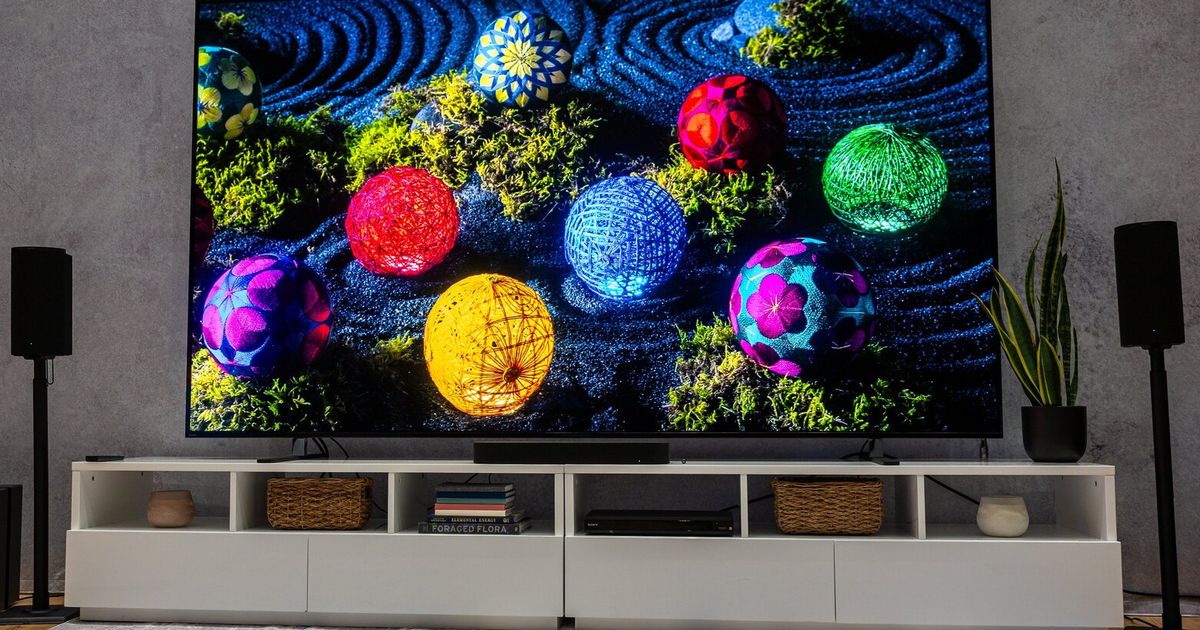
- The Bravia 9 is an 85-inch Mini-LED model priced at $6,499, while the Bravia 8 is a 77-inch OLED set at $4,999 — both shipping in July 2026.
- Sony’s TV business has posted operating losses in four of the last six fiscal years, with the division losing approximately ¥28 billion ($185 million) in fiscal 2025 alone.
- TCL currently holds 14.3% of the global TV market by shipments, while Sony holds 6.8% — the combined entity will trail only Samsung’s 19.5% share.
- The merger agreement, signed in January 2026, gives Sony a 35% equity stake in the new joint venture, with TCL holding the remaining 65%.
- Sony will retain the Bravia brand for the joint venture’s premium product lines, but all manufacturing will shift to TCL’s facilities in China and Vietnam.
- The Bravia 9 and Bravia 8 feature Sony’s proprietary XR Cognitive Processor X2, a chip that will not be used in any future Sony-branded TVs after 2027.
Breaking It Down
Sony’s exit from stand-alone TV manufacturing represents a stunning reversal for a company that once dominated the premium display market. As recently as 2018, Sony commanded 12.4% of the global TV market by revenue and was the undisputed leader in the $2,000+ segment, with a 31% share. The Bravia brand became synonymous with picture quality, particularly in OLED technology, where Sony’s processing algorithms were widely considered best-in-class.
The financial math simply stopped working. Sony’s TV division has been bleeding cash for years, unable to compete with TCL and Hisense on price while simultaneously losing its technological edge to LG Display and Samsung Display in panel innovation. Sony never owned its own panel factories, instead buying screens from LG Display for its OLED models and from AU Optronics for its LCD sets. This left Sony with a cost structure that was 18-22% higher than TCL’s vertically integrated operation, which manufactures its own panels through CSOT (China Star Optoelectronics Technology).
Sony’s TV business lost ¥28 billion ($185 million) in fiscal 2025 alone, while TCL’s display division posted ¥12 billion ($79 million) in operating profit during the same period.
The asymmetry is stark. TCL’s scale advantage — it shipped 28.5 million TV sets globally in 2025 versus Sony’s 9.1 million — gives it procurement and manufacturing leverage Sony simply could not match. The joint venture will combine TCL’s cost-efficient panel production and massive volume with Sony’s brand cachet and image processing expertise. For Sony, the deal is a lifeline: it sheds a money-losing hardware business while keeping its hand in the premium TV market through branding and licensing. For TCL, it gains instant credibility in the high-end segment, where its own brand has struggled to command prices above $2,000.
What Comes Next
The next 18 months will determine whether the Sony-TCL joint venture can execute on its ambitious roadmap. Key developments to watch include:
-
July 2026 Bravia 9 and Bravia 8 launch: These sets must sell well — Sony is targeting 350,000 units combined in the first quarter — to prove the brand still has premium pull before the transition. Pre-orders open June 15.
-
Q1 2027 merger completion: Regulatory approvals are expected from China’s SAMR, the European Commission, and the U.S. CFIUS. The deal faces minimal antitrust risk given the combined entity will still trail Samsung, but CFIUS review could be protracted due to TCL’s Chinese ownership.
-
2028 product roadmap reveal: The joint venture is expected to announce its first co-developed TVs at CES 2028 in Las Vegas. These will likely feature TCL-made QD-OLED panels with Sony’s XR processing — a combination that could challenge Samsung’s dominance in the ultra-premium segment.
-
Sony’s pivot to imaging and sensors: By mid-2027, Sony will redirect the 1,200 engineers currently assigned to TV development toward its image sensor and professional cinema camera divisions, which generated ¥1.6 trillion ($10.6 billion) in revenue in fiscal 2025.
The Bigger Picture
Sony’s retreat from TV manufacturing is part of a broader deconsolidation of Japanese consumer electronics. Panasonic sold its TV business to Hisense in 2022, Toshiba exited in 2018, and Sharp was acquired by Foxconn in 2016. Only Sony and Mitsubishi Electric remain as Japanese-owned TV brands, and Mitsubishi has not released a new consumer TV since 2023. The country that invented the transistor radio and the Walkman has now ceded the entire display manufacturing ecosystem to Chinese and South Korean companies.
The merger also accelerates the vertical integration trend in display technology. TCL, Samsung, and LG now all control their own panel production through CSOT, Samsung Display, and LG Display respectively. Sony’s reliance on external panel suppliers was always a structural weakness, and the joint venture finally solves it — but at the cost of Sony’s independence. The new entity will control everything from raw glass substrate to final assembly, a model that has proven essential for margin protection in a commodity business where average selling prices have fallen 42% over the past decade.
Key Takeaways
- [Sony exits TV manufacturing]: After 58 years as an independent TV maker, Sony is merging its home theater division with TCL in 2027, with the Bravia 9 and Bravia 8 being its last fully in-house models.
- [TCL gains premium access]: TCL, which held 14.3% of the global TV market in 2025, gains Sony’s brand equity and image processing technology to compete in the $2,000+ segment where it has historically failed.
- [Cost structure was fatal]: Sony’s lack of in-house panel production left its TV business with 18-22% higher costs than TCL, resulting in ¥28 billion in operating losses in fiscal 2025.
- [Japanese electronics retreat]: Sony’s exit leaves no major Japanese-owned TV manufacturers, completing a two-decade decline of the country’s consumer display industry to Chinese and Korean dominance.
