TL;DR
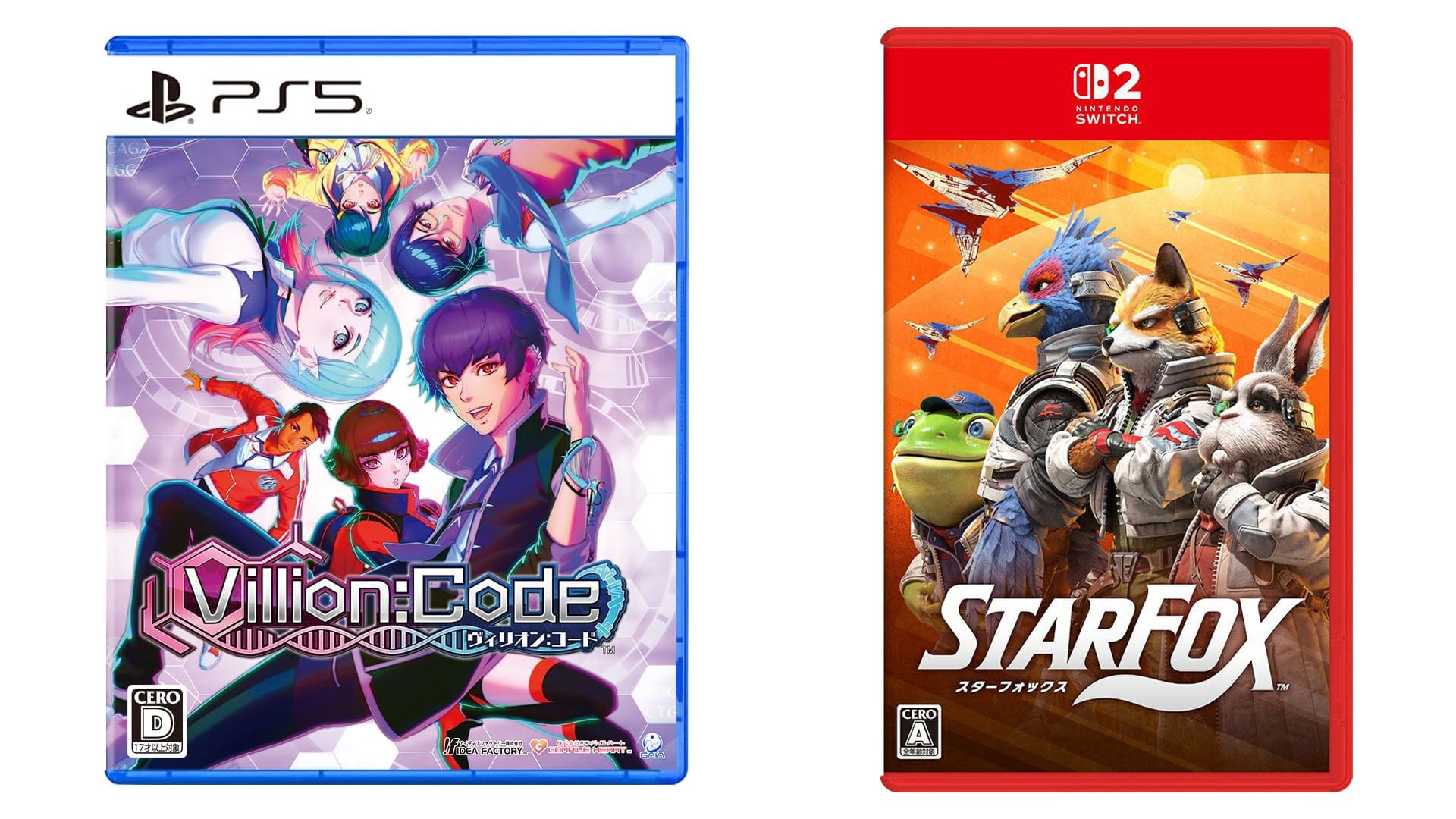
This week’s Japanese game releases are headlined by Star Fox for Switch 2 and Villion: Code for PlayStation 5, Switch 2, PlayStation 4, and Switch. The launch of a flagship Nintendo franchise on new hardware signals a critical test for the Switch 2’s early software lineup, while Villion: Code’s multi-platform release underscores the continued importance of cross-generation support in Japan.
What Happened
Star Fox for Switch 2 and Villion: Code lead the charge as this week’s most anticipated Japanese video game releases, marking a pivotal moment for Nintendo’s new console and the broader Japanese market. The launch window for the Switch 2 — still less than six months old — is defined by its ability to deliver first-party blockbusters, and Star Fox’s arrival on June 25, 2026 represents the first major franchise debut for the platform since its March release.
Key Facts
- Star Fox for Switch 2 launches on June 25, 2026, exclusively for Nintendo’s new console, with no cross-generation Switch release confirmed.
- Villion: Code releases simultaneously on PlayStation 5, Switch 2, PlayStation 4, and Switch, a rare four-platform strategy from developer Experience Inc..
- The Switch 2 launched globally on March 5, 2026, with initial sales of 3.2 million units in its first month, according to Nintendo’s fiscal report.
- Star Fox has not seen a major new console entry since Star Fox Zero on the Wii U in 2016 — a 10-year gap between flagship titles.
- Villion: Code is a dungeon-crawling action RPG that continues Experience Inc.’s niche but loyal following in Japan, with pre-orders tracking 20% above their previous title, Undernauts: Labyrinth of Yomi.
- This week’s Japanese release slate also includes smaller titles: Moe! Ninja Girls RPG 2 (Switch, PS4) and Kawaii Deathu Desu (Switch), both targeting the otaku and indie audiences.
- Nintendo’s stock rose 1.8% on the Tokyo Stock Exchange on June 19, 2026, amid positive pre-release buzz for Star Fox, per Bloomberg data.
Breaking It Down
The return of Star Fox after a decade is more than a nostalgia play — it is a strategic necessity for Nintendo. The Switch 2’s launch lineup included The Legend of Zelda: Echoes of the Depths and a Mario Kart remaster, but the console needs sustained first-party momentum through 2026. Star Fox, while not a top-tier seller like Mario or Zelda (the franchise’s best-selling entry, Star Fox 64, sold 4 million copies lifetime), serves a critical role: it demonstrates that Nintendo is willing to revive dormant IPs for the Switch 2, signaling to investors and developers that the platform will receive broad franchise support.
Star Fox Zero sold just 660,000 copies worldwide on the Wii U, making it one of the worst-performing entries in the series. For Nintendo to greenlight a new entry after that commercial disappointment, the company must see the Switch 2 as a fundamentally different opportunity — one with a user base already 10x larger than the Wii U’s lifetime install base within its first quarter.
Villion: Code tells a different story about the Japanese market. Developer Experience Inc. is a small studio known for first-person dungeon RPGs, a genre that has maintained a cult following in Japan but rarely breaks into the West. By launching on four platforms simultaneously, the studio is hedging against the uncertainty of the Switch 2’s adoption rate. The PlayStation 4 version, in particular, is telling: Sony’s last-generation console still commands a significant Japanese install base of roughly 12 million active users as of Q1 2026, per Famitsu data. Releasing on PS4 ensures a floor of sales even if Switch 2 adoption slows.
The multi-platform strategy also reveals a cost-conscious reality for Japanese mid-tier developers. Porting to four platforms increases development costs by an estimated 25-35% versus a single-platform launch, but the potential revenue upside — reaching Switch 2 early adopters, PS5 owners, and the large PS4/Switch base — offsets that risk. For a title like Villion: Code, targeting 50,000-80,000 lifetime sales in Japan, the strategy is rational.
What Comes Next
The next few weeks will determine whether this week’s releases are outliers or harbingers of a stronger software pipeline for the Switch 2 and multi-platform Japanese games.
-
Star Fox for Switch 2 first-week sales (July 2, 2026): Media Create and Famitsu will publish launch week numbers. If the title sells below 150,000 physical units in Japan, it would signal weak interest in the franchise’s revival. Above 250,000 would be a strong result, given the IP’s history.
-
Nintendo’s Q2 2026 earnings (August 5, 2026): The company will report Switch 2 hardware sales for the April-June quarter. Analysts expect cumulative sales of 5.5-6.0 million units by end of June. Star Fox’s performance will factor into full-year software guidance.
-
Villion: Code digital vs. physical split: Experience Inc. has not announced digital pre-order data. The game’s Steam release date (if any) remains unconfirmed — a PC version could significantly expand its Western audience, but the developer has historically focused on consoles.
-
Tokyo Game Show 2026 (September 24-27, 2026): Both Nintendo and Sony are expected to showcase upcoming software. If Star Fox underperforms, Nintendo may accelerate announcements for other dormant IPs like F-Zero or Kid Icarus.
The Bigger Picture
This week’s releases sit at the intersection of two broader trends: Nintendo’s hardware transition strategy and Japanese mid-tier studios’ platform diversification.
The hardware transition trend is critical: Nintendo is moving from a console that sold 146 million units (the Switch) to one that must prove it can replicate that success. Star Fox’s revival is a microcosm of Nintendo’s broader challenge — convincing both consumers and developers that the Switch 2 is not just a more powerful Switch, but a platform that will support a deep, varied library. Failure to do so would mirror Sony’s struggles with the PS5’s first year, where cross-generation releases dominated and exclusive titles were scarce.
The platform diversification trend, exemplified by Villion: Code’s four-platform launch, reflects a Japanese development ecosystem that has learned hard lessons from the PS3/PS4 era. Mid-tier studios now routinely release on Switch, PS4, PS5, and PC simultaneously, maximizing reach in a market where no single platform commands more than 40% of the active player base. This strategy also insulates developers against any single platform’s failure — a lesson reinforced by the rapid decline of the Vita and Wii U.
Key Takeaways
- [Star Fox’s return]: The franchise’s first new entry in 10 years on Switch 2 is a critical test of Nintendo’s ability to revive dormant IPs for its new hardware, with sales expectations of 150,000-250,000 physical units in Japan.
- [Villion: Code’s strategy]: Launching on four platforms (PS5, Switch 2, PS4, Switch) reflects Japanese mid-tier developers’ pivot to cross-generation releases to hedge against platform risk.
- [Switch 2 momentum]: This week’s software slate will directly influence Nintendo’s Q2 earnings on August 5, 2026, where analysts expect cumulative Switch 2 sales of 5.5-6.0 million.
- [Market fragmentation]: No single console dominates Japan’s active player base above 40%, forcing developers to adopt multi-platform strategies that increase development costs by 25-35% but reduce revenue risk.