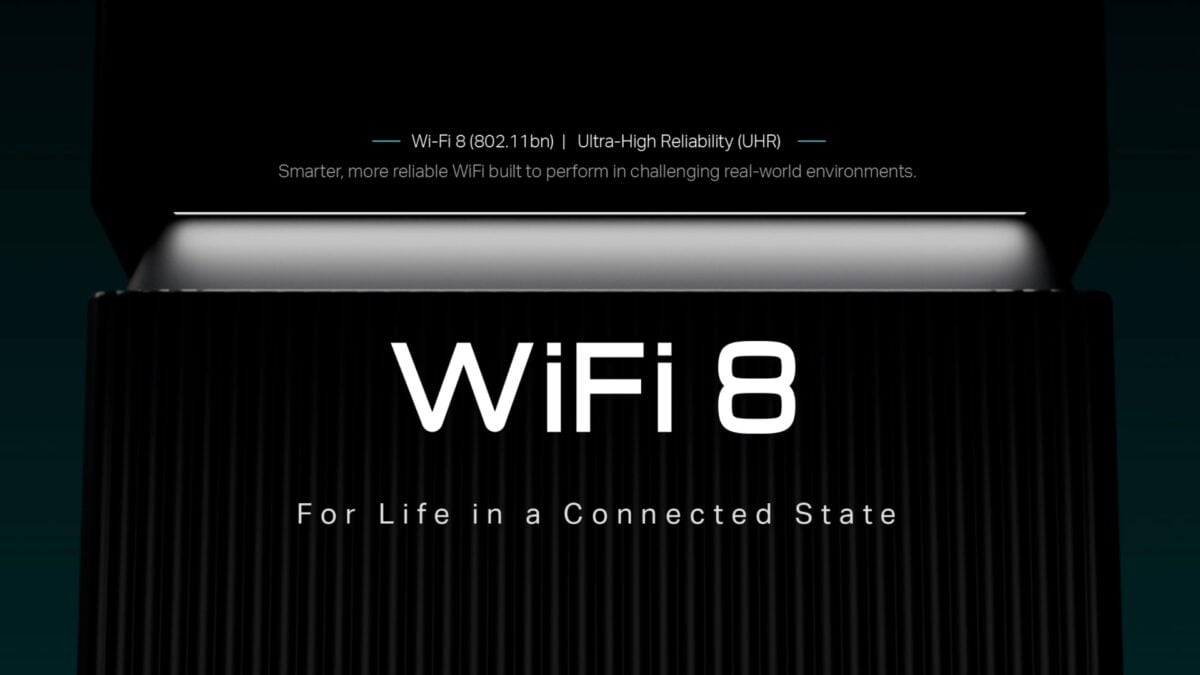
TL;DR
TP-Link is leapfrogging the industry by announcing plans to ship its first Wi-Fi 8 router in October 2026, skipping the typical multi-year gap between standards. This move pressures competitors like Netgear and Asus to accelerate their own roadmaps, and forces consumers to decide whether early adoption is worth the premium over still-maturing Wi-Fi 7 hardware.
What Happened
On Friday, May 29, 2026, networking giant TP-Link announced it will launch its first Wi-Fi 8 router in October 2026 — a full 16 months before the IEEE is expected to ratify the official 802.11bn standard. The company’s decision to pre-empt the formal certification process marks an aggressive bid to dominate the next generation of home and enterprise wireless networking, even as Wi-Fi 7 devices are still rolling out to mass-market consumers.
Key Facts
- TP-Link plans to ship its first Wi-Fi 8 router in October 2026, according to a report from Gizmodo published on May 29, 2026.
- The new standard, formally designated IEEE 802.11bn, is not expected to be ratified until late 2027 or early 2028.
- Wi-Fi 8 promises theoretical peak speeds exceeding 40 Gbps, roughly double the maximum of Wi-Fi 7 (802.11be).
- The standard introduces Coordinated Spatial Reuse (CSR) technology, which allows multiple access points to transmit simultaneously on the same channel without interference, improving network efficiency by up to 25% in dense environments.
- TP-Link has not disclosed pricing, but early-adopter Wi-Fi 7 routers launched at $600–$1,200 in 2023–2024, suggesting a similar or higher premium for Wi-Fi 8 hardware.
- The announcement comes as Wi-Fi 7 adoption is still accelerating: IDC reported that Wi-Fi 7 device shipments grew 340% year-over-year in Q1 2026, but still represent less than 8% of total Wi-Fi-enabled devices worldwide.
- Major chipset suppliers Qualcomm, Broadcom, and MediaTek have not yet announced commercial silicon for Wi-Fi 8, raising questions about TP-Link’s supply chain readiness.
Breaking It Down
TP-Link’s announcement is a calculated gamble on being first to market in a standard that doesn’t yet exist. By committing to an October 2026 launch, the company is effectively telling the IEEE and its chipset partners: “We’ll ship the hardware; you finalize the spec around it.” This approach carries significant risk — if the final 802.11bn standard diverges materially from the draft TP-Link is building to, early routers could require firmware patches or, in the worst case, hardware revisions to maintain full compliance. Consumers who buy in October 2026 may find their devices are not fully interoperable with later-certified Wi-Fi 8 gear from other vendors.
The core innovation in Wi-Fi 8 — Coordinated Spatial Reuse (CSR) — could reduce latency in congested networks by up to 50% compared to Wi-Fi 7, according to early IEEE simulation data cited by industry analysts. This is the feature most likely to drive real-world adoption, not raw speed.
The speed numbers are impressive on paper — 40 Gbps is enough to download a 4K movie in under two seconds — but the real value of Wi-Fi 8 lies in efficiency, not raw throughput. CSR allows routers within range of each other (think apartment buildings, office floors, or stadiums) to coordinate their transmissions rather than competing for airtime. In Wi-Fi 6 and 7, overlapping networks degrade each other’s performance. Wi-Fi 8’s CSR turns that interference into a managed resource. For TP-Link, which sells heavily into the ISP and multi-dwelling unit market, this is the killer feature that justifies a pre-ratification launch.
The timing also reflects a strategic pivot. TP-Link has long competed on price and volume, but Wi-Fi 7 saw the company push into the premium segment with its Archer BE series, priced up to $800. A Wi-Fi 8 launch in 2026 allows TP-Link to establish itself as a technology leader rather than a low-cost follower — a brand repositioning that could command higher margins for years. The risk is that early adopters get burned by incompatibility, damaging the very brand equity the company is trying to build.
What Comes Next
The next 12–18 months will determine whether TP-Link’s pre-emptive strike succeeds or backfires. Several concrete milestones will shape the outcome:
-
IEEE 802.11bn Draft 1.0 (Expected Q4 2026–Q1 2027): The first official draft of the Wi-Fi 8 standard is due. If it closely matches the implementation TP-Link has built to, the company’s October 2026 launch will be validated. Major deviations could force costly firmware rewrites or hardware recalls.
-
Qualcomm and Broadcom Chipset Announcements (Late 2026–Early 2027): TP-Link needs silicon partners. If Qualcomm or Broadcom announce Wi-Fi 8 chipsets in mid-2026 that support the draft standard, TP-Link’s supply chain is credible. If not, the October launch may be a paper announcement with limited availability.
-
Wi-Fi Alliance Certification Program Launch (Mid-2027): The Wi-Fi Alliance typically begins certification 12–18 months before IEEE ratification. TP-Link’s router will need to pass these tests. A failure to gain certification would be a major reputational blow.
-
Competitor Responses (2026–2027): Netgear, Asus, and Ubiquiti are likely to announce their own Wi-Fi 8 plans within 6–12 months. Watch for Netgear’s Orbi line and Asus’s ROG Rapture series as bellwethers of how seriously competitors take TP-Link’s gambit.
The Bigger Picture
This story sits at the intersection of three broader trends. The first is accelerated standards adoption: as Wi-Fi becomes critical infrastructure for work, streaming, gaming, and IoT, companies are shortening the traditional 4–5 year upgrade cycle. Wi-Fi 7 was the first standard to see significant commercial deployment before ratification; Wi-Fi 8 is pushing that envelope further. The second trend is network densification: urban environments and smart homes are packing more devices into less spectrum. Wi-Fi 8’s CSR is a direct response to the fact that raw speed gains are hitting diminishing returns — the real bottleneck is now interference, not bandwidth.
The third, and perhaps most consequential, trend is the consumer upgrade trap. With Wi-Fi 7 still in its early adoption phase — less than 8% of devices support it as of Q1 2026 — TP-Link is asking consumers to leapfrog an entire generation of hardware. Most households have not yet upgraded to Wi-Fi 7, and many are still on Wi-Fi 6 or even Wi-Fi 5. A Wi-Fi 8 router in October 2026 will deliver its full benefits only when paired with Wi-Fi 8 client devices — smartphones, laptops, and tablets that are unlikely to appear in volume before 2028. Early adopters will pay a premium for a router whose headline features remain dormant for 12–18 months.
Key Takeaways
- [Pre-ratification gamble]: TP-Link is launching Wi-Fi 8 hardware 16+ months before the IEEE standard is finalized, accepting compatibility risk for first-mover advantage.
- [Efficiency over speed]: The real breakthrough in Wi-Fi 8 is Coordinated Spatial Reuse (CSR), which reduces interference in dense networks — not raw 40 Gbps throughput.
- [Ecosystem lag]: Wi-Fi 8 client devices (phones, laptops) won’t ship in volume until 2028, meaning early router buyers won’t see full benefits for 12–18 months.
- [Brand pivot]: TP-Link is using this launch to reposition from a value leader to a technology innovator, betting that early adoption risk is worth the premium positioning.
