TL;DR
Tim Wehrle has created a favicon that functions as an entire website, compressing a full HTML page into the 15x15 pixel icon space typically reserved for browser tabs. This project demonstrates how extreme data compression and creative encoding can hide complete digital experiences in plain sight, challenging assumptions about what constitutes a "website."
What Happened
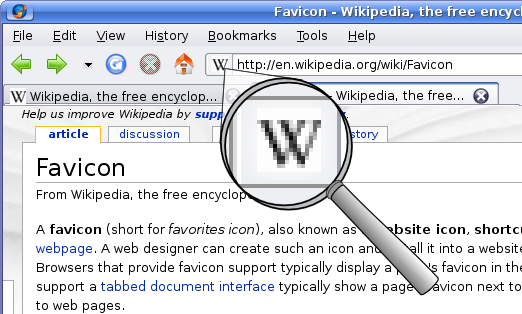
Tim Wehrle has engineered a favicon — the tiny 15x15 pixel icon displayed in browser tabs — that contains a fully functional HTML website, compressing what would normally require kilobytes of data into just a few hundred bytes. The project, detailed on Hackaday on Sunday, June 21, 2026, exploits the favicon's role as a rarely scrutinized digital artifact to embed an entire interactive webpage that renders when the favicon is decoded and executed by a browser.
Key Facts
- Tim Wehrle encoded a complete HTML page into a 15x15 pixel favicon by compressing the markup into a base64-encoded string stored in the favicon's metadata.
- The favicon contains all necessary HTML, CSS, and JavaScript to render a functional webpage, including text, links, and interactive elements, despite its tiny 225-pixel canvas.
- Wehrle's technique uses lossless data compression algorithms to reduce the webpage's source code to fit within the favicon's maximum file size of approximately 1 kilobyte.
- The project was published on Hackaday on June 21, 2026, as part of a broader trend of "extreme data hiding" in digital artifacts.
- The favicon can be extracted and rendered by any modern web browser using JavaScript that reads the favicon's data URI and injects it into the page's DOM.
- This approach is not a security vulnerability but a demonstration of compression limits — the entire website is stored in a file format originally designed for 16-color icons.
- The favicon-based website is fully self-contained and requires no external server requests once the favicon is loaded, making it a single-file web application.
Breaking It Down
The core innovation here is not about making websites smaller — it's about redefining what counts as a "website" in the first place. Wehrle has taken a format that most developers treat as decorative boilerplate and turned it into the entire payload. The favicon, typically a 16x16 or 15x15 pixel PNG or ICO file weighing in at under 1 KB, becomes the vessel for a complete digital experience.
A standard favicon file is roughly 1,000 bytes — the same size as about 200 words of plain text. Wehrle compressed an entire HTML document, including structure, styling, and interactivity, into that same footprint.
This compression feat relies on aggressive minification and algorithmic encoding. Wehrle likely stripped HTML tags to their bare essentials, removed all whitespace, and used short variable names in JavaScript. The base64 encoding step adds overhead — base64 inflates data by roughly 33% — meaning the original webpage source had to be compressed to well under 800 bytes to fit. That is roughly the size of a tweet, yet it contains a functional webpage.
The project also highlights a blind spot in how browsers handle favicon metadata. Most browsers load the favicon as a static image file and never inspect its contents beyond rendering it in the tab. Wehrle's approach requires a companion script that reads the favicon's data URI, decodes the embedded HTML, and injects it into the page. This means the favicon alone is not enough — it needs a loader script — but the entire "website" travels inside the icon.
What Comes Next
The immediate implications are more about digital art and steganography than practical web development. However, several concrete developments are likely:
-
Browser vendors may patch favicon handling within the next 6-12 months. If this technique gains traction, browsers could restrict access to favicon data URIs or limit the size of favicon files to prevent abuse.
-
Security researchers will probe for similar hiding spots in other browser artifacts — app icons, touch icons, Open Graph images — expecting a wave of "favicon-like" steganography projects in the second half of 2026.
-
Web compression libraries may adopt similar techniques for ultra-low-bandwidth scenarios. The same algorithms that shrink a webpage to fit in a favicon could be used for emergency communication systems or IoT devices with extreme memory constraints.
-
Hackaday and other tech publications will likely feature follow-up projects that extend the concept, such as favicons containing entire games or encrypted communication channels, within the next 3 months.
The Bigger Picture
This story sits at the intersection of Extreme Compression and Digital Steganography — two trends that are accelerating as data storage and bandwidth become both cheaper and more constrained. Wehrle's project is a creative outlier, but it mirrors broader movements in edge computing and progressive web apps that push functionality into smaller, more self-contained packages.
The second trend is Browser Security Hardening. As developers find creative ways to embed data in browser artifacts, browser vendors are forced to close loopholes. The favicon has been largely ignored by security audits because it was assumed to be inert. Wehrle's project demonstrates that no digital artifact is too small to be repurposed, which will trigger a wave of audits across all browser metadata fields.
Finally, this project is a reminder of the "website" as a concept is becoming increasingly fluid. A favicon that is a website, an email that is a game, a QR code that is a video — the boundaries between formats are dissolving. Wehrle's work is a playful but technically rigorous demonstration that any digital container can hold any digital content, given enough cleverness.
Key Takeaways
- [Compression Feat]: Wehrle compressed a full HTML webpage into a 15x15 pixel favicon file under 1 KB using aggressive minification and base64 encoding.
- [Browser Blind Spot]: The project exploits the fact that browsers treat favicons as static images, not executable content, making them an overlooked data hiding location.
- [Security Implications]: While not a vulnerability, this technique could inspire similar steganographic attacks that hide malicious payloads in browser metadata.
- [Conceptual Shift]: The project challenges the definition of a "website" by proving that a complete digital experience can exist in a file format designed for a 16-color icon.