TL;DR
Samsung is set to unveil the Galaxy Z Fold 8 and Z Fold 8 Ultra on July 26, 2026, with leaked specs and design details already generating massive online buzz. The Ultra model, in particular, promises a significantly thinner chassis and a larger cover display, marking the most aggressive hardware refresh in the Fold line since the Z Fold 3. This matters now because Samsung faces mounting pressure from Chinese rivals like Huawei and Xiaomi, who have already shipped foldables with slimmer profiles and integrated stylus support.
What Happened
On Saturday, June 27, 2026, tech outlet Geeky Gadgets published a comprehensive leak detailing the specifications and design of the upcoming Samsung Galaxy Z Fold 8 and Z Fold 8 Ultra, scheduled for a July 26 unveiling. The report sent shockwaves through the tech community, as it reveals Samsung is finally addressing the two most persistent complaints about its foldable line: bulk and battery life.
Key Facts
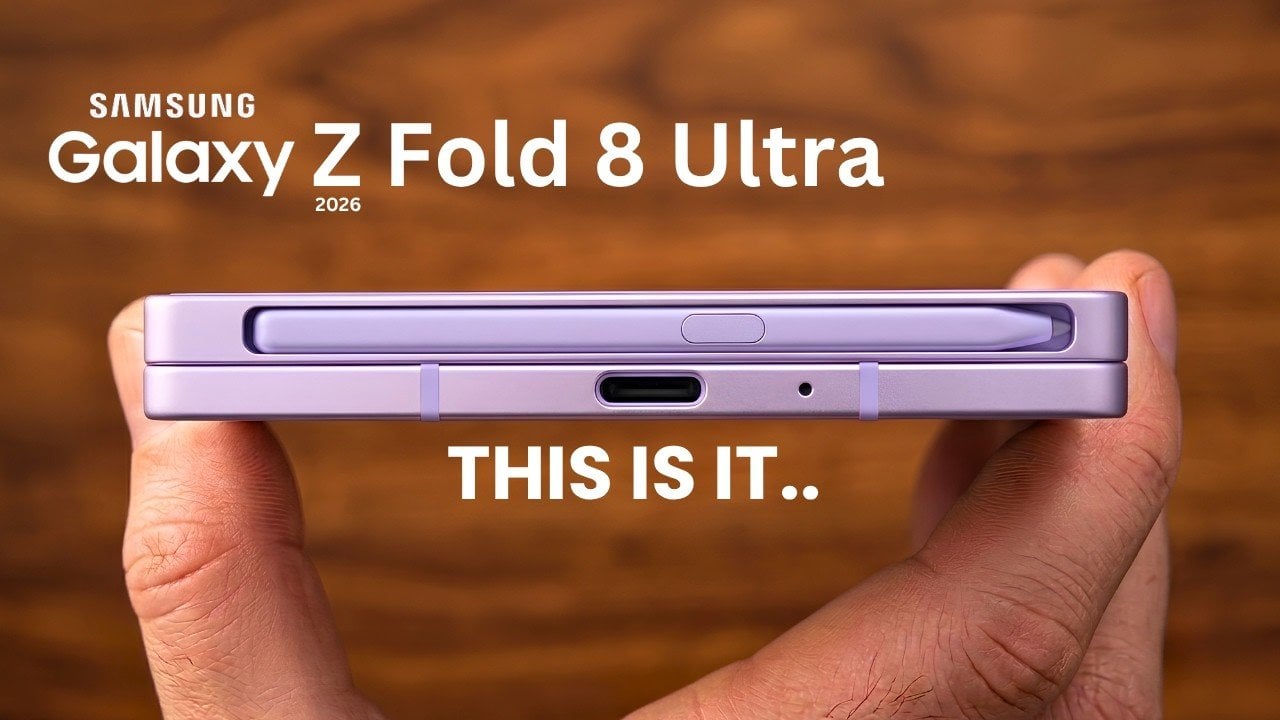
- The Galaxy Z Fold 8 Ultra is reported to be 8.6mm thick when folded, down from 13.4mm on the Z Fold 6, a 35% reduction in thickness.
- Both models will feature Samsung's Exynos 2600 chipset, built on a 3nm process, marking a full return to in-house silicon after the Snapdragon-only Z Fold 5 and 6.
- The Z Fold 8 Ultra will carry a 5,100 mAh battery, a 13% increase over the Z Fold 6's 4,400 mAh cell, while the standard Z Fold 8 gets a 4,800 mAh battery.
- The Ultra model is expected to include a 6.5-inch cover display (up from 6.2 inches on the Z Fold 6) and a 7.9-inch inner screen, with 2,600 nits peak brightness.
- Samsung will equip both phones with a 200MP primary camera sensor (the ISOCELL HP5), a first for the Fold line, matching the Galaxy S26 Ultra.
- The Z Fold 8 Ultra will support S Pen storage inside the hinge, a feature previously exclusive to the Galaxy Z Fold 6 Special Edition sold only in South Korea.
- Pricing is expected to start at $1,999 for the standard Z Fold 8 and $2,499 for the Z Fold 8 Ultra, a $300 increase over the Z Fold 6 launch price.
Breaking It Down
The most striking revelation from the Geeky Gadgets leak is the 35% reduction in folded thickness for the Z Fold 8 Ultra. Samsung has been losing ground to Huawei's Mate X6 (9.3mm folded) and Xiaomi's Mix Fold 5 (9.0mm folded) for two consecutive generations. The Z Fold 6, at 13.4mm, was widely criticized as a "brick" in pocket-friendly markets like Europe and China. By slimming down to 8.6mm, Samsung is not just catching up — it is leapfrogging the competition by a meaningful margin. This is not an iterative change; it is a structural re-engineering of the hinge mechanism, likely using a new waterdrop-style folding system that reduces the crease depth while allowing for a tighter fold radius.
The Z Fold 8 Ultra will pack a 200MP camera and a 5,100 mAh battery into a chassis that is 35% thinner than its predecessor — a density achievement that, if accurate, would be the most impressive in foldable engineering since the original Galaxy Fold launched in 2019.
The decision to return to Exynos 2600 silicon is equally significant. Samsung's relationship with Qualcomm has been strained since the Snapdragon 8 Gen 3 fiasco in 2024, where Samsung's custom Snapdragon for Galaxy chips offered marginal gains over standard versions. By moving to an in-house 3nm Exynos 2600, Samsung gains control over thermal management and power efficiency — critical for a foldable that must cool a 200MP sensor and a 7.9-inch 120Hz display simultaneously. The risk, however, is real: the Exynos 2200 in the Galaxy S22 series suffered from thermal throttling and poor battery life. Samsung's foundry division has since invested $15 billion in a new 3nm GAA (Gate-All-Around) facility in Taylor, Texas, and the Z Fold 8 will be the first public test of that investment.
The 200MP ISOCELL HP5 sensor marks a radical departure for the Fold line. Previous Z Fold models maxed out at 50MP (Z Fold 5 and 6), while the Galaxy S26 Ultra already uses a 200MP HP5. Samsung is effectively merging its camera flagship and foldable flagship into a single imaging platform. This means the Z Fold 8 Ultra will likely support 8K video at 30fps and 16-in-1 pixel binning for improved low-light performance — features that were previously impossible in the Fold's constrained thermal envelope.
What Comes Next
The July 26 unveiling is only the beginning. Here is what to watch in the months ahead:
-
July 26, 2026 — Galaxy Unpacked Event: Samsung will officially launch the Z Fold 8 and Z Fold 8 Ultra at its summer Unpacked in Seoul, South Korea. Pre-orders are expected to open immediately, with shipments starting August 6. The event will also likely feature the Galaxy Watch 8 and Galaxy Buds 4 Pro.
-
August–September 2026 — Global Rollout and Carrier Tests: The Z Fold 8 Ultra will launch in 40 markets simultaneously, including the US, UK, Germany, South Korea, and India. Verizon, T-Mobile, and AT&T in the US have already confirmed mmWave 5G support. Early durability tests from JerryRigEverything and PBKreviews will be critical — the thinner hinge must prove it can survive 200,000 folds as Samsung promises.
-
October 2026 — First Software Update: Samsung will release One UI 8.0 based on Android 17, specifically optimized for the new foldable form factor. The update is expected to include AI-powered multitasking features that automatically resize apps based on the fold angle — a feature Samsung demoed at MWC 2026 but delayed for the Z Fold 8 launch.
-
November 2026 — Competition Response: Huawei is expected to announce the Mate X7 at its November 2026 event, and Xiaomi will likely counter with the Mix Fold 6. Both companies have been aggressively pricing foldables below $1,500, and Samsung's $2,499 Ultra pricing will face intense scrutiny in China, where Samsung's foldable market share has fallen from 35% in 2023 to an estimated 18% in 2026.
The Bigger Picture
This story sits at the intersection of two major trends: Foldable Mainstreaming and Chipset Sovereignty. The foldable market is projected to ship 45 million units globally in 2026, up from 22 million in 2024, according to IDC. Samsung's move to a thinner, camera-focused Ultra model signals that the company believes foldables are no longer a niche experiment but a viable replacement for traditional slab flagships. The 35% thickness reduction is not just a spec — it is a statement that Samsung intends to win the pocketability war against Chinese rivals who have dominated that metric for two years.
The Chipset Sovereignty trend is equally critical. By returning to Exynos, Samsung is betting that its 3nm GAA process can deliver the 30% power efficiency gain it promised in 2024. If the Exynos 2600 fails — if it throttles in the Z Fold 8's thin chassis — Samsung will have no fallback for the Galaxy S27 series in 2027. The Z Fold 8 Ultra is therefore a litmus test for Samsung's entire semiconductor division, which has lost $8 billion in foundry revenue since 2023 to TSMC.
Key Takeaways
- [Thinner Design]: The Z Fold 8 Ultra at 8.6mm folded represents a 35% thickness reduction over the Z Fold 6, directly targeting complaints about bulk and portability.
- [Exynos Return]: Samsung is moving from Qualcomm Snapdragon to its own 3nm Exynos 2600 chipset, a high-stakes bet on in-house silicon for thermal and power control.
- [Camera Parity]: The 200MP ISOCELL HP5 sensor brings flagship photography to the Fold line for the first time, matching the Galaxy S26 Ultra.
- [Price Escalation]: Starting at $2,499, the Z Fold 8 Ultra is $300 more than the Z Fold 6, testing consumer willingness to pay a premium for thinner hardware and a larger battery.