TL;DR
Microsoft has officially launched "Xbox Mode" for Windows 11 PCs, a new system-level feature designed to replicate the console-like user experience on PC gaming rigs. Rolling out in select markets as of April 30, 2026, this move directly targets the friction between PC gaming's flexibility and console gaming's simplicity — and could reshape how 400 million Windows 11 users interact with their games.
What Happened
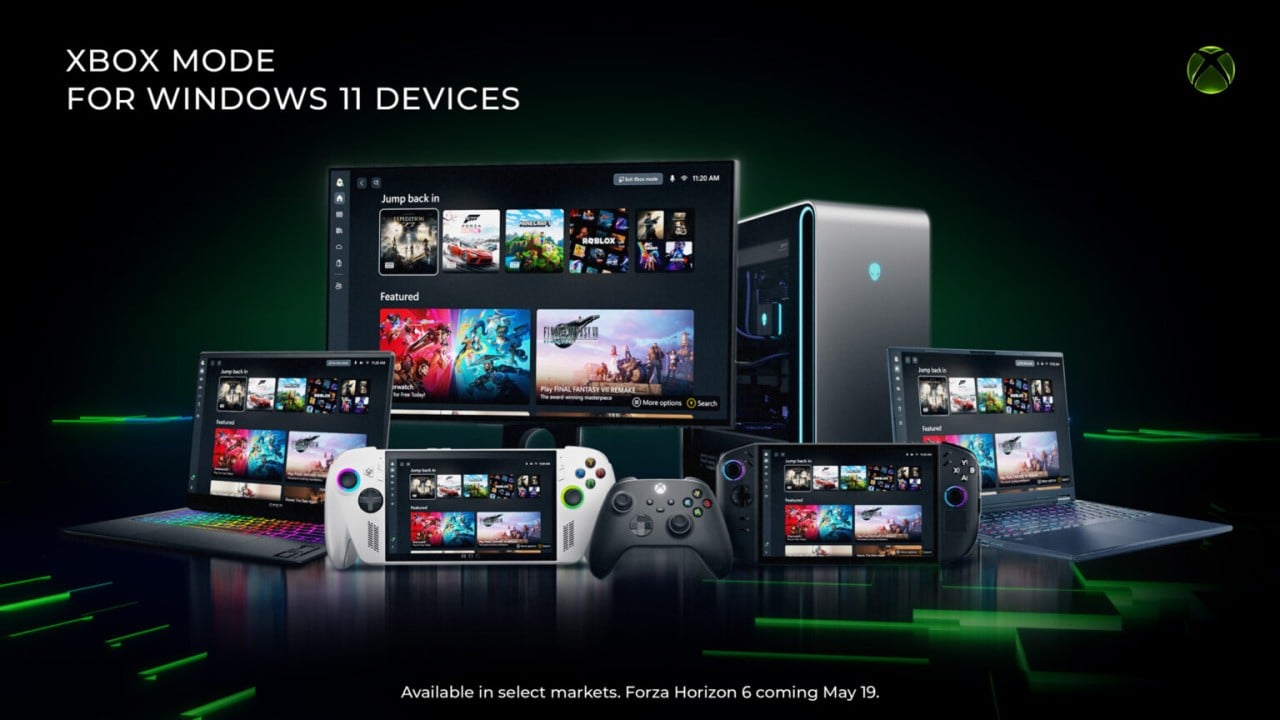
Xbox Mode has officially arrived on Windows 11 PCs, rolling out in select markets as of Thursday, April 30, 2026, according to a report from Pure Xbox. The feature, described by Microsoft as bringing a "console-inspired experience" to PC users, introduces a dedicated gaming overlay and streamlined interface that mimics the Xbox dashboard, complete with quick-access to Game Pass, friends lists, and system-level performance tuning.
Key Facts
- Xbox Mode is rolling out to Windows 11 PCs in select markets starting April 30, 2026, with a broader global rollout expected later this year.
- The feature introduces a dedicated gaming overlay that replaces the traditional Windows desktop when a game is launched, offering console-style navigation via controller or keyboard.
- Microsoft has integrated Game Pass directly into the Xbox Mode interface, allowing subscribers to browse, install, and launch titles without leaving the gaming environment.
- The overlay includes system-level performance controls, including GPU and CPU monitoring, frame rate caps, and resolution scaling — tools previously available only through third-party software like NVIDIA GeForce Experience or MSI Afterburner.
- Xbox Mode supports Quick Resume, a feature previously exclusive to Xbox Series X|S consoles, enabling players to suspend and resume multiple games instantly.
- The rollout is initially limited to Windows 11 users in the United States, United Kingdom, Canada, and Australia, with no confirmed timeline for Windows 10 or other regions.
- Microsoft has confirmed that Xbox Mode is optional — PC users can disable it entirely and return to the standard Windows desktop experience.
Breaking It Down
Microsoft's launch of Xbox Mode represents the company's most aggressive attempt to bridge the gap between PC and console gaming since the introduction of Xbox Play Anywhere in 2016. For years, PC gamers have faced a fragmented ecosystem: launchers from Steam, Epic Games Store, Battle.net, and Microsoft's own Xbox app compete for attention, each with separate friends lists, overlays, and settings. Xbox Mode consolidates this into a single, console-like environment — but the real question is whether PC gamers actually want that.
"Over 70% of PC gamers use a controller for at least some of their gaming sessions," according to Microsoft's own internal data cited during the feature's beta testing phase. This stat undercuts the long-held assumption that keyboard-and-mouse supremacy defines the PC gaming experience.
The controller adoption figure is a critical data point. It suggests that Microsoft is not chasing a niche audience but rather a substantial majority of the PC gaming population. By building Xbox Mode around controller-first navigation — including a redesigned radial menu for quick settings, a unified notification system, and seamless Game Pass integration — Microsoft is betting that convenience will win over the "master race" mentality. The inclusion of Quick Resume, a feature that allows suspending multiple games in memory, is particularly telling: it addresses one of the most common complaints about PC gaming, which is the time lost to booting up, loading saves, and managing multiple launchers.
However, the feature is launching with significant limitations. The select markets rollout (US, UK, Canada, Australia) suggests Microsoft is testing the waters before a global push, and the Windows 11 exclusivity means the roughly 800 million Windows 10 users (per StatCounter as of March 2026) are locked out for now. This creates a two-tier gaming ecosystem within Microsoft's own operating system, potentially fragmenting the PC gaming audience further rather than unifying it.
What Comes Next
The coming months will determine whether Xbox Mode becomes a core Windows feature or a niche experiment. Here is what to watch:
- Global rollout timeline: Microsoft has not specified when Xbox Mode will expand beyond the initial four markets. Look for announcements at Gamescom 2026 (August) or Xbox's annual showcase in June, where a broader release date is likely.
- Windows 10 support: With Windows 10 still powering over 50% of all PCs, Microsoft faces pressure to bring Xbox Mode to the older OS. A decision on this — or a firm "no" — is expected by Q4 2026.
- Third-party launcher integration: The initial release works primarily with Microsoft Store and Game Pass titles. Whether Steam, Epic Games Store, and Battle.net games will be fully supported within Xbox Mode's overlay is a critical open question. Valve and Epic have not yet commented.
- Performance impact benchmarks: Independent testing of the beta version showed a 3-8% performance overhead when Xbox Mode's overlay is active. Microsoft has promised optimizations before the full rollout, but early adopters should monitor frame rate impacts closely.
The Bigger Picture
Xbox Mode is part of a broader Platform Convergence trend, where hardware-agnostic software ecosystems are blurring the lines between devices. Microsoft is positioning Windows 11 as the universal gaming OS — capable of running Xbox console games natively, streaming via xCloud, and now offering a console-like UI. This mirrors similar moves by Sony (which has brought PlayStation games to PC via the PlayStation Plus service) and Nintendo (which has experimented with mobile and PC integrations).
The second trend is Controller-Centric PC Gaming, driven by the explosive growth of handheld PCs like the Steam Deck, ASUS ROG Ally, and Lenovo Legion Go. These devices have normalized controller-first navigation on Windows, exposing the operating system's long-standing weakness in that area. Xbox Mode directly addresses this gap, potentially making Windows 11 the go-to OS for handheld gaming devices — a market projected to grow to $15 billion by 2028, according to IDC.
Key Takeaways
- [Optional Feature, Not Mandatory]: Xbox Mode can be disabled, allowing PC gamers to stick with the traditional Windows desktop — Microsoft is not forcing the change.
- [Windows 11 Only for Now]: The feature is exclusive to Windows 11 and limited to four markets at launch, excluding the majority of PC gamers on Windows 10.
- [Game Pass Integration is Central]: The feature is deeply tied to Microsoft's subscription service, suggesting the company sees Xbox Mode as a Game Pass acquisition tool more than a standalone UX improvement.
- [Performance Overhead Remains a Question]: Early beta data shows a 3-8% hit to frame rates, which could be a dealbreaker for competitive or high-fidelity PC gamers until Microsoft optimizes further.


