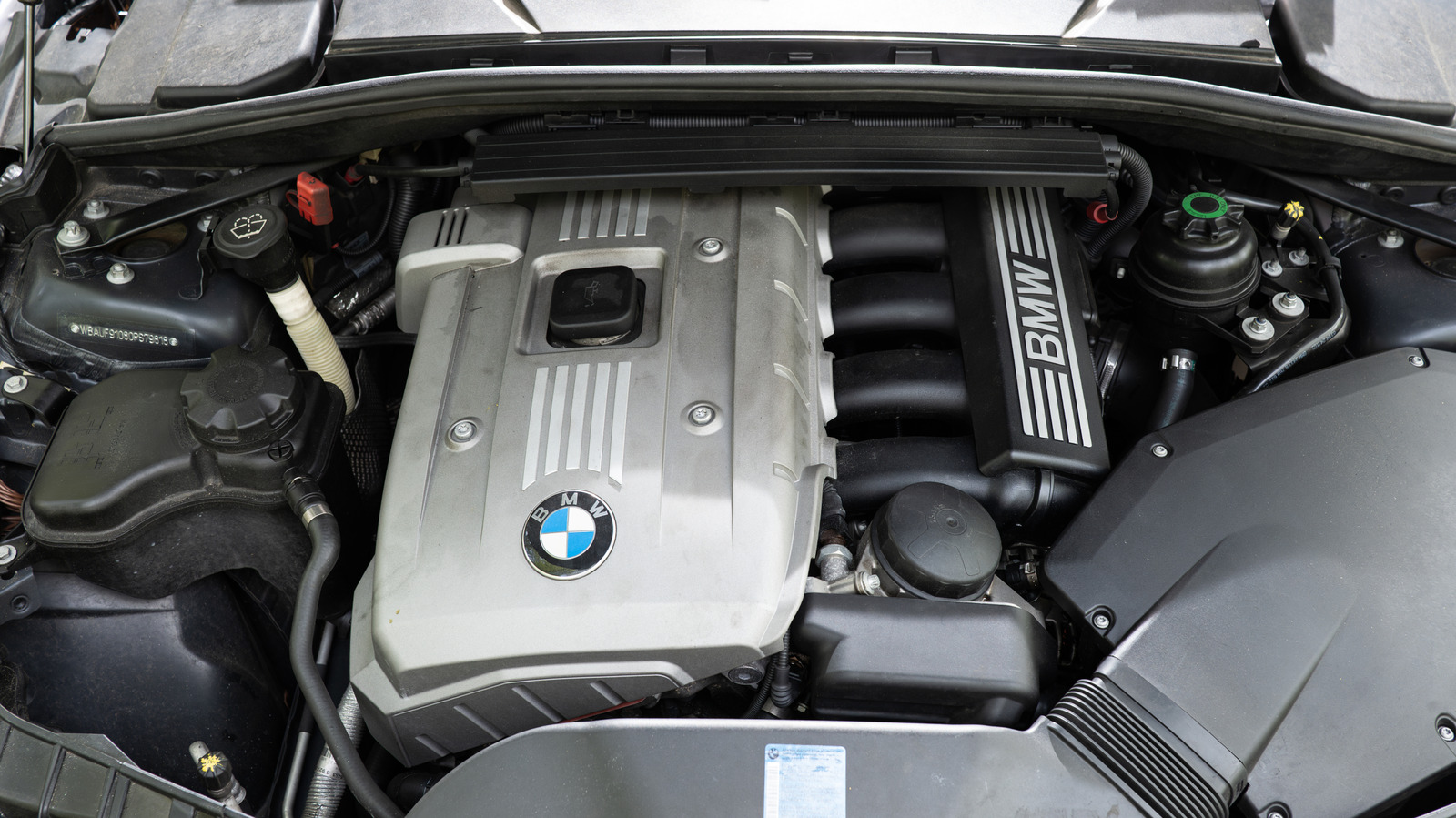
TL;DR
Inline-six engines, long celebrated for their smoothness and torque, face four persistent engineering challenges: excessive length causing packaging issues, camshaft flex at high RPM, uneven air/fuel distribution to the farthest cylinders, and timing chain wear that can lead to catastrophic failure. These problems are especially relevant as automakers from Mercedes-Benz to Stellantis revive the straight-six layout for 2025–2026 models, betting that modern materials and variable valve timing can overcome historical weaknesses.
What Happened
On June 21, 2026, automotive outlet SlashGear published a detailed technical analysis identifying four recurring failure modes in inline-six engines, just as the configuration experiences a renaissance across the industry. The report arrives as BMW, Mercedes-Benz, and Stellantis have all launched new straight-six platforms since 2023, reviving a layout that automakers largely abandoned in the 1990s in favor of V6 engines. SlashGear’s analysis zeroes in on the fundamental physics of the inline-six’s long crankshaft and cylinder bank, arguing that despite modern metallurgy, the architecture’s inherent compromises remain unresolved.
Key Facts
- The inline-six engine layout requires a crankshaft roughly 30% longer than a comparable V6, creating packaging challenges that forced many automakers to switch to V-configurations in the 1990s.
- Camshaft flex and torsional vibration increase exponentially above 5,500 RPM in long inline-six engines, according to SlashGear, because the camshaft must span six cylinders in a single bank.
- Uneven air/fuel distribution affects the number 6 cylinder (farthest from the throttle body) most severely, with mixture variations of up to 15% reported in some naturally aspirated inline-six designs.
- Timing chain problems are the most common catastrophic failure mode, with chains on long inline-six engines stretching 2–3 times faster than on shorter four-cylinder or V6 engines, per SlashGear’s analysis.
- BMW has used inline-six engines continuously since 1933, making the company the longest-running producer of the layout, and its current B58 engine (introduced 2015) is widely considered the most reliable modern iteration.
- Mercedes-Benz reintroduced the inline-six in 2018 with the M256 engine, which uses an electric supercharger and 48-volt mild hybrid system to address low-end torque and response issues.
- Stellantis launched its Tornado straight-six in 2023 for the Jeep Wagoneer and Ram 1500, marking the first mass-market American inline-six since the GM Atlas engine was discontinued in 2012.
Breaking It Down
The four problems SlashGear identifies are not new — engineers have known about them since the 1950s — but the revival of the inline-six makes their re-examination urgent. The length issue is the most fundamental. A six-cylinder inline engine’s crankshaft must be roughly 50% longer than a four-cylinder’s, and nearly twice as long as a V6’s, because all six cylinders sit in a single row. This creates a longitudinal packaging problem that forced automakers like Ford and General Motors to abandon the layout for front-wheel-drive platforms in the 1980s. Even today, the inline-six’s length means it can only fit in rear-wheel-drive or longitudinal-engine vehicles, limiting its application to trucks, SUVs, and premium sedans.
Camshaft flex at 6,000 RPM in a 2.0-meter-long straight-six camshaft can exceed 0.5 degrees of torsional twist, causing valve timing errors of up to 3 crank degrees between cylinder 1 and cylinder 6.
This torsional flex is the second problem SlashGear highlights. In a V6, the camshafts are half as long because each bank has only three cylinders. In a straight-six, a single camshaft must twist across all six. At high RPM, the torsional vibration can cause the camshaft to oscillate, delaying valve events at the rear cylinders. Modern variable valve timing systems partially compensate, but the physics limit how much correction is possible. BMW’s B58 engine addresses this with a hollow, lightweight camshaft and chain-driven dual overhead cams, but the fundamental twist remains.
The third issue — uneven air/fuel distribution — stems from the intake manifold’s geometry. In a straight-six, the intake runners to the farthest cylinders (numbers 1 and 6) are significantly longer than those to the center cylinders (3 and 4). This creates a pressure wave mismatch that can cause lean mixtures in the end cylinders. SlashGear notes that modern direct injection and individual throttle bodies can reduce this to under 5% variation, but early multi-port injection inline-sixes from Toyota (the 2JZ) and Nissan (the RB series) required meticulous tuning to avoid hot spots.
The fourth and most dangerous problem is timing chain wear. Because the inline-six’s timing chain must span a longer distance between the crankshaft and camshafts, it experiences greater tension and more oscillation. SlashGear reports that chain stretch in long inline-six engines occurs 2–3 times faster than in four-cylinders. This was a notorious issue on BMW’s N52 engine (2004–2015), where the plastic chain guides would crack, allowing the chain to skip teeth and destroy the engine. The current B58 uses a reinforced steel chain guide and a hydraulic tensioner, but the basic physics of chain length remain unchanged.
What Comes Next
The inline-six revival is still in its early stages, and the next two years will determine whether it becomes a lasting trend or a short-lived nostalgia play. Key developments to watch:
-
2027 Euro 7 Emissions Standards: The new regulations, effective July 2027, will require all engines to meet stricter particulate and NOx limits. Inline-sixes, with their longer exhaust manifolds and uneven flow, may struggle more than V6s to meet these targets without complex after-treatment systems. Automakers must decide by late 2026 whether to invest in further inline-six development or pivot to hybrid V6s.
-
Stellantis Tornado Engine Reliability Data: The Tornado straight-six launched in 2023 for the Jeep Wagoneer and Ram 1500. By mid-2027, the first 100,000-mile (160,000 km) fleet data will be available, offering the first real-world test of whether modern materials have solved the timing chain and distribution problems SlashGear highlights.
-
BMW’s Next-Generation B58 Successor: BMW is expected to announce a replacement for the B58 around 2028, likely incorporating an integrated starter-generator and possibly a variable-compression ratio system. How BMW addresses the camshaft flex issue in this next design will signal whether the company sees the inline-six as a long-term platform or a transitional technology.
-
Mercedes-Benz M256 Hybrid Integration: Mercedes is rumored to be developing a plug-in hybrid version of the M256 for the 2027 S-Class. If successful, this could demonstrate that electrification — using the electric motor to smooth low-RPM torque — effectively mitigates the inline-six’s traditional weaknesses.
The Bigger Picture
This story sits at the intersection of two major trends: Engine Architecture Revival and Electrification as a Band-Aid. The inline-six comeback is part of a broader pattern where automakers are revisiting older layouts — boxer engines, V12s, even rotary engines — as they search for the optimal internal combustion configuration to pair with hybrid systems. The inline-six’s natural balance (perfect primary and secondary force cancellation) makes it an ideal generator engine for series hybrids, where it can run at a single, optimal RPM.
The second trend is that electrification is solving physical problems that mechanical engineering could not. The very issues SlashGear identifies — camshaft flex, uneven distribution, timing chain wear — are worst at high RPM and under high load. A hybrid inline-six that runs the engine at a constant 3,000 RPM to charge a battery, while the electric motor handles acceleration and peak torque, effectively sidesteps all four problems. This is why Mercedes and BMW are betting heavily on mild-hybrid and plug-in hybrid straight-sixes: the electric motor compensates for the engine’s weaknesses.
However, there is a risk. If automakers rely too heavily on electrification to mask the inline-six’s flaws, they may not invest in the fundamental engineering improvements — shorter camshafts, better chain guides, optimized intake geometry — that would make the layout robust even without hybrid assistance. The SlashGear analysis serves as a reminder that physics does not care about marketing trends.
Key Takeaways
- [Inline-Six Revival]: Automakers including Mercedes-Benz, BMW, and Stellantis have reintroduced straight-six engines since 2018, but the layout retains four fundamental engineering weaknesses related to its length.
- [Timing Chain Risk]: Timing chain wear is the most dangerous failure mode, with chain stretch occurring 2–3 times faster than in four-cylinder or V6 engines, potentially causing catastrophic engine damage.
- [Electrification Mitigation]: Hybrid systems can mask the inline-six’s high-RPM weaknesses by allowing the engine to run at a constant, low-stress speed while the electric motor handles peak torque demands.
- [Packaging Constraints]: The inline-six’s length limits it to longitudinal-engine, rear-wheel-drive platforms, preventing its use in front-wheel-drive or transverse-engine vehicles, which represent the majority of global car sales.