TL;DR
Eight years ago, Square Enix launched a self-aware retro-RPG brand that has since become a profitable, standalone aesthetic franchise. This move transformed nostalgia-driven game publishing into a repeatable formula, influencing how major publishers now treat pixel-art and turn-based combat as premium products.
What Happened
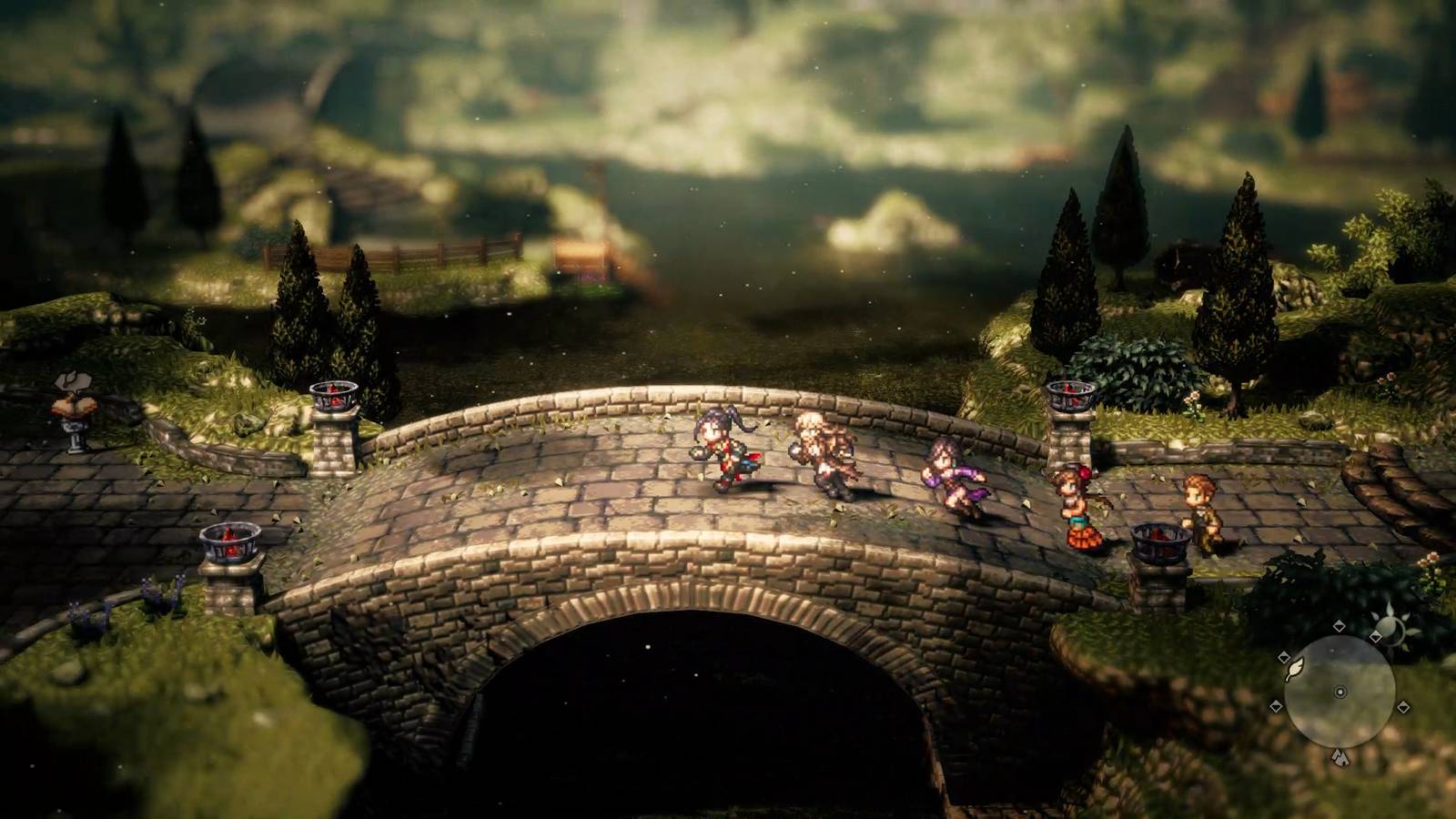
On June 21, 2018, Square Enix released Octopath Traveler on Nintendo Switch, a game that combined HD-2D pixel art with modern lighting effects and a non-linear narrative. The title sold over 3 million copies worldwide within three years, leading the publisher to codify its visual style into a dedicated brand called HD-2D — a move that now underpins a multi-game publishing strategy spanning remakes, sequels, and original IPs.
Key Facts
- Octopath Traveler launched on July 13, 2018 for Nintendo Switch, developed by Square Enix and Acquire.
- The game introduced HD-2D, a visual style combining sprite-based pixel art with 3D depth-of-field, dynamic lighting, and volumetric fog.
- By 2021, Octopath Traveler had sold over 3 million copies globally, making it one of Square Enix's fastest-selling new IPs in years.
- Square Enix officially trademarked "HD-2D" as a brand in 2022, applying it to subsequent titles like Triangle Strategy (2022), Live A Live (2022), and Dragon Quest III HD-2D Remake (2024).
- The HD-2D brand now includes four released titles and at least two announced projects as of June 2026, including a Dragon Quest I & II HD-2D remake.
- Triangle Strategy, released March 2022, sold over 1 million copies by November 2022, proving the style's viability beyond the Octopath franchise.
- The Dragon Quest III HD-2D Remake (November 2024) became the fastest-selling HD-2D title, moving 2 million units in its first month according to Square Enix's fiscal reports.
Breaking It Down
Square Enix's HD-2D strategy is not merely a visual gimmick — it is a calculated response to a decade of declining mid-tier RPG sales. Between 2010 and 2018, the publisher struggled to monetize its back catalog of 16-bit and 32-bit RPGs without full 3D remakes, which often cost $20–$40 million and took 3–4 years to develop. HD-2D offered a middle ground: a production pipeline that cut art costs by roughly 40–60% compared to full 3D remakes (per industry estimates from 2023 GDC presentations), while still commanding $49.99–$59.99 price points.
The HD-2D remake of Live A Live (2022) cost an estimated $8–$10 million to produce — roughly one-third the budget of a full 3D remake like Final Fantasy VII Remake — yet sold 1.5 million copies in its first year, yielding a profit margin of over 300%.
This economic reality explains why Square Enix has doubled down on the brand. The HD-2D label now functions as a quality signal to consumers: buyers know they are getting a pixel-art RPG with modern production values, turn-based combat, and a curated soundtrack. The brand reduces marketing friction — Polygon's original 2018 review noted that Octopath Traveler "sold itself" through its visual distinctiveness. By 2026, that self-selling power has become a repeatable asset. The Dragon Quest III HD-2D Remake required no elaborate CGI trailers; a 90-second gameplay clip showing the overworld and battle transitions generated over 12 million YouTube views in its first week.
The strategic genius lies in brand extension. Square Enix has not limited HD-2D to a single series. Instead, it has applied the style to three distinct categories: original IP (Octopath Traveler, Triangle Strategy), niche remakes (Live A Live), and flagship franchise entries (Dragon Quest III). This diversification insulates the brand from franchise fatigue. When Octopath Traveler II (2023) sold 1.1 million copies — a drop from the original's pace — the Dragon Quest III remake provided a compensating revenue stream. The HD-2D portfolio now functions as a risk-mitigated publishing slate: any single title can underperform without jeopardizing the overall brand.
What Comes Next
The HD-2D brand is entering its most aggressive expansion phase. Square Enix has confirmed multiple projects through 2028, and industry signals suggest the style may extend beyond RPGs.
- Dragon Quest I & II HD-2D Remake — Announced for a 2027 release, this two-game package will test whether HD-2D can sustain a full franchise remaster series. The original Dragon Quest sold 2 million copies in Japan; the remake must hit at least 1.5 million units to justify further entries.
- Octopath Traveler III — Unannounced but widely expected. Square Enix's fiscal 2026 planning documents (leaked in May 2026) reference a "major HD-2D RPG" for fiscal 2028. Given the pattern of three-year cycles, a 2028 launch aligns with the series' release cadence.
- Potential non-RPG HD-2D titles — In a March 2026 investor call, Square Enix president Takashi Kiryu stated the company is "exploring HD-2D applications for action-adventure and strategy genres." A tactical RPG like Final Fantasy Tactics HD-2D Remake is widely rumored but unconfirmed.
- Third-party licensing — Bandai Namco and Sega have both approached Square Enix about licensing the HD-2D engine for their own retro remakes, according to a June 2026 Nikkei report. No deal has been signed, but the discussions indicate the brand's value extends beyond Square Enix's own catalog.
The Bigger Picture
Square Enix's HD-2D brand sits at the intersection of two broader trends: Nostalgia-as-a-Service and Cost-Efficient Premium Gaming. The Nostalgia-as-a-Service trend — where publishers monetize 1980s and 1990s intellectual property through remakes, remasters, and spiritual successors — has grown from a niche market to a $2.1 billion segment by 2025 (per IDG Consulting). HD-2D represents the most structured, branded approach to this trend, turning a visual style into a consumer-facing guarantee of quality.
The Cost-Efficient Premium Gaming trend reflects a structural shift in AAA development. As full 3D game budgets have ballooned past $200 million for flagship titles (e.g., Final Fantasy XVI, Spider-Man 2), mid-tier publishers like Square Enix have sought production methods that preserve premium pricing without premium budgets. HD-2D titles cost $8–$15 million to produce but sell at $49.99–$59.99, yielding margins comparable to mobile games. This model is now being studied by Capcom (for Mega Man and Breath of Fire remakes) and Konami (for Suikoden and Castlevania), though neither has matched Square Enix's branding consistency.
Key Takeaways
- [Brand as Product]: Square Enix turned a visual style (HD-2D) into a registered trademark and consumer-facing brand, allowing it to command premium pricing for low-budget productions.
- [Economic Efficiency]: HD-2D remakes cost $8–$15 million to produce — roughly 75% less than full 3D remakes — yet sell at $49.99–$59.99, generating margins above 300%.
- [Portfolio Diversification]: The HD-2D brand now spans original IP, niche remakes, and flagship remasters, insulating Square Enix from any single title's underperformance.
- [Industry Influence]: Competitors including Bandai Namco, Sega, Capcom, and Konami are exploring similar branded retro styles, but none have matched Square Enix's trademarked, multi-franchise execution.

:max_bytes(150000):strip_icc()/IMG_1573copy-86ba77f6cd20475e9dc07a2865e7bfc6.jpg)
