TL;DR
Samsung has officially detailed the One UI 8.5 update, which will bring select Galaxy S26 AI features to a wide range of older smartphones. This move is a strategic effort to extend the lifespan of its devices and maintain competitiveness against Google and Apple, who are aggressively pushing on-device AI. For millions of users, it means a significant, free upgrade to their phone's core intelligence without needing to purchase the latest hardware.
What Happened
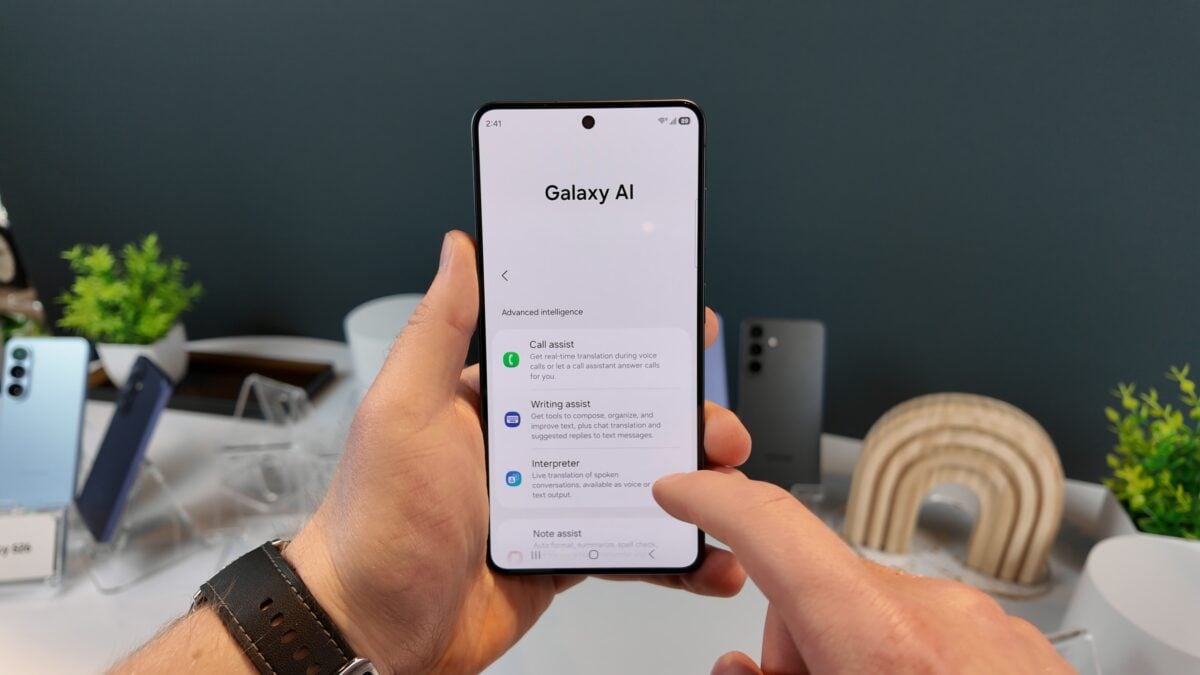
Samsung has drawn a clear line in the sand for its AI-powered future, announcing the specific rollout of its latest Galaxy AI suite to legacy devices. The One UI 8.5 software update will transplant key artificial intelligence features from the flagship Galaxy S26 series onto dozens of older smartphone models, transforming them with capabilities they were not originally designed to have. This mass enhancement, set to begin in the coming months, represents one of the most ambitious software support initiatives in the company's history and a direct counter to the industry-wide shift toward AI as a core differentiator.
Key Facts
- The update originates from the Galaxy S26 series, which launched in February 2026 with four new core Galaxy AI features: Advanced Live Translate, ProVisual Engine, Generative Edit Max, and Instant Slow-Mo.
- One UI 8.5 is the delivery vehicle, scheduled for a phased global rollout starting in Q3 2026, with availability varying by model and region.
- The list of eligible devices is extensive, reportedly including the Galaxy S24 series, S23 series, S22 series, Z Fold5 and Z Flip5, Z Fold4 and Z Flip4, and multiple Galaxy A-series models from recent years.
- Not all four new S26 AI features will reach every device; Samsung has indicated that hardware limitations, particularly on older or mid-range chipsets, will determine the final feature set for each model.
- This move extends Samsung's previous promise of "up to seven years of software support" for flagship devices, now explicitly including generative AI features as part of that long-term commitment.
- The update strategy is a competitive response to Google's Gemini Nano on Pixel devices and Apple's Apple Intelligence ecosystem, which also emphasize on-device AI processing.
- Samsung's Galaxy AI features are powered by a hybrid approach, utilizing both on-device processing for speed and privacy and cloud-based AI for more complex tasks.
Breaking It Down
Samsung's announcement is less a routine software update and more a strategic recalibration of the smartphone value proposition. By back-porting its headline AI features, the company is directly attacking the rapid depreciation cycle that has plagued the Android ecosystem. It sends a powerful message to consumers: a Samsung phone purchased today is an investment in a platform that will gain intelligence over time, not just receive security patches. This fundamentally alters the calculus for users considering an upgrade and could significantly bolster customer retention and brand loyalty in a saturated market.
The deployment of features like Generative Edit Max and ProVisual Engine to devices with chipsets like the Exynos 2200 or Snapdragon 8 Gen 1 represents a serious engineering challenge and a calculated risk.
The technical hurdle here is substantial. Features such as Generative Edit Max, which likely involves filling in or reconstructing missing parts of images using generative AI, and the ProVisual Engine, which presumably enhances photography through computational AI, are computationally intensive. They were designed for the neural processing units (NPUs) inside the 2026-era chips powering the Galaxy S26. Successfully optimizing them for older silicon, some of which are over four years old, is a testament to Samsung's software prowess. However, the risk is performance inconsistency; users on a Galaxy S22 may experience slower processing or reduced quality compared to an S26 user. Samsung's ability to manage these expectations will be critical to the update's perceived success.
Furthermore, this move exposes the evolving battlefield in mobile tech. The war is no longer just about camera megapixels or screen refresh rates; it is about AI agent capability. Google has deeply integrated Gemini across Android, while Apple has staked its future on Apple Intelligence deeply woven into iOS 18 and beyond. Samsung, by making Galaxy AI a cross-generational platform, is asserting that its AI ecosystem is robust and mature enough to be a legacy feature. It is a defensive play to prevent its vast installed base from being lured away by AI-native experiences on competing platforms, and an offensive one to make the Galaxy S26's marquee features a selling point for the entire brand portfolio.
What Comes Next
The announcement sets the stage for a critical execution phase for Samsung and introduces new variables for the broader mobile market. The coming months will determine whether this ambitious software promise translates into a smooth user experience or becomes a case study in overextension.
- The Q3 2026 Rollout and Performance Reviews: The first waves of the One UI 8.5 update, expected to hit the Galaxy S24 series first, will be scrutinized. Independent tech reviewers will immediately benchmark AI feature performance (like Instant Slow-Mo generation speed) on older hardware versus the S26, setting the narrative for the update's technical success.
- Samsung's Clarification on Feature Fragmentation: Samsung must provide a clear, model-by-model breakdown of which devices get which specific AI features. Confusion over why a Galaxy Z Flip4 gets Advanced Live Translate but not Generative Edit Max could lead to consumer frustration. A transparent matrix is essential.
- Competitive Counter-Moves from Google and Apple: Google may respond by expanding Gemini Nano's reach to older Pixel devices or partnering with other Android OEMs. Apple, with its controlled hardware-software integration, will likely highlight the seamless performance of Apple Intelligence on supported iPhones as a contrast to Android's fragmented approach.
- The Impact on Galaxy S27 Strategy: This generous update policy raises questions about the Galaxy S27's value proposition. Samsung will need to develop a new suite of AI or hardware features compelling enough to motivate users who have just received a major AI upgrade on their S23 or S24 to purchase the 2027 flagship.
The Bigger Picture
Samsung's decision is a microcosm of two dominant trends reshaping consumer technology. First, it highlights the industry's pivot toward Software as a Sustained Value. Hardware differentiation has plateaued, and companies are now competing on the longevity and evolving intelligence of their software platforms. This transforms devices from static products into updatable experiences, pushing the industry closer to a subscription-like model where ongoing software support is a key purchase driver.
Second, it underscores the Democratization of Generative AI. Once a research-centric cloud technology, generative AI is now being distilled into on-device features for mass-market consumption. Samsung, by bringing these capabilities to millions of older phones, is accelerating this democratization faster than the natural hardware replacement cycle would allow. This normalizes AI as an everyday tool for photo editing, communication, and content creation, embedding it deeper into the fabric of daily digital life and raising user expectations for all devices, regardless of price point.
Key Takeaways
- Strategic Lifespan Extension: Samsung is using AI software to dramatically extend the usable life and perceived value of its existing devices, challenging the traditional two-year upgrade cycle.
- The AI Ecosystem Battle: Mobile competition has decisively shifted from hardware specs to AI ecosystem strength, with Samsung, Google, and Apple now fighting for dominance through software intelligence.
- Hybrid AI is the Model: Samsung's approach confirms that the future of mobile AI is hybrid, balancing on-device processing for privacy and immediacy with cloud-based power for complex tasks, a model others will follow.
- Execution is Everything: The success of this bold strategy hinges entirely on the real-world performance and reliability of these AI features on older hardware; a botched rollout could damage trust more than the promise builds it.