TL;DR
British artist and game developer Joe Richardson has completed The Immortal John Triptych, a trilogy of point-and-click adventure games built entirely from animated Renaissance paintings, coming to Xbox on May 1, 2026. This marks the first time a full trilogy of games created from hand-painted historical art has been released on a major console platform, bridging fine art and interactive entertainment in a commercially viable format.
What Happened
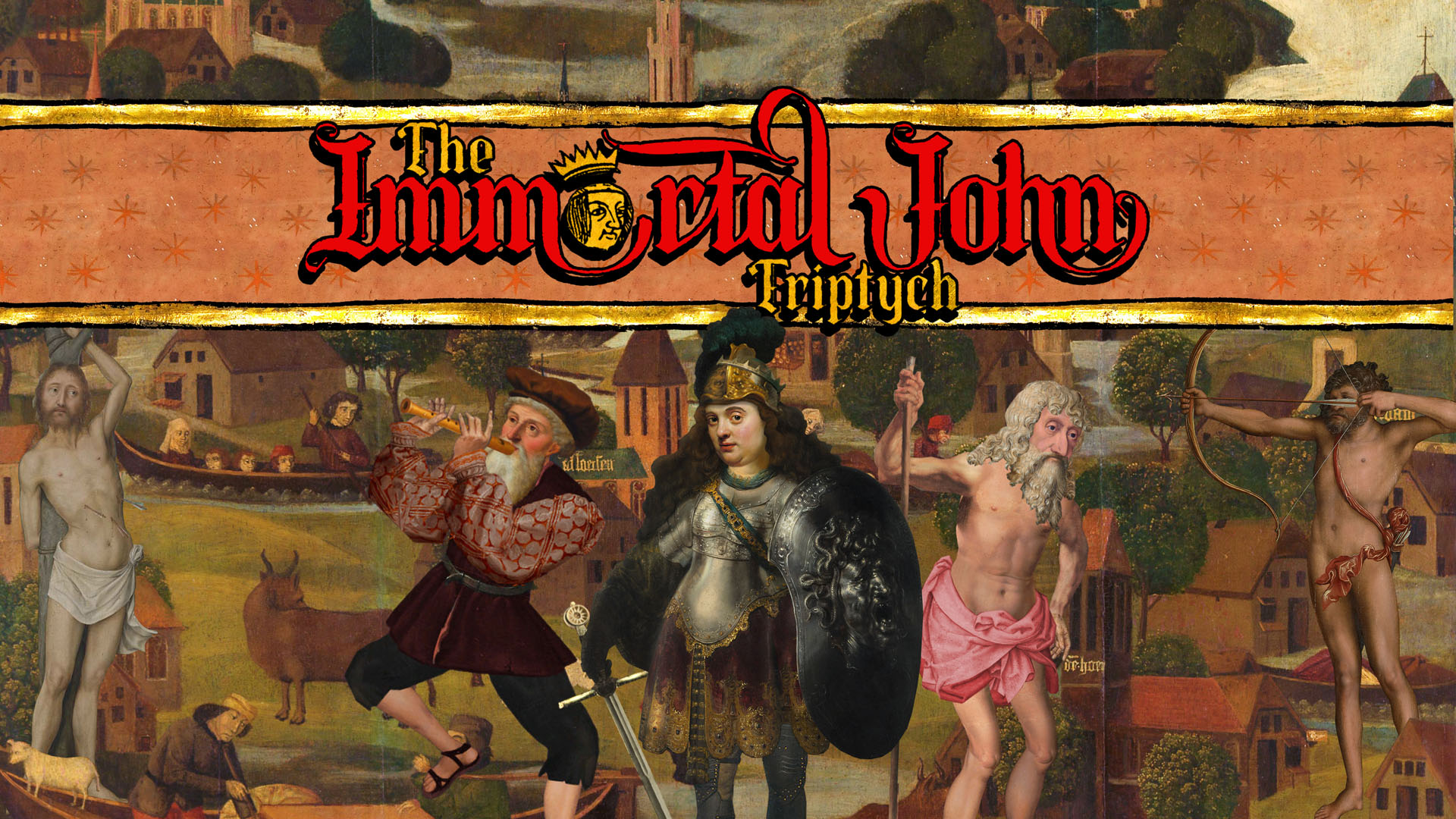
On Friday, May 1, 2026, Xbox Wire announced that The Immortal John Triptych — a trilogy of games by artist Joe Richardson — is coming to Xbox consoles. The collection brings together The Procession to Calvary, The Last Faerie, and The Immortal John, each built by meticulously cutting, animating, and recontextualising figures from actual Renaissance paintings into a surreal, darkly comedic point-and-click adventure format.
Key Facts
- Joe Richardson is a British independent developer who spent over five years creating the trilogy by hand-animating figures from Renaissance-era artworks, primarily from the 16th and 17th centuries.
- The trilogy is titled The Immortal John Triptych, referencing the three-panel altarpiece format common in Renaissance religious art — a structural homage to the paintings that supply its visual assets.
- The Procession to Calvary (released 2021) is the first game, a Monty Python-esque satire set in a holy war, built entirely from Pieter Bruegel the Elder's 1564 painting of the same name.
- The Last Faerie (2023) shifts to a melancholic fairy-tale world, using over 200 individual artworks from the Renaissance and Baroque periods, including works by Hieronymus Bosch and Albrecht Dürer.
- The Immortal John (2025) concludes the trilogy, centering on an immortal man searching for meaning across centuries, with assets drawn from more than 400 paintings spanning the 15th to 17th centuries.
- The Xbox release marks the first time the complete trilogy has been available on a single console platform; previous releases were on PC (Steam) and Nintendo Switch.
- Richardson's technique involves digitally cutting figures from scanned paintings, rigging them with skeletal animation, and compositing them into interactive scenes — a process he describes as "digital collage meets traditional animation."
Breaking It Down
Joe Richardson's method is not merely aesthetic window-dressing; it is a structural constraint that defines every aspect of gameplay and narrative. Unlike most game developers who build assets from scratch to serve a predetermined story, Richardson begins with the paintings and discovers the story within them. The Procession to Calvary game, for example, takes Bruegel's crowded, chaotic canvas and treats it as a playable world — the player navigates through the same figures Bruegel painted, but with dialogue and puzzles grafted onto their historical poses.
To create The Immortal John, Richardson sourced figures from over 400 individual paintings — roughly one artwork for every 90 seconds of playtime in a game that runs approximately 6–8 hours. This ratio of source material to final product is virtually unprecedented in commercial game development.
The technical achievement lies in the animation pipeline. Richardson does not simply crop and paste; he isolates individual characters from their original compositions — often requiring painstaking removal of background elements painted in the 1500s — then builds digital skeletons that allow each figure to walk, gesture, and interact. A figure of a soldier from a Caravaggio painting might be re-rigged to serve as a guard in a puzzle sequence, while a weeping woman from a Rogier van der Weyden altarpiece becomes a quest-giver. The result is a game world that feels simultaneously ancient and alive, where every pixel carries the weight of art history.
The commercial viability of this approach is notable. Richardson's games have sold over 500,000 copies collectively on Steam and Switch, proving that audiences will pay for interactive art. The Xbox release — with its larger install base and Game Pass distribution potential — could double that figure within the first year. Microsoft's decision to feature the trilogy on Xbox Wire signals that the company sees value in positioning itself as a platform for art-game crossovers, a niche traditionally dominated by PC indie stores.
What Comes Next
-
Xbox release date and Game Pass status: The Xbox Wire announcement confirms the trilogy is "coming soon," but no specific launch date has been given. Watch for a Summer 2026 release window, and whether the trilogy launches on Xbox Game Pass — a move that would dramatically expand its audience beyond traditional art-game buyers.
-
Physical edition announcement: Given the trilogy's collector appeal — each game features a distinct art style and soundtrack — a limited physical release for Xbox is likely. Richardson's previous physical editions on Switch sold out within hours. Expect an announcement within 60 days of the digital launch.
-
Joe Richardson's next project: The completion of the triptych leaves Richardson without an active game in development for the first time in nearly a decade. He has stated in interviews that he is considering a museum installation or a non-interactive animated film using the same Renaissance-collage technique. A formal announcement is expected by late 2026.
-
Console port of Richardson's back catalog: Richardson's earlier game, Four Last Things (2017), which uses Renaissance art in a similar style, has not been announced for Xbox. If the trilogy sells well, a port of that title is a logical next step, potentially arriving in early 2027.
The Bigger Picture
This story sits at the intersection of three converging trends. First, Art-Game Hybridization — the growing willingness of mainstream platforms (Xbox, PlayStation, Steam) to distribute games that explicitly function as interactive art installations. Richardson's success follows Pentiment (2022, Xbox) and Disco Elysium (2019), both of which prioritise painted or illustrated aesthetics over photorealistic graphics. Second, AI and Handcrafted Authenticity — at a moment when generative AI tools can produce game assets in seconds, Richardson's painstaking, hand-animated process becomes a differentiator, not a limitation. Players increasingly value knowing that every frame was touched by a human hand, especially when that hand is working from 500-year-old source material. Third, Cross-Platform Indie Expansion — the movement of niche PC indies onto console platforms, driven by services like Game Pass, is creating new revenue models for developers whose games would have been considered too "arty" for console audiences a decade ago. Richardson's trilogy is a test case for whether Renaissance art can sustain a commercial game franchise.
Key Takeaways
- [Artistic Method as Game Mechanic]: Richardson's technique of animating Renaissance paintings is not just a visual style but a gameplay constraint that forces puzzle and narrative design to emerge from existing artworks.
- [Commercial Viability Proven]: With over 500,000 copies sold across Steam and Switch, the trilogy demonstrates that art-game hybrids can achieve mainstream sales without sacrificing artistic integrity.
- [Xbox as Art Platform]: Microsoft's promotion of The Immortal John Triptych signals a strategic bet on console distribution for high-art interactive experiences, potentially opening Game Pass to similar projects.
- [Handcrafted as Counterpoint to AI]: In an era of generative AI asset generation, Richardson's manual, multi-year process of cutting and rigging historical paintings positions handcrafted authenticity as a premium product differentiator.