TL;DR
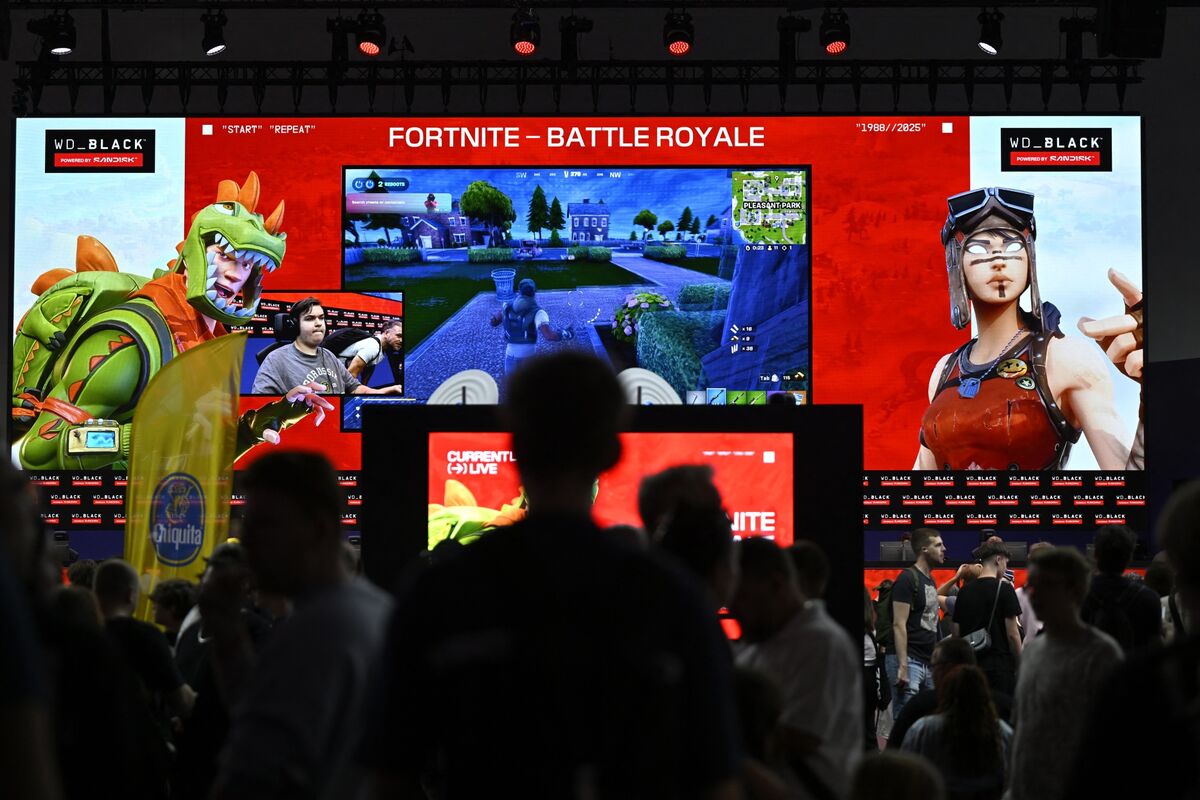
Epic Games is betting its entire "Fortnite" revival strategy on a massive, multi-year partnership with The Walt Disney Company. This move comes after a series of poorly received in-game seasons have led to a 15% decline in monthly active users over the last 18 months, making this collaboration a critical inflection point for the gaming giant.
What Happened
Epic Games is staking the future of its flagship title, "Fortnite," on an unprecedented corporate alliance. Facing dwindling player engagement and creative stagnation, the Cary, North Carolina-based developer has entered a comprehensive partnership with The Walt Disney Company, aiming to inject the magic of Disney's century of storytelling into the battle royale's core experience. This high-stakes maneuver, announced Friday, April 10, 2026, is a direct response to what insiders describe as a "creative crisis" within the "Fortnite" development team following several failed seasonal updates.
Key Facts
- Epic Games and The Walt Disney Company announced a multi-year strategic partnership on Friday, April 10, 2026, centered on integrating Disney, Pixar, Marvel, and Star Wars intellectual property into "Fortnite."
- The deal follows a reported 15% decline in "Fortnite" Monthly Active Users (MAUs) from a peak of 100 million in late 2024 to approximately 85 million in Q1 2026.
- Recent in-game seasons, codenamed "Aether" and "Chrono Fracture," underperformed critically and commercially, with player spending on in-game V-Bucks dropping 22% year-over-year in their first months.
- The partnership is not limited to cosmetic items; it includes plans for permanent Disney-themed "worlds" within Fortnite's evolving ecosystem and narrative integration of iconic characters.
- Disney CEO Bob Iger stated the collaboration is a "cornerstone" of the company's renewed interactive entertainment strategy, following the 2025 restructuring of its games division.
- Epic Games CEO Tim Sweeney framed the deal as an evolution of the "Fortnite" metaverse vision, calling Disney's portfolio "the most compelling cast of characters ever assembled."
- Financial terms were not disclosed, but industry analysts at Bloomberg Intelligence estimate the minimum guarantee and revenue-sharing agreement to be valued in the low billions of dollars.
Breaking It Down
Epic Games' pivot to Disney is a stark admission that its internal creative engine has stalled. For years, "Fortnite" thrived on its own original lore and pop-culture crossovers, but the failure of recent original seasons like "Aether" has exposed a vulnerability. The 15% MAU drop is more than a blip; it signals player fatigue with Epic's own narrative directions and a potential ceiling on the appeal of its standard battle pass model. This partnership is less an expansion and more a strategic lifeline, outsourcing creative heavy-lifting to the most reliable brand portfolio in entertainment.
The partnership’s scope moves far beyond cosmetic "skins," aiming to create persistent Disney, Marvel, and Star Wars sub-worlds inside "Fortnite" that function as permanent destinations.
This is the critical divergence from past collaborations. Previously, IP integrations like Marvel's Galactus event were spectacular, temporary occurrences. The Disney deal architecturally alters "Fortnite's" map and gameplay loop. Imagine a permanent Tatooine biome with its own quests, or an Avengers Tower hub with recurring missions. This transforms "Fortnite" from a game with occasional crossovers into a persistent platform hosting mini-MMOs built on beloved IP. It directly counters the "one-and-done" seasonal fatigue by offering evergreen content pillars that can be updated independently of the main game's storyline.
The financial and strategic implications for both companies are profound. For Disney, this is the most ambitious execution of its platform strategy since its investment in Epic Games' $2 billion funding round in 2022. It bypasses the risk and cost of building its own gaming platform, instead leasing "shelf space" inside the world's most popular digital social hub. For Epic, the billions in guaranteed revenue stabilize its finances amid heavy investments in its Unreal Engine and legal battles, while the content influx could halt the MAU slide almost overnight. However, it raises a fundamental question about creative dependency: does "Fortnite" risk becoming a vessel for other companies' stories at the expense of its own identity?
What Comes Next
The immediate focus will be on execution and player reception. Integrating multiple mega-franchises into a cohesive experience without turning "Fortnite" into a cluttered theme park is a monumental design challenge. The development roadmap will be scrutinized for delays or scaled-back promises.
- The First Integrated Season Launch (Target: Late 2026). The first full "Fortnite" season built around Disney IP is expected before the 2026 holiday season. Its theme—whether it leads with Marvel, Star Wars, or a hybrid—and its commercial success will set the tone for the entire partnership.
- The First Permanent "World" Deployment (Target: Q1 2027). Watch for the launch of the first non-rotating, Disney-owned location on the "Fortnite" island. Its depth, gameplay mechanics, and player retention metrics will prove if the "platform within a platform" vision is viable.
- Epic's Original Content Strategy Reveal. Concurrently, Epic must clarify how it will continue to develop original "Fortnite" lore alongside the Disney content. A clear roadmap for original seasons will be essential to placate long-time fans concerned about brand dilution.
- Regulatory and Competitive Response. The scale of this partnership may attract fresh scrutiny from regulators concerned about market concentration in digital entertainment. Competitors like Roblox Corporation and Microsoft (Minecraft) will be forced to respond with their own major partnership announcements or platform innovations.
The Bigger Picture
This deal is a landmark event in the convergence of gaming as a dominant social platform. "Fortnite" long ago transcended being just a game; it is a virtual commons where concerts and movie trailers debut. The Disney partnership formalizes this, treating "Fortnite" not as a game to be licensed into, but as a territory to be colonized with branded experiences. It validates the "platform-of-platforms" model where a single digital environment hosts multiple other corporate ecosystems.
Furthermore, it accelerates the trend of IP Aggregation in Interactive Media. The arms race is no longer just about owning studios, but about securing exclusive access to the world's most valuable catalogs within live-service games. This mirrors the streaming wars but in an interactive space, where player time and engagement are the ultimate metrics. The risk is an industry where a handful of mega-platforms, like "Fortnite" and Roblox, become gatekeepers, and success is determined by which IP portfolios they can secure, potentially stifling original IP creation at the platform level.
Key Takeaways
- Strategic Pivot: Epic Games is using the Disney partnership to address a clear period of creative stagnation and player decline, making it a defensive move as much as an offensive one.
- Platform Evolution: The deal signifies "Fortnite's" final evolution from a battle royale game into a licensed content platform, hosting persistent worlds from other media giants.
- Financial Lifeline: The guaranteed revenue from Disney provides Epic with crucial stability to fund its engine development and legal strategies, even if player spending on original content remains soft.
- Industry Bellwether: The success or failure of this integration will dictate the playbook for future cross-media mega-deals, potentially leading to an era where major game platforms are defined by their licensed IP "tenants."