TL;DR
Wear OS 7 promises up to 10% improvement in battery life for watches upgrading from Wear OS 6, plus a suite of new features. The Canary build is now available, giving developers and early adopters a preview of the update expected to roll out to supported smartwatches later this year.
What Happened
Google formally announced Wear OS 7 on Tuesday, May 19, 2026, with the Canary build now accessible for testing. The update targets a 10% battery life boost over Wear OS 6, alongside new features designed to close the gap with competitors like the Apple Watch and Samsung’s Tizen-based wearables.
Key Facts
- Wear OS 7 was announced on May 19, 2026, with the Canary build immediately available for developers.
- Google claims watches upgrading from Wear OS 6 to Wear OS 7 can expect up to 10% improvement in battery life.
- The update is set to release to supported smartwatches later in 2026, though no specific date has been provided.
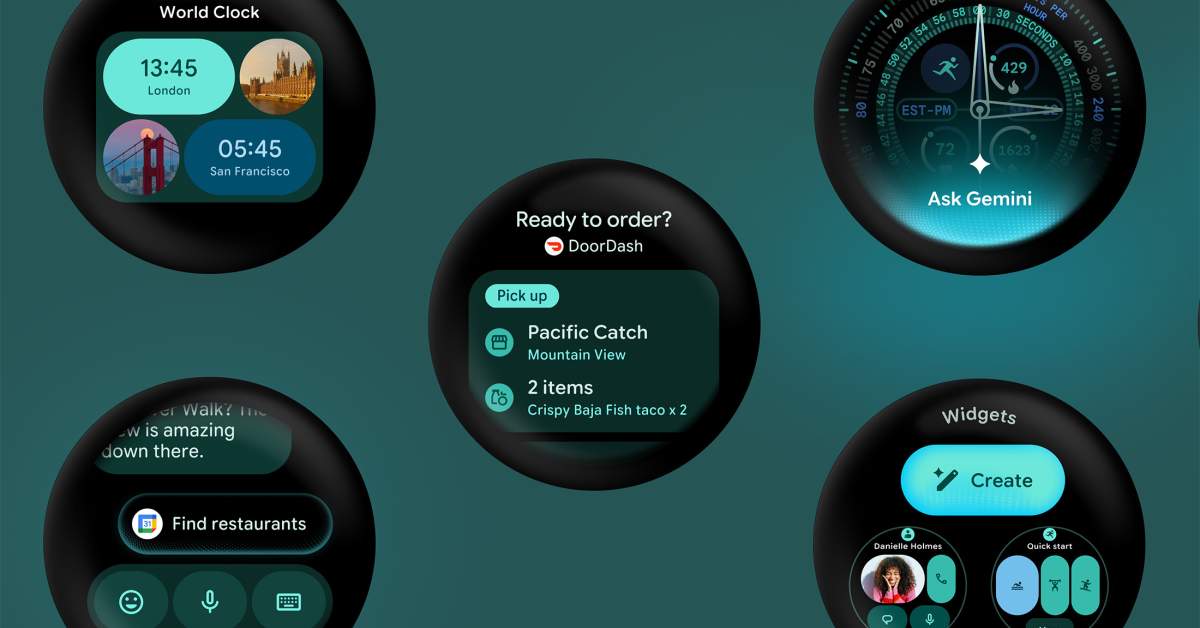
- Wear OS 7 introduces new features, though Google has not yet disclosed the full changelist—only that it includes "plenty of new features."
- This announcement follows Wear OS 6’s release in 2025, which itself brought performance gains and a redesigned UI.
- The Canary build is aimed at developers and early testers, not general consumers, to identify bugs and optimize performance before the public rollout.
- The 10% battery life improvement is a modest but welcome gain, given that battery life remains the top complaint among smartwatch users.
Breaking It Down
10% battery life improvement may sound incremental, but for Wear OS, it represents a critical step toward parity with rivals that routinely deliver multi-day battery life.
The 10% figure is significant because it addresses Wear OS’s most persistent weakness: battery endurance. While Apple Watch users typically charge nightly, Samsung’s Galaxy Watch 5 Pro can last up to 80 hours on a single charge. Google’s own Pixel Watch 2, running Wear OS 4, struggled to exceed 24 hours with always-on display enabled. A 10% gain would push a typical Wear OS device from, say, 30 hours to 33 hours—still short of the two-day benchmark that many users consider the minimum for comfortable use. However, the improvement likely comes from system-level optimizations in the kernel, scheduler, or display driver, rather than a larger battery, meaning it benefits all supported watches without hardware changes.
The Canary build release is a notable shift in Google’s approach. Traditionally, Wear OS updates were tested internally or through a limited Developer Preview program. By offering a Canary channel—a term borrowed from Chrome’s release cycle—Google signals a desire for broader, earlier feedback from the developer community. This could accelerate bug detection and feature refinement, though it also risks exposing testers to instability. The Canary build is explicitly not for daily use, but it allows app developers to begin testing compatibility with Wear OS 7’s new APIs and features months before the public release.
The "plenty of new features" claim is vague by design. Google has historically used major version bumps to introduce health-tracking enhancements, watch face formats, and third-party app integration. Wear OS 6, for example, added improved sleep tracking and fall detection. For Wear OS 7, speculation centers on native blood oxygen monitoring without requiring third-party apps, streamlined notifications, and better workout auto-detection. The 10% battery improvement may also be tied to a new low-power co-processor integration, similar to what Apple uses in the Apple Watch Series 9 to offload tasks from the main CPU.
What Comes Next
-
Developer feedback period (May–August 2026): The Canary build will likely be followed by a Beta release in June or July, with Google collecting bug reports and performance data. Developers must update their apps to target Wear OS 7’s new SDK to avoid compatibility issues at launch.
-
Public rollout begins (September–October 2026): Based on past release patterns, Wear OS 7 should start rolling out to supported watches in September 2026, possibly alongside the Pixel Watch 3 announcement. Google typically ties major Wear OS updates to new hardware launches.
-
Supported devices list: Google will need to confirm which watches qualify for the update. Likely candidates include the Pixel Watch 2 and 3, Samsung Galaxy Watch 6 and 7, Fossil Gen 7, and TicWatch Pro 5. Older watches with Qualcomm Snapdragon Wear 4100+ chipsets may be excluded due to performance constraints.
-
Full feature reveal (August 2026): Google is expected to publish a detailed changelog and developer documentation in August 2026, ahead of the public release. This will clarify exactly what new features arrive and whether the 10% battery gain applies uniformly across all supported hardware.
The Bigger Picture
Wear OS 7 arrives amid a broader smartwatch market consolidation where Google’s Wear OS and Apple’s watchOS dominate, while Samsung has abandoned Tizen for Wear OS, and Fitbit has been absorbed into Google’s hardware division. The 10% battery improvement reflects a battery-first optimization trend across the entire wearable industry, as manufacturers realize that raw performance gains matter little if users must charge daily. Apple’s watchOS 11 similarly focused on power efficiency in 2025, and Qualcomm’s Snapdragon W5 Gen 2 chipset was designed specifically for low-power always-on displays.
The Canary build also signals a developer-centric shift at Google. By opening testing earlier, Google hopes to avoid the app compatibility disasters that plagued Wear OS 2 and Wear OS 3 transitions, where popular apps like WhatsApp and Strava took months to update. This mirrors a broader trend in platform development where early access programs have become standard for Android, iOS, and Chrome OS to smooth major version transitions.
Key Takeaways
- [Battery Life Focus]: Wear OS 7’s headline 10% battery improvement directly addresses the platform’s biggest weakness, though it still lags behind rivals’ multi-day endurance.
- [Canary Build Strategy]: Google’s Canary build launch signals a more aggressive, developer-first testing approach to catch bugs early and ensure app compatibility at launch.
- [Timeline Uncertainty]: The public release is set for late 2026, likely September or October, but no exact date has been given, and device support remains unconfirmed.
- [Incremental vs. Breakthrough]: While 10% is a modest gain, the system-level optimizations behind it could lay the groundwork for larger improvements in Wear OS 8, making this update a strategic stepping stone.