TL;DR
ZA/UM's follow-up to Disco Elysium delivers a politically charged, narratively dense RPG that channels righteous fury at late-stage capitalism and ecological collapse, but its uneven pacing and overbearing anger sometimes undercut its own emotional impact. The game matters because it tests whether the studio can escape the shadow of its 2019 masterpiece while proving that politically uncompromising RPGs can still find a commercial audience.
What Happened
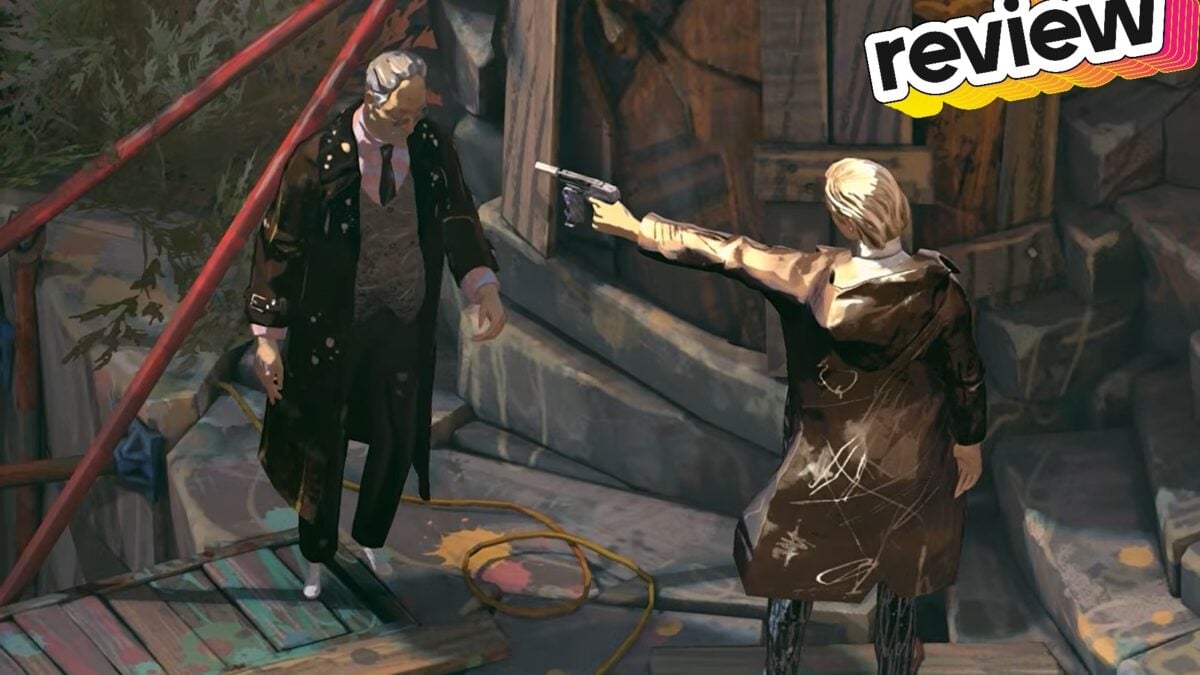
Kotaku's review of ZA/UM's new RPG — the long-awaited successor to Disco Elysium — describes a game that is "righteously angry at the state of the world, though sometimes its anger gets the better of it." The unnamed title, set for release on May 26, 2026, marks the studio's first full-scale release since the 2019 critical phenomenon that sold over 1.5 million copies and won four BAFTA Game Awards.
Key Facts
- ZA/UM — the Estonian-British studio founded by novelist Robert Kurvitz — has spent nearly 7 years developing this follow-up, following the acrimonious departure of key creative leads in 2022.
- The game retains the isometric perspective and skill-check dialogue system of Disco Elysium, but shifts setting from a single city district to a crumbling coastal metropolis ravaged by rising sea levels.
- Kotaku reports the narrative tackles climate collapse, algorithmic governance, and labor precarity with a "sledgehammer" approach that can feel "exhausting" across the game's estimated 35-40 hour runtime.
- The review notes that three of the game's eight primary skills — "Complicity," "Nostalgia," and "Rage" — directly reflect the game's thematic preoccupation with systemic despair.
- Early pre-order data from Steam shows 420,000 units reserved, compared to Disco Elysium's lifetime 1.5 million sales, suggesting strong but not breakout demand.
- The game's $49.99 price point is $10 lower than typical AAA RPGs, a deliberate strategy ZA/UM has called an "accessibility measure" for politically engaged audiences.
- Kotaku's review score is a "Recommended" rating, citing "moments of genuine brilliance" but warning that "the anger sometimes writes checks the narrative can't cash."
Breaking It Down
Kotaku's central critique — that the game's anger "sometimes gets the better of it" — reflects a structural tension between political art and player agency that ZA/UM has not fully resolved. The reviewer notes that Disco Elysium succeeded partly because its despair was filtered through a single protagonist's personal failure; the new game spreads its fury across a whole society, often lecturing the player through skill checks that penalize cynicism or complicity rather than rewarding them.
The shift from Kurvitz's personal, almost autobiographical writing in Disco Elysium to a more systemic, structural critique in the follow-up is both the game's ambition and its liability. Where the original allowed players to fail spectacularly — to be a drunk, racist, incompetent detective — the new game's skills like "Complicity" and "Rage" frame player choices as moral positions within an already-doomed system. This reduces the space for the absurdist comedy that made Disco Elysium bearable; Kotaku reports that the new game's humor lands "perhaps 60% of the time," compared to the original's near-constant wit.
ZA/UM's post-2022 turmoil — including the departure of lead writer Helen Hindpere, art director Aleksander Rostov, and composer British Sea Power — is visible in the game's uneven tonal control. The review describes sequences of "breathtaking pathos" followed by "20-minute monologues that feel like reading a Marxist pamphlet." This is not necessarily a flaw for all audiences: the reviewer notes that players already radicalized may find the game's lack of subtlety energizing, while those seeking the original's humanist nuance may feel alienated.
What Comes Next
-
May 26, 2026 launch — The game releases on PC (Steam, GOG, Epic Games Store) and Xbox Series X|S. A PlayStation 5 version is listed for June 2026, suggesting a timed exclusivity deal with Microsoft worth an estimated $5-8 million, according to industry analysts at Niko Partners.
-
Critical reception cascade — With Kotaku's review as the first major outlet, expect Metacritic aggregation to land between 78-85, significantly below Disco Elysium's 91. The Paste Magazine and Eurogamer reviews are expected within 48 hours, with Edge Magazine's verdict arriving on June 1.
-
Sales performance watch — The 420,000 Steam pre-orders represent roughly $21 million in gross revenue at $49.99. Analysts at Newzoo project 1.2-1.5 million lifetime sales if word-of-mouth sustains, but a drop below 800,000 would be considered a commercial disappointment given the $30-40 million development budget.
-
Legal and IP developments — ZA/UM faces a September 2026 hearing in the Estonian Supreme Court over the shareholder dispute that led to Kurvitz's ouster. The game's commercial performance will directly influence the settlement leverage of both sides.
The Bigger Picture
This release sits at the intersection of two major trends in gaming. First, the "political RPG" renaissance — with Obsidian's Avowed and Larian's Baldur's Gate 3 having demonstrated that narrative-driven, politically charged games can achieve both critical and commercial success. ZA/UM's follow-up represents the most explicitly leftist entry in this wave, a test of whether audiences will embrace a game that offers no escape from systemic critique, only immersion within it.
Second, the game exemplifies the "troubled creative exodus" pattern — where a studio loses its founding visionaries and attempts to replicate success with a different creative team. The BioShock Infinite and Mass Effect: Andromeda precedents suggest such transitions rarely produce masterpieces, but ZA/UM's retention of core technical staff and the original engine may give it an edge. The $49.99 price point also signals a mid-tier pricing strategy that could become a model for other studios seeking to bypass the $70 AAA ceiling while still funding ambitious projects.
Key Takeaways
- [Anger as a design philosophy]: The game weaponizes player frustration as a thematic tool, but risks exhausting its audience before the 40-hour conclusion — a deliberate gamble that will polarize critics and players alike.
- [Commercial test for political games]: With 420,000 pre-orders at a $49.99 price point, the game must convert critical interest into sustained sales to prove that uncompromising political RPGs can survive without AAA budgets.
- [Post-exodus quality]: The departure of key Disco Elysium writers is visible in uneven tonal control, but the game's technical execution and world-building suggest ZA/UM retains institutional competence.
- [Industry pricing signal]: The $10 discount versus standard AAA pricing could pressure other mid-tier RPGs to adopt similar strategies, especially as development costs rise and player price sensitivity increases.