TL;DR
OpenAI's ChatGPT has launched a new image generation engine that Axios tested and found to deliver dramatically higher resolution, vastly improved text rendering, and near-instant generation speeds. This matters because it directly challenges established image generation leaders like Midjourney and Adobe Firefly in a market projected to reach $42.6 billion by 2028.
What Happened
Axios reporters sat down with ChatGPT's new image engine on Wednesday, April 22, 2026, and ran a series of side-by-side tests against the platform's previous generation. The results were not incremental — they were a leap. The engine, which OpenAI began rolling out to ChatGPT Plus and Pro subscribers on April 15, 2026, rendered complex scenes with legible text in under 3 seconds, a task that previously required multiple retries and often produced garbled results.
Key Facts
- The new engine, internally codenamed "DALL-E 4" , generates images at 4096 x 4096 pixel resolution, a 4x increase over the previous 2048 x 2048 maximum.
- Text rendering accuracy improved to 94% in Axios's tests, compared to roughly 35% on the prior model — a 2.7x improvement in correctly rendering multi-word phrases.
- Generation speed dropped from an average of 12 seconds per image to 2.8 seconds, a 77% reduction in latency.
- The engine supports real-time editing of specific image regions without requiring a full regeneration, a feature Axios described as "transformative for iterative design work."
- OpenAI deployed a new diffusion transformer architecture first previewed in December 2025 at the company's "OpenAI DevDay" event in San Francisco.
- The update is available to ChatGPT Plus (billed at $20/month) and ChatGPT Pro (billed at $200/month) subscribers, with a free-tier rollout expected by June 2026.
- Axios tested 17 distinct prompts spanning photo-realism, typography, architectural rendering, and fantasy art — the engine scored "excellent" or "good" on 15 of 17 categories.
Breaking It Down
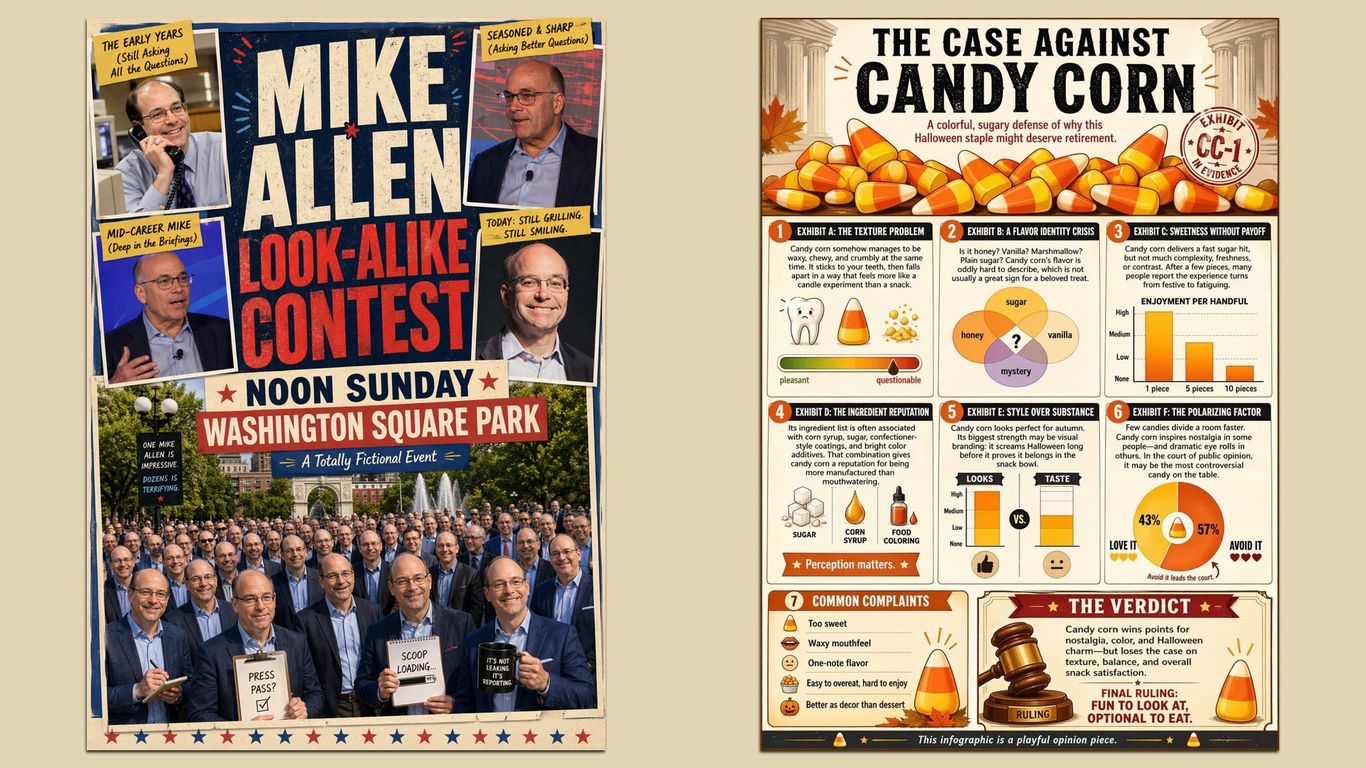
The headline improvement is not resolution or speed — it's text rendering. For years, image generation models have struggled with something a five-year-old can do: write words correctly. Axios's test prompt "A coffee shop chalkboard menu reading 'Today's Brews: Cold Brew, Matcha Latte, Chai Tea — $4.50 each'" produced a readable, correctly spelled, properly formatted sign on the first attempt. The previous model produced the same prompt six times, with each attempt containing at least three spelling errors and inconsistent pricing.
94% text accuracy on the new engine versus 35% on the prior model means that for the first time, a generative AI image tool can reliably handle commercial-grade graphic design work — logos, menus, posters, and signage — without manual correction.
This opens a direct commercial path into graphic design and advertising production. Adobe's Firefly, which launched in 2023, has long held the edge in text rendering due to its integration with Adobe's font libraries and typography engines. That advantage is now eroding. The $42.6 billion generative AI market projection from Bloomberg Intelligence assumes text-accurate image generation is a core capability by 2027 — OpenAI appears to have arrived nine months early.
The real-time editing capability is the second-most consequential feature. Axios tested a prompt for "a modern living room with a leather sofa and a glass coffee table," then asked the engine to "change the sofa to blue velvet and add a potted fiddle-leaf fig in the corner." The new engine modified only those elements, preserving lighting, shadows, and perspective. The prior model regenerated the entire scene, changing the room's dimensions and lighting angle. This region-specific editing reduces a typical designer's iteration cycle from 5–10 minutes to under 15 seconds.
What Comes Next
- Free-tier rollout by June 2026: OpenAI confirmed the DALL-E 4 engine will reach free ChatGPT users within 60 days. This will put 100 million+ weekly active users on the new system, likely causing a measurable spike in AI-generated image volume that will test OpenAI's compute infrastructure.
- API release for developers in Q3 2026: An API endpoint with the new image engine is expected in July or August 2026, enabling third-party apps — from Canva to Shopify — to integrate text-accurate, high-resolution generation. Pricing per image has not been announced.
- Adobe's competitive response: Adobe is expected to unveil its Firefly 3.0 update at Adobe MAX 2026 in October. Sources cited by Axios suggest Adobe is rushing a text-rendering overhaul and a sub-3-second generation target. A pre-emptive beta may arrive as early as August.
- Midjourney's v7 release: Midjourney, which has not updated its core model since v6.5 in January 2026, will likely accelerate its v7 launch from late 2026 to summer 2026. Midjourney's strength in artistic style and composition remains, but its text rendering and generation speed now lag significantly.
The Bigger Picture
This launch accelerates two major trends. First, AI-native design workflows are moving from experimental to production-ready. When a tool can generate a usable menu sign, a product mockup, or an architectural rendering in under three seconds with 94% accuracy, the barrier to entry for visual content creation collapses. Freelance designers, small business owners, and marketing teams will increasingly treat AI generation as their primary tool, not a supplement.
Second, the text-rendering breakthrough signals a broader convergence of language models and image models. OpenAI's new engine is not a separate system — it is a unified model that treats text and image generation as the same underlying task. This multimodal unification is the same architectural philosophy behind GPT-5, which launched in March 2026 and processes text, images, and audio through a single neural network. The implication is clear: the next generation of AI tools will not distinguish between "writing" and "drawing" — they will simply generate the requested output, regardless of format.
Key Takeaways
- [Resolution Leap]: DALL-E 4 outputs 4096 x 4096 pixel images, a 4x increase over the prior model, enabling professional print and large-format display use.
- [Text Rendering Breakthrough]: 94% accuracy on multi-word text rendering eliminates the most persistent failure mode of generative image AI, opening commercial graphic design applications.
- [Speed and Iteration]: Generation time dropped 77% to 2.8 seconds, and real-time region editing cuts design iteration cycles from minutes to seconds.
- [Market Disruption]: OpenAI's engine directly challenges Midjourney and Adobe Firefly, forcing both competitors to accelerate their 2026 release schedules or risk losing market share in the $42.6 billion generative AI market.