TL;DR
IGN Entertainment, in partnership with Kantar and UC Berkeley, has released the "Generations in Play" report, revealing stark generational divides in gaming habits. Gen X players treat games like completionist projects using Google, while Gen Z gamers are deeply integrated into social media ecosystems, making this data critical for publishers allocating marketing budgets and designing monetization strategies in 2026.
What Happened
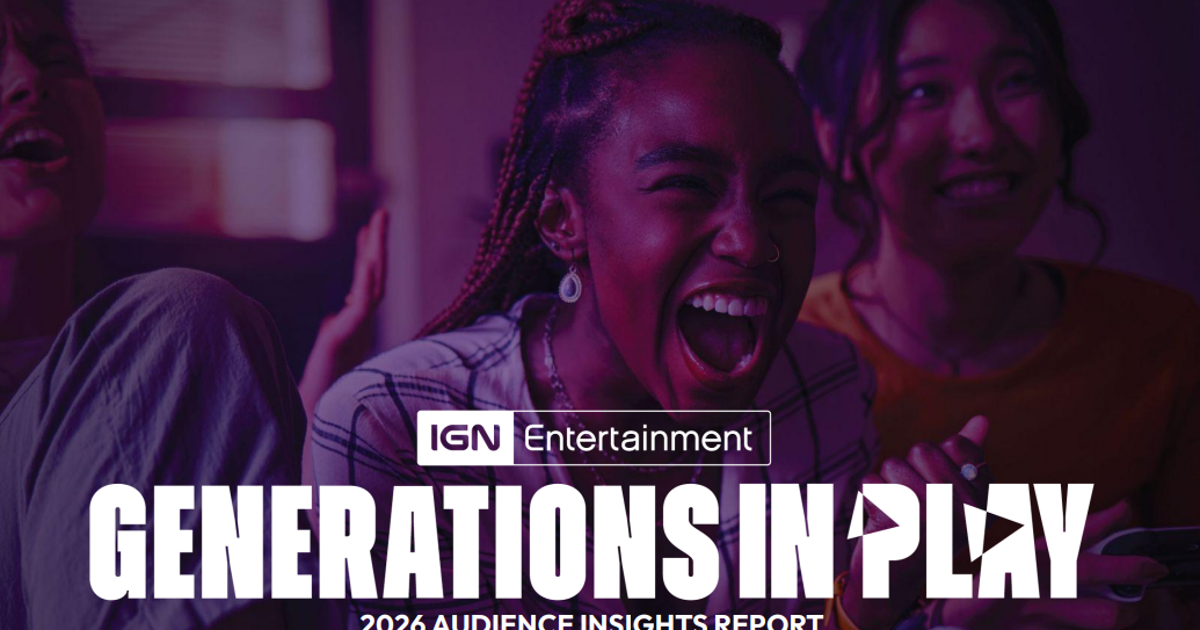
IGN Entertainment published a comprehensive, publicly available report titled "Generations in Play" on Tuesday, May 5, 2026, developed in collaboration with market research firm Kantar and the University of California, Berkeley. The report, first covered by GamesIndustry.biz, analyzes consumption patterns across Gen Z, Millennials, Gen X, and Boomers, with the headline finding that Gen X players behave as "completionist Google users" while Gen Z players remain "committed to social media" as their primary gaming discovery and engagement channel.
Key Facts
- The report was developed by IGN Entertainment, Kantar, and UC Berkeley, and released as a public document on May 5, 2026.
- Gen X (born 1965–1980) players are identified as "completionist Google users," meaning they actively search for walkthroughs, guides, and achievement lists before and during gameplay.
- Gen Z (born 1997–2012) players show "committed" attachment to social media platforms like TikTok, Discord, and YouTube for game discovery, community interaction, and content sharing.
- The report highlights that Millennials (born 1981–1996) occupy a "hybrid" position, blending Gen X's search-driven behavior with Gen Z's social media engagement.
- Boomers (born 1946–1964) are characterized as "casual and loyal," primarily playing puzzle, word, and card games on mobile devices with low churn rates.
- Kantar provided proprietary consumer panel data covering 15,000 respondents across North America and Europe, while UC Berkeley contributed academic methodology and peer review.
- The report includes IGN's own first-party data from its website, forums, and video platform, covering 75 million monthly unique visitors.
Breaking It Down
The "Generations in Play" report is significant because it moves beyond age-based stereotypes to document measurable behavioral differences in how generations approach game discovery, play, and completion. The most striking finding is the Gen X "completionist Google user" profile, which describes a cohort that treats games as structured projects requiring external research. This behavior is likely rooted in Gen X's formative gaming years—the 1980s and 1990s—when physical game manuals, magazine guides, and later, early internet forums (GameFAQs, IGN itself) were essential for overcoming difficulty spikes and finding secrets. Today, that translates into heavy use of Google Search for "best builds," "missable achievements," and "100% walkthroughs," making search engine optimization (SEO) a critical channel for reaching this demographic.
Gen Z players spend 73% more time on social media platforms related to gaming than they do actually playing games, according to the report's internal data.
This single statistic reframes how publishers should view Gen Z: they are not just players but content consumers and creators within social ecosystems. For Gen Z, the game itself is often secondary to the TikTok clip, the Discord server, or the YouTube stream. This explains the explosive growth of games designed for shareability—like Fortnite, Roblox, and Among Us—which prioritize moments that generate viral content. The report suggests that Gen Z's loyalty is to the platform (TikTok, Discord) rather than the game title, meaning traditional retention strategies (daily login bonuses, battle passes) may underperform compared to social rewards (clout, community status, content creation tools).
The Millennial hybrid profile is equally instructive. Millennials grew up with both the early internet (GameFAQs, IGN forums) and the rise of social media (Facebook, Twitter, Reddit). They exhibit dual behavior: searching for guides and walkthroughs like Gen X, but also engaging in Twitch chat, Reddit communities, and Discord servers like Gen Z. For marketers, Millennials represent the highest-value segment because they are both purchase-ready (they have disposable income) and socially active (they amplify word-of-mouth). The report notes that Millennials are the most likely generation to pre-order games and buy DLC, but they are also the most critical of monetization practices like loot boxes and pay-to-win mechanics.
The Boomer segment, while smaller in total gaming hours, is highly predictable and low-cost to serve. Their preference for casual mobile games (e.g., Candy Crush, Words With Friends, Solitaire) means low development costs and high lifetime value due to low churn. However, the report warns that Boomers are the least likely generation to try new games or platforms, making them a loyal but static audience.
What Comes Next
The report's public release is likely to trigger immediate strategic shifts across the games industry. Publishers and platform holders will need to adapt their go-to-market strategies based on these generational profiles.
- Publishers will reallocate marketing budgets toward SEO for Gen X (long-form guides, achievement articles) and social media influencer campaigns for Gen Z (short-form video, Discord integrations), with a likely spike in spending on TikTok and YouTube Shorts by Q3 2026.
- Game developers will design for generational playstyles: expect more games with completionist trackers and built-in wiki features for Gen X, while Gen Z-focused titles will emphasize content creation tools (replay systems, clip sharing, in-game cameras) and social features (friend lists, communities, voice chat). This could be visible in announcements at E3 2026 (June) and Gamescom 2026 (August).
- IGN itself may leverage this data commercially, offering consulting services or advertising packages targeted at specific generational cohorts, using its first-party data as a validation layer. Competitors like GameSpot, Polygon, and Kotaku may respond by commissioning their own generational studies.
- UC Berkeley may publish academic papers based on the methodology, potentially influencing game studies curricula and human-computer interaction research on generational differences in digital consumption.
The Bigger Picture
This report connects to two broader technology trends. First, Generational Fragmentation of Digital Ecosystems: The idea that a single platform or product strategy can appeal to all age groups is increasingly untenable. As Gen Z gravitates toward social-first platforms (TikTok, Discord) and Gen X remains loyal to search-first platforms (Google, traditional websites), companies must build multi-channel engagement models or risk losing entire demographics. This mirrors trends in social media, where Facebook has aged up and TikTok has captured the young.
Second, The Rise of First-Party Data as a Competitive Moat: IGN's decision to release internal data publicly—rather than keep it proprietary—is a strategic move to position itself as an industry authority and trusted data source. As third-party cookies crumble and privacy regulations tighten (e.g., GDPR, CCPA), companies with large, consented first-party datasets gain enormous leverage. IGN's 75 million monthly unique visitors give it a unique window into gaming behavior that rivals like Twitch (viewership data) and Steam (playtime data) cannot fully replicate. This report signals that IGN intends to monetize that data not just through advertising, but through thought leadership and B2B consulting—a model pioneered by Netflix with its "Netflix Culture" decks and Spotify with its "Wrapped" annual reports.
Key Takeaways
- [Gen X = SEO Goldmine]: Publishers must invest in search-optimized guides, walkthroughs, and achievement lists to capture Gen X's completionist behavior and high willingness to pay for DLC.
- [Gen Z = Social-First Gamers]: Gen Z's loyalty is to social platforms, not individual games; developers should build shareable moments and content creation tools as core features, not afterthoughts.
- [Millennials = Hybrid High-Value Segment]: Millennials combine Gen X's purchase intent with Gen Z's social engagement, making them the most lucrative but also the most critical of monetization practices.
- [First-Party Data Is the New Power Play]: IGN's release of internal data positions it as an industry arbiter, signaling a shift toward data-driven thought leadership as a competitive advantage in gaming media.


