TL;DR
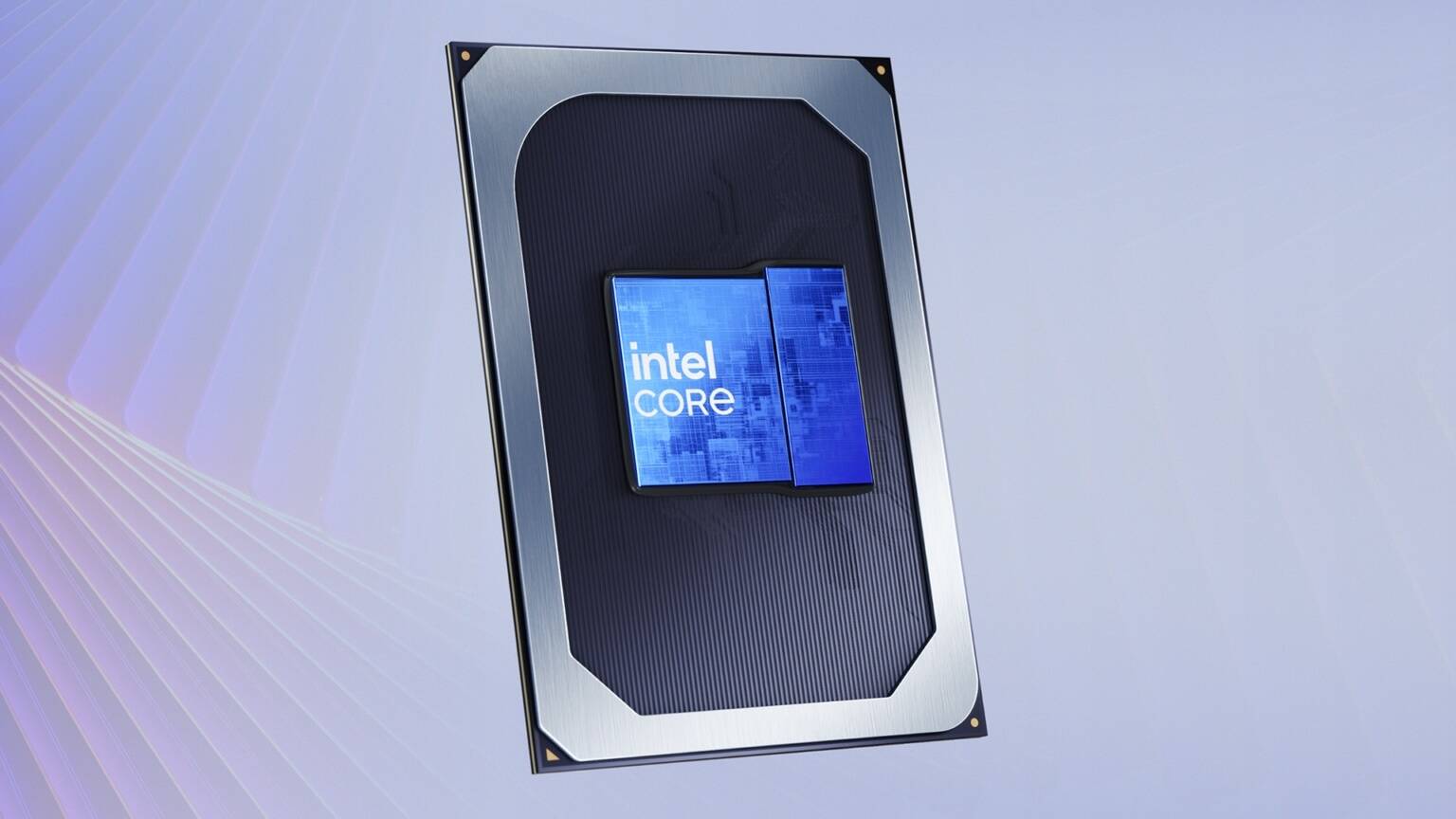
Intel has launched its Core Series 3 processors, a new line of stripped-down CPUs for laptops and edge computing that are manufactured entirely on its own internal process nodes. This marks a significant strategic pivot, reducing the company's reliance on TSMC for leading-edge manufacturing and signaling a renewed focus on its integrated device manufacturing (IDM) model.
What Happened
Intel has officially launched its Core Series 3 processor family, a decisive move to reclaim manufacturing sovereignty and reduce its dependency on external foundries. The new chips, designed for efficiency in thin laptops and low-power edge devices, are the first client processors in years to be built entirely on Intel's own fabrication processes, bypassing the industry's dominant contract manufacturer, TSMC.
Key Facts
- The Core Series 3 family was officially announced and launched on Friday, April 17, 2026.
- The processors are positioned as a stripped-down alternative to the higher-performance "Ultra" series, targeting thin-and-light laptops and low-power edge computing boxes.
- This product line is manufactured using Intel's internal process nodes, a shift from recent generations that utilized TSMC's N3 (3nm) technology for compute tiles.
- The launch represents a key deliverable under CEO Pat Gelsinger's "IDM 2.0" strategy, which aims to revitalize Intel's manufacturing arm while also operating it as a foundry for external clients.
- The architectural focus is on power efficiency and cost-effectiveness rather than peak performance, addressing specific market segments where TSMC-dependent parts may be over-specified or too expensive.
- This move is a direct competitive maneuver against AMD, Qualcomm, and Apple, all of whom rely wholly or substantially on TSMC for advanced manufacturing.
- The product category, "low-power edge boxes," indicates Intel is targeting the growing infrastructure for AI and data processing at the network periphery, not just traditional PCs.
Breaking It Down
Intel's Core Series 3 launch is less about raw silicon performance and more about strategic realignment. For years, Intel's roadmap had become inextricably linked to TSMC's capacity and schedule, particularly for its most advanced products. By bringing a new client CPU line entirely in-house, Intel is demonstrating tangible progress on the foundational promise of IDM 2.0: that its manufacturing group, Intel Foundry, can deliver competitive products on its own timeline. This is a critical proof point for both investors and potential external foundry customers who need assurance that Intel's process technology is viable and reliable.
The financial and supply chain implications are profound. Relying on TSMC comes with premium wafer costs and places Intel in a queue behind Apple, AMD, and Nvidia for the Taiwanese giant's most advanced capacity. By utilizing its own fabs, Intel gains greater control over its cost structure, supply security, and profit margins for this segment. It allows the company to optimize the design-for-manufacturing loop more tightly and potentially respond more quickly to market demands without being subject to TSMC's allocation decisions.
Shifting even a portion of its volume away from TSMC could save Intel hundreds of millions of dollars annually in wafer purchase costs and improve its product gross margin by several percentage points.
This financial recalibration is central to Intel's comeback narrative. Every Core Series 3 chip sold represents revenue that flows through Intel's own manufacturing books, improving the utilization and economics of its multi-billion-dollar fab network. In an industry where scale is everything, demonstrating the ability to profitably fill its fabs with its own leading-edge designs is the first step toward attracting external customers to do the same. A failure here would have cast severe doubt on the entire IDM 2.0 enterprise.
Furthermore, the focus on edge computing boxes is a savvy market expansion. As AI inference moves out of centralized data centers, a new class of power-constrained hardware is emerging at cell towers, retail locations, and factories. By offering a CPU platform built on a proven, cost-optimized internal node for this space, Intel is positioning itself ahead of competitors who may lack the integrated design-manufacture capability or who would be forced to use older, less competitive TSMC nodes to hit the right price point.
What Comes Next
The success of the Core Series 3 will be measured in the coming quarters, but its launch immediately sets in motion several critical industry watchpoints.
- Market Adoption and Reviews (Q2-Q3 2026): The first independent performance, power efficiency, and cost benchmarks will be published within weeks. OEM adoption announcements from major laptop manufacturers like Dell, HP, and Lenovo, as well as edge hardware specialists, will be a key indicator of commercial confidence in Intel's in-house node for this segment.
- Intel's Next-Node Execution (Late 2026-2027): All eyes will now turn to Intel's subsequent process node, 18A, slated for production readiness in late 2026. The Core Series 3 proves Intel can execute on its current nodes; the 18A ramp, particularly for the next-generation Core Ultra processors, will prove whether it can truly compete with TSMC's 2nm and beyond on performance and power.
- TSMC's Response and Capacity Reallocation: TSMC will not cede business passively. The foundry may adjust pricing or capacity allocation for its N3 and N2 families in response. The volume Intel shifts to its own fabs may free up advanced TSMC wafers for competitors like AMD and Nvidia, potentially altering the competitive dynamics in the high-performance CPU and GPU markets.
- The Foundry Customer Test (2027): The ultimate validation of IDM 2.0 is signing major external clients. A successful Core Series 3 launch serves as a flagship case study. Intel Foundry will now aggressively use this data point in its pitches to other chip designers, with the goal of announcing a marquee "foundry 2.0" customer within the next 12-18 months.
The Bigger Picture
This move by Intel intersects with two dominant macro-trends reshaping global technology. First, it is a major escalation in the geopolitical re-shoring of semiconductor manufacturing. Governments in the US, EU, and Japan are spending hundreds of billions to reduce concentrated dependency on East Asian foundries. Intel, as the only Western company with both leading-edge design and manufacturing capabilities, is positioning itself as the linchpin of this supply chain diversification. A successful in-house product line strengthens the argument for its foundry business as a national strategic asset.
Second, it reflects the industry's segmentation into heterogeneous and purpose-built silicon. The era of one-size-fits-all CPUs is over. The Core Series 3, by being "stripped-down" for specific efficiency workloads, acknowledges that not every device needs the absolute cutting-edge node. This allows Intel to deploy the right process technology for the right product—using its own mature-but-optimized nodes for cost-sensitive edge and mobile devices, while potentially still partnering with TSMC for peak-performance compute tiles where necessary. This flexibility could become a key competitive advantage.
Key Takeaways
- Strategic Decoupling: Intel has taken a concrete step to reduce its strategic vulnerability and cost burden associated with reliance on TSMC, bringing a key product line back in-house.
- IDM 2.0 Proof Point: The Core Series 3 is the first major fruit of Pat Gelsinger's strategy, serving as a live demonstration that Intel's manufacturing can be competitive for client products.
- Edge Computing Play: The launch is not just about laptops; it's a targeted grab for the nascent but high-growth market of AI-enabled low-power edge infrastructure.
- Financial Recalibration: Success with this line could significantly improve Intel's product margins and fab utilization, creating a more virtuous financial cycle to fund future process R&D and compete on cost.