TL;DR
Apple's Mac Studio, the company's critical desktop workstation for creative professionals, is confirmed to be receiving a major update in 2026. This matters now because current models are selling out, signaling strong demand and creating a vacuum in the high-end desktop market that competitors could exploit.
What Happened
Supply of the current Mac Studio is dwindling across Apple's online and retail channels, a classic precursor to a new product launch. According to a report from MacRumors on April 17, 2026, this inventory drawdown coincides with multiple sources indicating that Apple is actively developing the next generation of its compact powerhouse desktop, with an expected release sometime this year.
Key Facts
- Source: The report originates from MacRumors, a leading Apple-focused news and rumor website, published on Friday, April 17, 2026.
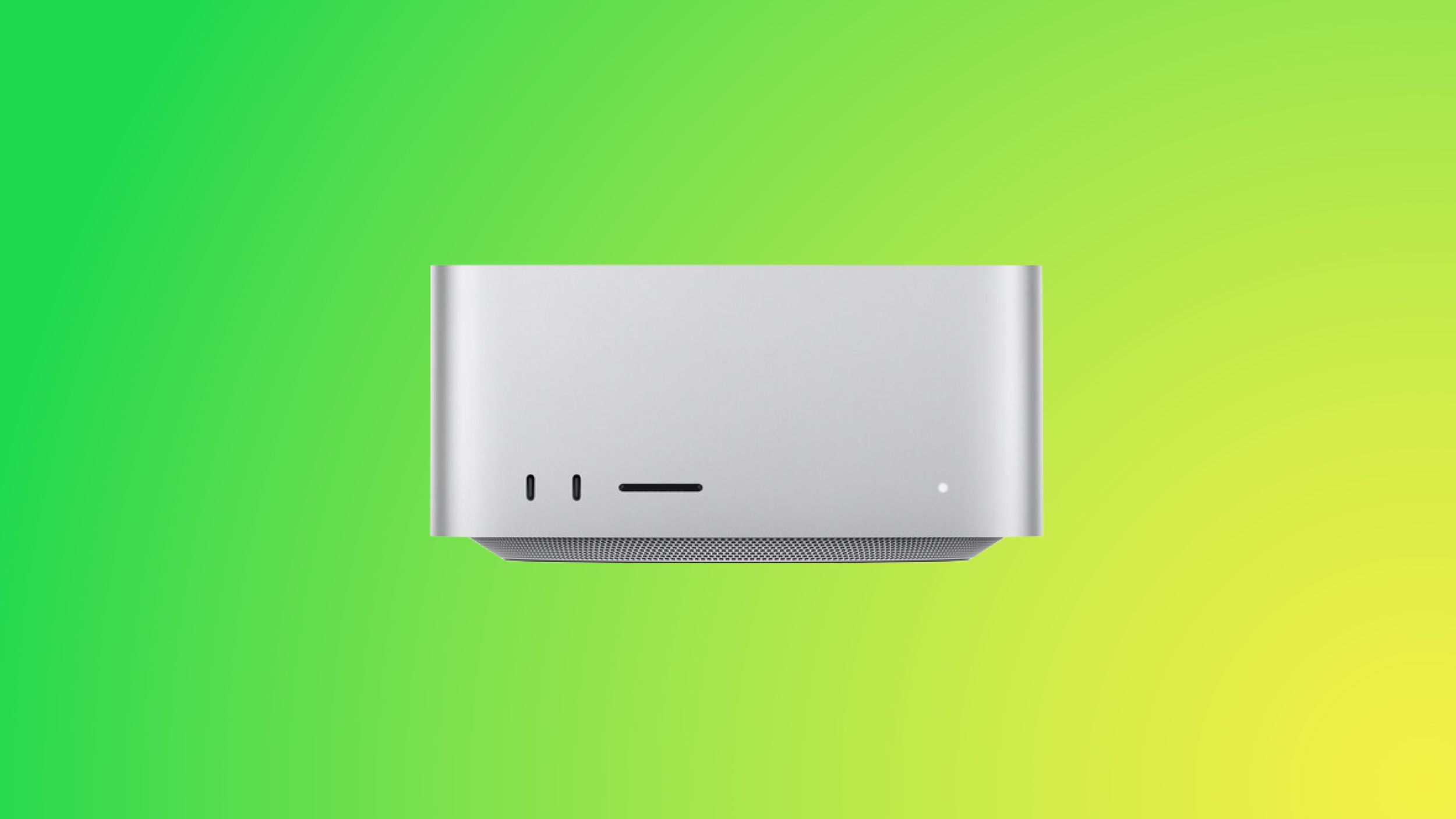
- Product: The subject is the next-generation Mac Studio, Apple's desktop computer positioned between the Mac mini and the Mac Pro.
- Timeline: The update is expected to arrive at some point in 2026, with the current supply situation suggesting a launch could be imminent.
- Market Signal: Supplies of existing machines are running low, a standard operational indicator from Apple that a transition to new models is underway.
- Core Implication: The update will almost certainly feature a new Apple Silicon chipset, continuing the company's multi-year transition away from Intel processors.
- Historical Context: The last Mac Studio update was in June 2023, featuring the M2 Max and M2 Ultra chips, making a 2026 refresh consistent with a roughly three-year product cycle.
Breaking It Down
The dwindling inventory of the current Mac Studio is the most tangible signal that Apple's product engine is shifting gears. For Apple watchers and enterprise procurement departments, this is a reliable, non-verbal announcement. When specific configurations become unavailable for shipment, transitioning to "while supplies last" status, it systematically clears the channel for a new product introduction. This logistical move prevents a costly backlog of obsolete inventory and creates pent-up demand, ensuring a strong launch quarter for the successor model.
The Mac Studio's last update was nearly three years ago, in June 2023, featuring the since-surpassed M2 generation of chips.
This timeline is critical for understanding the competitive pressure Apple now faces. In the three years since the M2 Ultra debuted, the landscape for high-performance computing has evolved rapidly. AMD's Threadripper Pro and Intel's Xeon W series have advanced, while NVIDIA's RTX workstation GPUs continue to set benchmarks in GPU-accelerated tasks like AI training and 3D rendering. For creative professionals and developers whose workflows have grown to incorporate more machine learning and real-time ray tracing, the current Mac Studio's capabilities, while still robust, are no longer at the bleeding edge. A 2026 update is not merely incremental; it is necessary to reclaim leadership in performance-per-watt and reassert the Mac's viability in the most demanding professional pipelines.
The strategic importance of the Mac Studio within Apple's portfolio cannot be overstated. It serves as the accessible flagship for the Apple Silicon ecosystem, offering near-Mac Pro levels of performance in a fraction of the footprint and at a significantly lower price point. Its success is a direct proof point for Apple's vertical integration strategy. The next iteration will be judged on how effectively it closes the remaining gaps with traditional workstation towers, particularly in areas like expandable storage and RAM, and whether the new "M4" or "M5" Ultra chip (depending on Apple's naming convention) can deliver a generational leap substantial enough to justify an upgrade for the existing user base.
What Comes Next
The focus now shifts from if a new Mac Studio is coming to when and with what specifications. The development cycle will move through several predictable phases, with key milestones for observers to monitor.
- WWDC 2026 Announcement: The most likely venue for a reveal is Apple's Worldwide Developers Conference in June 2026. This event is tailored for the Mac Studio's core audience of developers and creative pros, and it would allow Apple to showcase new silicon and software features in tandem. A pre-order announcement at WWDC with shipments to follow in July or August aligns with historical patterns.
- Chipset Specification Reveal: The single most important detail will be the configuration of the new Apple Silicon Ultra chip. Key metrics to watch include core counts for performance and efficiency CPUs, the scale of the GPU (potentially targeting 80-100 cores), the inclusion of a dedicated, more powerful Neural Engine for AI/ML tasks, and support for unified memory beyond the current 192GB limit.
- Connectivity and Expandability Updates: Industry observers will scrutinize the I/O panel for next-generation connectivity. Will Apple finally integrate Wi-Fi 7 and Bluetooth 5.4? More critically, will there be any movement on user-accessible components? While a full modular design is unlikely, even a single user-upgradeable NVMe SSD slot would be a monumental shift in Apple's desktop philosophy.
- Supply Chain and Regulatory Filings: In the weeks leading up to any announcement, regulatory certifications in databases like the Eurasian Economic Commission (EEC) will likely confirm new model identifiers. Furthermore, reports from Apple's supply chain in Asia detailing production ramp-ups for new enclosures or logic boards will offer concrete evidence of the launch timeline.
The Bigger Picture
The evolution of the Mac Studio is a microcosm of two dominant trends in computing. First, it exemplifies the Arm-based Performance Revolution. Apple's success with its custom silicon has fundamentally disrupted the desktop and laptop CPU market, proving that Arm architecture can compete head-to-head with x86 in high-performance workflows. The next Mac Studio will be a benchmark for how far this revolution can go, potentially challenging single-socket workstation CPUs from Intel and AMD in multi-threaded professional applications.
Second, its role underscores the critical importance of the AI-Native Workstation. The computer is no longer just a tool for video editing or coding; it is a platform for running large language models, generating media with diffusion models, and training custom AI datasets locally. The performance of the Neural Engine and the GPU in the next Mac Studio will be directly marketed against this trend. Apple's ability to integrate these AI accelerators seamlessly into its hardware and software stack—through frameworks like Core ML and MLX—will be a key differentiator against Windows workstations that rely on discrete, often power-hungry, GPUs from NVIDIA and AMD.
Key Takeaways
- Imminent Refresh: A new Mac Studio is confirmed for 2026, with low current inventory signaling a launch potentially within months, likely at WWDC in June.
- Silicon Leap: The update will be driven by a next-generation Apple Silicon Ultra chip (M4/M5 Ultra), aiming to reclaim performance leadership for professional creative and development workflows.
- AI Workhorse: A major focus will be on enhanced AI/ML capabilities through an upgraded Neural Engine and GPU, positioning the Mac Studio as a core device for on-device AI processing.
- Strategic Linchpin: The model remains essential to Apple's pro desktop strategy, offering top-tier performance in a compact form factor and defending against incursions from Windows-based AI workstations.