TL;DR
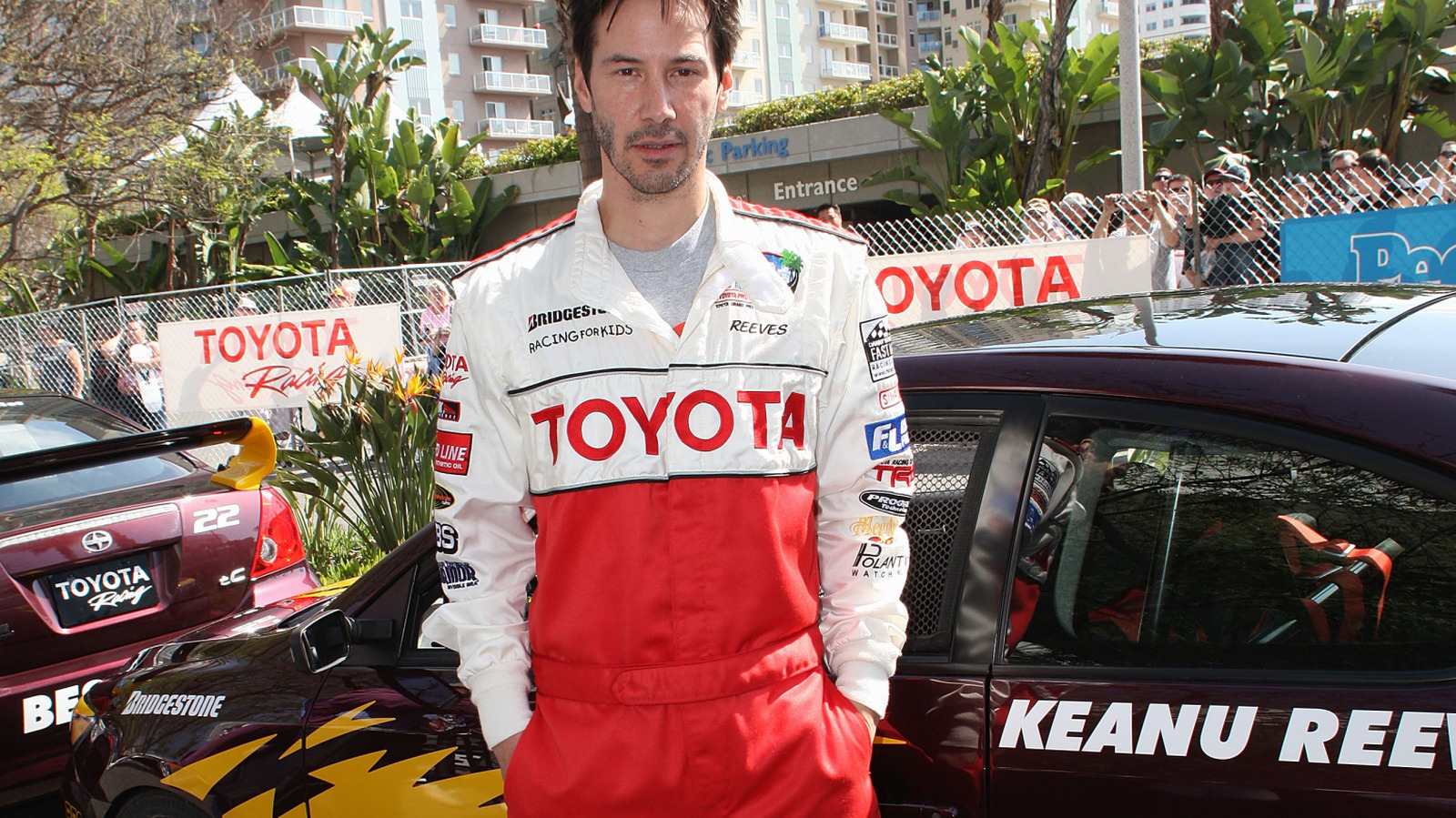
A 2006 Scion tC, one of two factory-built, supercharged race cars commissioned by Warner Bros. for the 2008 film Speed Racer and driven by Keanu Reeves during promotional events, is being offered for public sale. Its emergence from a private collection for $125,000 highlights the booming market for authentic, screen-used vehicles and a growing appreciation for the unique, analog-era machines that defined a specific moment in automotive and cinematic history.
What Happened
The g-forces in the cockpit of the Wachowski-directed Speed Racer film were real for at least one actor. Keanu Reeves, tasked with promoting the 2008 live-action adaptation, didn't just pose with a prop—he was strapped into a fully functional, 300-horsepower race car and pushed it to its limits on a track. Now, nearly two decades later, one of only two such cars ever built is hitting the market, offering a rare chance to own a piece of cinematic and automotive obscurity that was once the domain of a Hollywood star.
Key Facts
- The vehicle is a 2006 Scion tC, heavily modified by Toyota Racing Development (TRD) and 3D Industries into a dedicated track machine for Warner Bros.' Speed Racer film.
- Only two of these functional race-spec tCs were ever constructed; the car for sale is the one used extensively by Keanu Reeves for promotional driving events and media appearances.
- Power comes from a TRD supercharged 2AZ-FE 2.4-liter inline-four engine, producing an estimated 300 horsepower, routed through a 6-speed manual transmission and a TRD limited-slip differential.
- The car features a full Motec M600 ECU, a custom 3D Industries roll cage, Wilwood racing brakes, and BBS alloy wheels shod in Hoosier racing slicks.
- It has been held in a private collection for years and is being offered for sale at $125,000.
- The sale is being facilitated by a specialist dealer, with the car currently located in Southern California.
- The film Speed Racer, directed by Lana and Lilly Wachowski, was released in May 2008 and underperformed at the box office but has since gained a cult following.
Breaking It Down
The $125,000 asking price for a modified Scion tC might initially raise eyebrows, but this is no ordinary tuner car. It represents a perfectly preserved artifact from a unique collision of Hollywood marketing, factory-backed motorsport engineering, and a specific, fleeting era of youth-oriented automotive culture. Scion, Toyota's now-defunct brand, was at its peak in the mid-2000s, explicitly targeting younger buyers with affordable, customizable cars. The tC was its halo. Transforming it into a legitimate race car for a major motion picture was a logical, if extreme, extension of that "personalization" ethos, backed by Toyota's official performance arm.
This car exists because of a $120 million studio gamble on a hyper-stylized, family-friendly racing film that ultimately failed to recoup its budget during its theatrical run.
The financial context is crucial. Warner Bros. invested heavily in Speed Racer, not just in visual effects, but in tangible assets like these race cars to generate authentic promotional material. The vehicle for sale is a physical remnant of that marketing budget. Its value today is inversely related to the film's initial commercial failure; it has transformed from a promotional tool into a rare collectible. Its provenance is not tied to the film's success, but to its specific, behind-the-scenes role and its association with Keanu Reeves—an actor whose own star has only risen in the years since, bolstered by a reputation for genuine automotive passion.
The technical specifications reveal a machine built for one purpose: to look, sound, and perform like a real race car on camera and under the scrutiny of a knowledgeable lead actor. The use of a Motec M600 ECU, a system favored by professional racing teams, indicates an intent for serious performance tuning, not just cosmetic alteration. The TRD supercharger kit was a factory-approved power adder for the period, lending an air of legitimacy. This car bridges the gap between a movie prop and a bona fide track weapon, making it significantly more compelling than a static display piece.
Furthermore, its sale tests a niche within the collector car market: "interesting failures." It appeals not to investors seeking blue-chip Ferrari appreciation, but to enthusiasts who value narrative, engineering, and pop-cultural obscurity. Its worth is derived from its complete story—its genesis for a specific film, its use by a specific celebrity, its survival as one of two, and its embodiment of a defunct brand's racing ambitions.
What Comes Next
The sale of this Scion tC will serve as a barometer for several evolving trends in the collector market. Its journey from a private collection to a public listing will be closely watched by auction houses, film memorabilia specialists, and Toyota collectors.
- The Bidding and Sale Process: Whether the car meets, exceeds, or fails to reach its $125,000 reserve will provide hard data on the value of early-2000s, film-related "modern classics." Specialist dealers and auction platforms like Bring a Trailer will analyze the outcome to gauge market appetite for similar offbeat lots.
- Increased Scrutiny of Speed Racer Assets: The sale will likely trigger renewed interest in other props, costumes, and assets from the film. The whereabouts of the second functional tC, the full-size Mach 6 mockups, or the extensive digital assets could become topics of public search, potentially bringing more items to market.
- Toyota's Archival and Heritage Response: Toyota Motor North America, which oversees the Toyota and TRD heritage archives, may take note. While unlikely to purchase the vehicle itself, the sale could prompt the company to formally document its role in the project for historical purposes, or to leverage the renewed interest in a digital marketing context, connecting its current GR performance brand to its TRD past.
- The Future of the Car: The new owner will face a defining choice: preserve it as a time-capsule piece of cinema history, likely limiting its use, or actively campaign it in vintage or club racing events, embracing its original purpose as a driven machine. This decision will shape the car's long-term narrative and value.
The Bigger Picture
This sale is a microcosm of two powerful, converging trends in technology and collecting. First, the Democratization of Automotive Provenance Tracking. Digital archives, online forums, and specialist marketplaces have made it possible to authenticate and trace the history of even the most obscure vehicles. Two decades ago, this Scion's story might have been lost; today, its entire pedigree—from build sheets to photos of Reeves driving it—can be assembled and verified, creating the trust necessary for a high-value transaction.
Second, it reflects the Nostalgia for Analog-Digital Hybrids. The Speed Racer film was a technological marvel, using then-revolutionary "bullet time" digital effects to create a live-action cartoon. Yet, its most visceral promotional element was this analog, internal-combustion, manual-transmission race car. In an era rapidly transitioning to electric vehicles and digital driving assists, there is growing cultural and economic value placed on physical, mechanical, and driver-centric artifacts from the not-too-distant past. This car is a fossil from the last era where a major film's racing sequences were supported by real, petrol-burning machines built in a workshop, not just rendered on a server farm.
Key Takeaways
- Cinematic Provenance Pays: Authentic, functional vehicles used by major stars for specific film promotions command significant premiums, often independent of the film's box-office performance.
- Niche Markets Are Maturing: The collector car market is expanding beyond traditional classics to embrace cult film memorabilia and factory-built oddities, with prices now being set for categories that lacked benchmarks five years ago.
- The Scion tC's Legacy Cemented: This sale elevates the first-generation Scion tC, particularly in TRD-modified form, from a forgotten economy coupe to a historically significant piece of 2000s automotive culture worthy of preservation.
- Marketing Artifacts as History: Tools created for film marketing, once considered ephemeral, are being re-evaluated as primary historical sources and desirable collectibles in their own right.