TL;DR
Logitech has unveiled the Mobi Fold, an $80 Bluetooth mouse built around a silicone-wrapped hinge that allows the device to fold flat for pocket storage. The product targets the persistent gap between mobile workers who need a full-size mouse and those who refuse to carry one due to bulk, launching on June 10, 2026 at a premium price point that tests whether convenience can command a premium over traditional travel mice.
What Happened
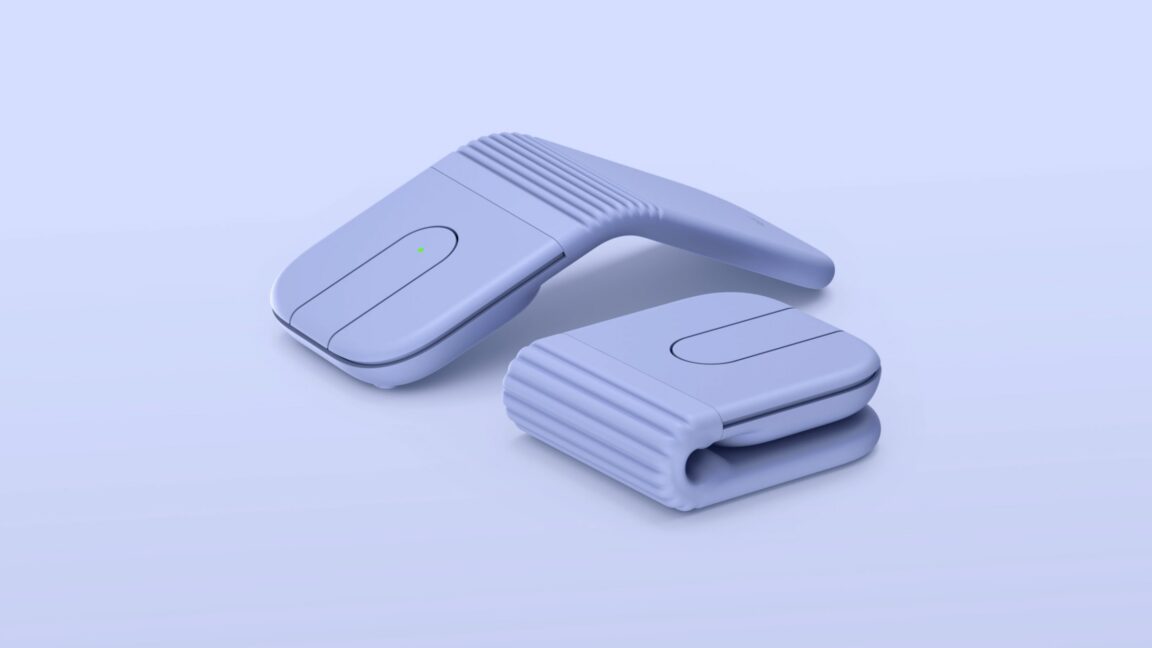
On Wednesday, June 10, 2026, Logitech announced the Mobi Fold, a foldable Bluetooth mouse priced at $80 that uses a silicone-wrapped hinge to collapse into a flat, pocketable shape. The product, first reported by Ars Technica, represents Logitech’s latest attempt to solve the long-standing tension between ergonomic utility and portability in computer peripherals.
Key Facts
- The Mobi Fold retails for $80, placing it in the premium tier of portable mice — more than double the cost of Logitech’s own M185 ($29.99) and on par with the company’s flagship MX Anywhere 3S ($79.99).
- The device uses a silicone-wrapped hinge as its core structural innovation, allowing the mouse body to fold completely flat when not in use while protecting the hinge mechanism from dust and wear.
- It connects via Bluetooth only, with no support for Logitech’s proprietary Bolt receiver or Unifying receiver, which means compatibility is limited to devices with native Bluetooth.
- The product targets the specific user demographic that Ars Technica describes as “people who refuse to carry a mouse with them” — a segment that has historically relied on trackpads despite their ergonomic shortcomings.
- Logitech announced the product on June 10, 2026, with availability expected to follow within weeks through Logitech’s direct sales channel and major online retailers.
- The silicone wrap serves dual purposes: it protects the hinge mechanism from debris and provides a non-slip grip surface when the mouse is in use.
- The foldable design reduces the mouse’s thickness to approximately the depth of a smartphone when folded, though specific dimensions were not disclosed in the announcement.
Breaking It Down
The Mobi Fold enters a market segment that has seen remarkably little innovation over the past decade. Portable mice have largely settled into two categories: the tiny “puck” style that sacrifices ergonomics for size, and the full-size travel mouse that still occupies significant bag space. Logitech’s own MX Anywhere series has dominated the premium travel mouse category by offering a full-size shape in a compact form, but it still requires a dedicated pocket or case. The Mobi Fold attempts to split the difference — offering a full-size mouse experience when open, but collapsing to near-zero thickness when closed.
The $80 price point is the most aggressive bet Logitech is making here. At that price, the Mobi Fold competes directly with Logitech’s own MX Anywhere 3S, which includes a rechargeable battery, the company’s best sensor, and multi-device pairing. The Mobi Fold must justify its premium through the convenience of the folding mechanism alone, since it lacks the MX line’s advanced features. For context, a standard Logitech M185 wireless mouse costs $29.99 and works perfectly well for basic productivity — the folding mechanism represents a 167% price premium over that baseline.
The $50 gap between the Mobi Fold and Logitech’s budget travel mouse represents the exact dollar amount the company believes consumers will pay to eliminate the “will I or won’t I” decision of packing a mouse for a trip.
That calculation is not arbitrary. Logitech has decades of sales data showing that millions of laptop users own a mouse but rarely carry it, defaulting to trackpad use in coffee shops, airport lounges, and meeting rooms. The Mobi Fold is designed to eliminate the friction of that decision — if the mouse folds flat enough to slip into a jeans pocket or the thin front pocket of a laptop sleeve, the user no longer has to choose between ergonomics and portability. The silicone-wrapped hinge is the critical engineering detail here: it must survive thousands of folding cycles without developing play or stiffness, and the silicone must not degrade from pocket lint, moisture, or temperature changes.
What Comes Next
The Mobi Fold faces its first real test not in reviews, but in the hands of frequent travelers over the coming months. Logitech has not disclosed the hinge’s rated lifespan, which will be the single most important durability metric. A hinge that fails after 10,000 folds — roughly three years of daily use — would be acceptable. One that fails after 1,000 folds would be a disaster for the product line.
- Hinge durability testing: Independent reviewers and early adopters will stress-test the silicone-wrapped hinge within the first 30 days of availability, likely publishing tear-down analyses by mid-July 2026. The hinge’s long-term reliability will determine whether the Mobi Fold becomes a permanent product category or a one-off experiment.
- Battery life disclosures: Logitech has not yet specified battery capacity or expected runtime on a single charge. Given the $80 price and the lack of a replaceable battery, battery life will be a key differentiator. If the Mobi Fold matches the MX Anywhere 3S’s 70-day battery life, the price becomes easier to justify.
- Enterprise adoption: Logitech’s B2B sales channel for corporate procurement will be a major revenue driver. Companies that issue laptops to mobile workers may evaluate the Mobi Fold as a standard accessory, particularly for employees who travel frequently but currently use trackpads.
- Competitor response: Microsoft, Apple, and Anker all compete in the portable mouse space. If the Mobi Fold gains traction, expect at least one competitor to announce a foldable design within 12 months, potentially at a lower price point.
The Bigger Picture
The Mobi Fold sits at the intersection of two broader trends: peripheral miniaturization and mobile-first ergonomics. The first trend has driven everything from foldable keyboards to rollable displays, as manufacturers race to make full-size functionality disappear into pocketable form factors. The silicone-wrapped hinge is a direct descendant of the engineering that gave us foldable phones — but applied to a much simpler, cheaper device. The second trend reflects the post-pandemic reality that more workers than ever split their time between dedicated home offices, co-working spaces, and coffee shops. For these workers, a mouse that lives permanently in a laptop bag is a nuisance; a mouse that lives in a pocket is a tool.
The $80 price also signals that Logitech sees this as a premium, design-forward product rather than a commodity accessory. That positioning is consistent with the company’s broader strategy of moving upmarket — its MX and Ergo lines now command prices that would have seemed absurd for a mouse a decade ago. The Mobi Fold is a bet that a significant slice of the laptop-using population will pay a premium not for better tracking or more buttons, but for the simple convenience of never having to decide whether to bring a mouse.
Key Takeaways
- [Price Premium]: At $80, the Mobi Fold costs 167% more than Logitech’s basic wireless mouse, with the folding hinge as the sole justification for the premium.
- [Hinge Engineering]: The silicone-wrapped hinge is the product’s core innovation and its greatest risk — long-term durability will determine market success.
- [Target User]: The product specifically targets mobile workers who own a mouse but routinely leave it at home due to bulk, a segment Logitech has data on but has not previously addressed.
- [Competitive Landscape]: The Mobi Fold enters a market with established competitors at every price point, from $20 budget mice to $80 premium options, and must prove its folding mechanism offers real utility.