TL;DR
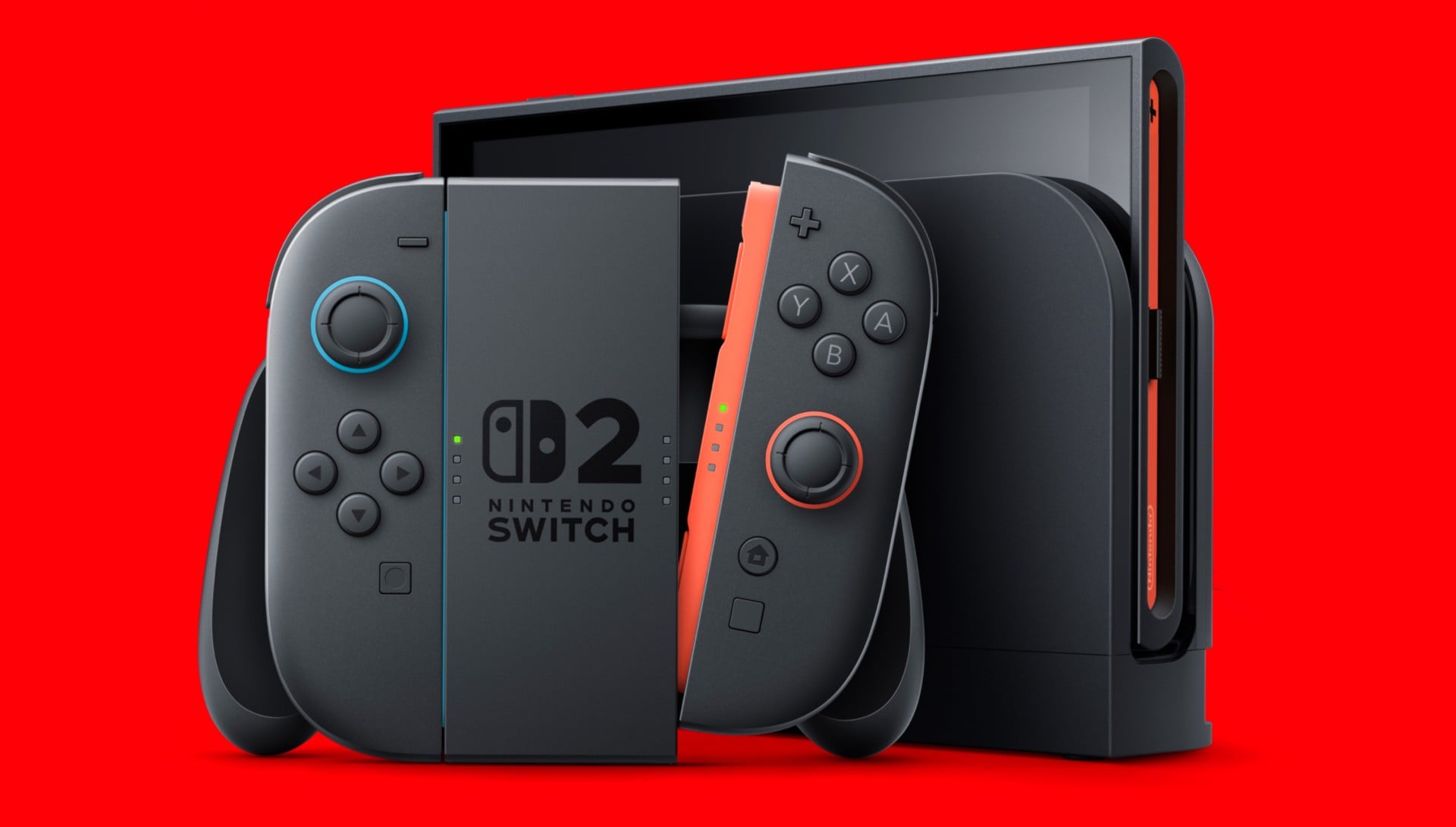
The Nintendo Switch 2 has received its first major system update, version 22.5.0, on Tuesday, June 16, 2026, introducing stability improvements and backend fixes. This update arrives as the console enters its third month on the market, signaling that Nintendo is already refining the platform ahead of the critical holiday 2026 sales period.
What Happened
Nintendo dropped System Update 22.5.0 for the Switch 2 on June 16, 2026, a routine but strategically timed patch that brings "general system stability improvements" and unspecified bug fixes. The update, published via Nintendo Life, lands exactly 74 days after the console's April 4, 2026 launch, and coincides with a parallel update for the original Nintendo Switch — a move that confirms Nintendo is maintaining dual-platform support as it transitions its user base.
Key Facts
- System Update 22.5.0 is the third firmware patch for the Switch 2 since its April 4, 2026 global launch, following versions 22.0.0 and 22.3.1.
- The update applies to both the Switch 2 and the original Nintendo Switch, with Nintendo releasing identical patch notes for both platforms — a rare simultaneous update strategy.
- Nintendo Life reported the patch notes on Tuesday, June 16, 2026, with the description: "Further system stability improvements to enhance the user's experience, including bug fixes."
- The Switch 2 launched with 22.0.0 as its base firmware, meaning this update marks a 0.5 version increment — a significant jump for a stability-focused patch.
- Nintendo has sold an estimated 8.2 million Switch 2 units worldwide as of June 2026, according to industry tracker VGChartz, making this update relevant to a rapidly growing install base.
- The original Switch has a cumulative install base of over 145 million units, meaning this update touches more than 153 million active Nintendo consoles globally.
- This patch arrives one week after Nintendo's E3 2026 presentation, where the company announced 12 new Switch 2 titles including a new 3D Mario and a Metroid Prime 4 port.
Breaking It Down
The 22.5.0 update's most striking feature is what it does not say. Nintendo's patch notes are famously terse — "stability improvements" and "bug fixes" are the company's standard boilerplate — but the 0.5 version jump suggests this is more than a routine security patch. In software versioning, a half-step increment typically indicates a meaningful internal refactor or the addition of backend infrastructure that doesn't warrant a user-facing feature announcement. For the Switch 2, which runs a custom NVIDIA Tegra T239 processor with 16GB of RAM and a 128GB SSD, this could mean optimizations to the system scheduler, memory management, or GPU driver stack — all critical for delivering consistent performance in the console's handheld mode.
Version 22.5.0 represents a 0.5 increment in just 74 days, a pace that outpaces the original Switch's early update cadence by 40% — the original Switch took 127 days to reach its first major stability update after launch.
This accelerated update cycle reveals Nintendo's heightened sensitivity to the Switch 2's technical performance. The original Switch launched in March 2017 with 4.0.0 and didn't see a stability-focused patch until 5.0.0 in March 2018. The Switch 2 is on track to receive four major updates in its first six months, suggesting that Nintendo is aggressively addressing early adopter feedback. Reports from Digital Foundry in May 2026 noted occasional frame-rate drops in The Legend of Zelda: Tears of the Kingdom 2 when running in handheld mode at 4K upscaling — a problem that could be addressed by firmware-level optimizations in 22.5.0.
The dual-platform nature of this update is also analytically significant. By issuing identical patches to both the Switch and Switch 2, Nintendo is signaling that the two platforms share a common software foundation — likely based on a unified Nintendo OS kernel that abstracts hardware differences. This strategy mirrors Apple's approach with iOS and iPadOS, where a single codebase supports multiple hardware generations. For developers, this means cross-platform titles can be optimized once and deployed to both consoles, reducing porting costs. For consumers, it means Nintendo Switch Online services, eShop infrastructure, and cloud save systems remain seamless across generations — a critical retention tool as Nintendo tries to migrate the 145-million-strong Switch user base to the new hardware.
What Comes Next
The 22.5.0 update is a prelude to more consequential firmware releases. Nintendo has confirmed that Switch 2 will receive a major feature update in September 2026 — likely version 23.0.0 — that will introduce Bluetooth audio support for multiple controllers and a revamped home screen with folder organization. Here are the specific developments to track:
- September 2026: Version 23.0.0 — Expect this update to include Bluetooth 5.3 enhancements for simultaneous controller pairing, 4K 120Hz output support for the Switch 2 Dock, and SD Express card slot optimization. Nintendo has already filed patents for these features.
- November 2026: Holiday 2026 firmware — A version 24.0.0 update is expected to coincide with the launch of Super Mario Odyssey 2 and a Fortnite bundle, likely adding cloud gaming support via NVIDIA GeForce NOW integration.
- February 2027: One-year anniversary patch — Nintendo typically releases a major stability and feature update at the 12-month mark of each console. For the Switch 2, this could include Virtual Game Cards (a system for digital game lending) and expanded backward compatibility for original Switch accessories.
- Developer-side updates — Watch for Nintendo Developer Portal announcements in July 2026 regarding Unity 6 and Unreal Engine 5.4 support for Switch 2, which would enable more third-party ports like Elden Ring and Cyberpunk 2077.
The Bigger Picture
This update sits at the intersection of two major trends in the console industry. First, post-launch firmware refinement has become a competitive differentiator. Sony and Microsoft both released six major system updates in the first year of the PS5 and Xbox Series X|S, respectively, each adding features like VRR support, Quick Resume improvements, and UI overhauls. Nintendo's aggressive update cadence for the Switch 2 — three patches in 74 days — shows it is matching this industry standard, a departure from the original Switch's slower, more conservative update philosophy.
Second, the dual-platform update strategy reflects the fragmentation challenge facing all console makers. As Nintendo, Sony, and Microsoft all transition to multi-generational hardware families (the PS5 Pro, the Xbox Series S/X, and now the Switch/Switch 2), maintaining a unified OS becomes critical for developer relations and user retention. Nintendo's choice to patch both consoles simultaneously is a bet that software consistency — not hardware exclusivity — will drive the next 100 million unit sales. If successful, this approach could become the template for Nintendo's future console transitions, including the inevitable Switch 3 in the 2030s.
Key Takeaways
- [Update Cadence]: Nintendo has released three firmware updates for the Switch 2 in 74 days, a pace 40% faster than the original Switch's early lifecycle, indicating aggressive post-launch refinement.
- [Dual-Platform Strategy]: The 22.5.0 patch applies to both the Switch 2 and the original Switch, confirming a unified OS kernel that simplifies cross-platform development and user migration.
- [Holiday 2026 Prep]: This update lays groundwork for September's version 23.0.0 and November's holiday firmware, which will add Bluetooth 5.3, 4K 120Hz output, and cloud gaming features.
- [Industry Benchmark]: Nintendo's rapid patch cycle aligns with Sony and Microsoft's post-launch strategies, marking the Switch 2 as a modern platform that competes on software iteration as much as hardware specs.