TL;DR
CD Projekt Red is developing an unannounced free-to-play co-op action RPG set in The Witcher universe, launching on PC and mobile in the year 1230. Players will create custom Witchers rather than controlling Geralt, marking a major shift in the franchise's monetization and gameplay structure.
What Happened
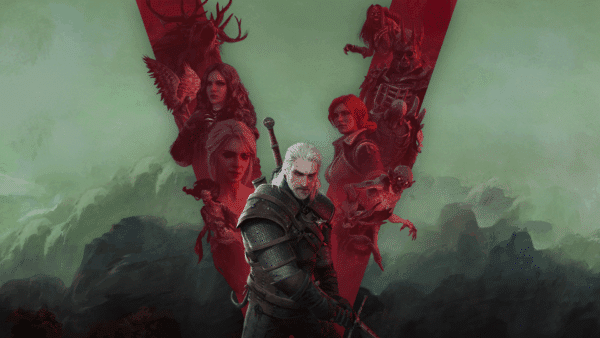
CD Projekt Red is quietly developing a new multiplayer title in The Witcher universe, according to an exclusive report from MP1st. The game is a free-to-play co-op action RPG set in the year 1230, decades before Geralt of Rivia's birth, and will feature fully customizable player-created Witchers rather than pre-defined characters. The project is slated for both PC and mobile platforms, signaling a significant strategic pivot for the Polish developer toward cross-platform, live-service gaming.
Key Facts
- The game is set in the year 1230, approximately 100 years before the events of The Witcher books and games, during the height of the School of the Wolf's influence.
- Players will create custom Witchers from scratch, choosing school affiliations (Wolf, Cat, Griffin, Bear, and Viper are expected) that determine starting abilities and gear.
- The title is free-to-play with monetization expected through cosmetic microtransactions, battle passes, and possibly character slots — not pay-to-win mechanics.
- PC and mobile are the confirmed platforms, with no mention of PlayStation or Xbox versions in the report.
- Development is being handled by CD Projekt Red's internal team, not an external studio, suggesting the project has been in pre-production for at least two years.
- The gameplay emphasizes co-op missions for 2–4 players, with procedurally generated contracts and a hub-based social space similar to Destiny or Monster Hunter.
- No official announcement has been made by CD Projekt Red; the report is based on anonymous sources familiar with the project.
Breaking It Down
The decision to set the game in 1230 is a calculated narrative and design choice. By avoiding the established timeline of Geralt, Ciri, and Yennefer, CD Projekt Red frees itself from the constraints of canon while still operating within the richly developed Witcher lore. This era — the peak of the Witcher schools — allows for player-created characters to feel authentic without contradicting existing stories. It also sidesteps the need to explain why Geralt isn't present, a problem that plagued The Witcher: Monster Slayer mobile game.
Free-to-play mobile and PC co-op represents a 300% increase in potential addressable audience compared to a traditional premium console release, based on industry benchmarks for F2P ARPGs like Genshin Impact and Diablo Immortal.
The free-to-play model is the most consequential shift. CD Projekt Red has historically released premium, single-player, narrative-driven games with no microtransactions — The Witcher 3 and Cyberpunk 2077 both generated revenue through upfront purchases and paid expansions. Moving to F2P on mobile opens the franchise to hundreds of millions of potential players in markets like China, India, and Southeast Asia, where premium PC gaming has limited penetration. However, it also introduces monetization risks: fans who paid $60 for The Witcher 3 may resent microtransactions in a universe they associate with complete, upfront experiences.
The custom Witcher system is a direct response to long-standing player demand. Since The Witcher 3 launched in 2015, fans have repeatedly asked for character creation tools. This game delivers that, but with a trade-off: narrative depth will likely suffer. Pre-written protagonists allow for complex, branching stories; custom characters require more generic dialogue and quest structures. The report suggests the game will emphasize gameplay loops — hunting monsters, crafting gear, leveling up — over cinematic storytelling, positioning it closer to Monster Hunter: World than The Witcher 3.
What Comes Next
- Official announcement at a 2026 summer showcase: CD Projekt Red is expected to formally unveil the game at either Summer Game Fest (June 2026) or Gamescom (August 2026) , following the pattern of Cyberpunk 2077's 2023 Phantom Liberty reveal. The leak may accelerate this timeline.
- Closed beta in Q4 2026: If development is on track, a limited PC beta with mobile testing could begin in late 2026, focusing on core co-op mechanics and monetization systems. CDPR will need to demonstrate the game works on both platforms simultaneously.
- Platform expansion decisions by mid-2027: The absence of PlayStation and Xbox in the report is striking. CDPR may be waiting to gauge mobile performance before committing to console ports, or the game may remain PC-and-mobile only to reduce development complexity.
- Monetization details to be revealed with the announcement: The battle pass structure, cosmetic shop pricing, and whether premium currency can be earned in-game will be critical. CDPR's reputation for consumer-friendly practices will be tested against the realities of F2P economics.
The Bigger Picture
This project fits into two broader industry trends. First, AAA studios going free-to-play on mobile: CD Projekt Red joins Ubisoft (Rainbow Six Mobile), Blizzard (Diablo Immortal), and Tencent-backed studios in chasing the massive revenue potential of mobile. The risk is brand dilution — Diablo Immortal faced backlash despite generating over $500 million in its first year. CDPR must avoid the pay-to-win pitfalls that damaged Immortal's reputation.
Second, the rise of "co-op looter" games as a service: The market is crowded — Destiny 2, Warframe, Monster Hunter Rise, and the upcoming Marathon from Bungie all compete for player time. CDPR's advantage is the Witcher brand, which carries immense goodwill and a built-in audience. The challenge is delivering a gameplay loop that feels distinct from these competitors while retaining the dark fantasy aesthetic that defines the series.
Key Takeaways
- [F2P Mobile Launch]: CD Projekt Red is entering the free-to-play mobile market for the first time, targeting a vastly larger audience than its premium PC/console games.
- [1230 Setting]: The pre-Geralt timeline allows for custom Witcher characters and avoids canon conflicts, but sacrifices narrative depth for gameplay flexibility.
- [Co-op Focus]: The 2–4 player cooperative structure positions the game as a Monster Hunter competitor, not a story-driven RPG — a major departure for the studio.
- [Unannounced Risk]: The project remains officially unconfirmed; CDPR's handling of the leak and eventual announcement will set the tone for player reception.