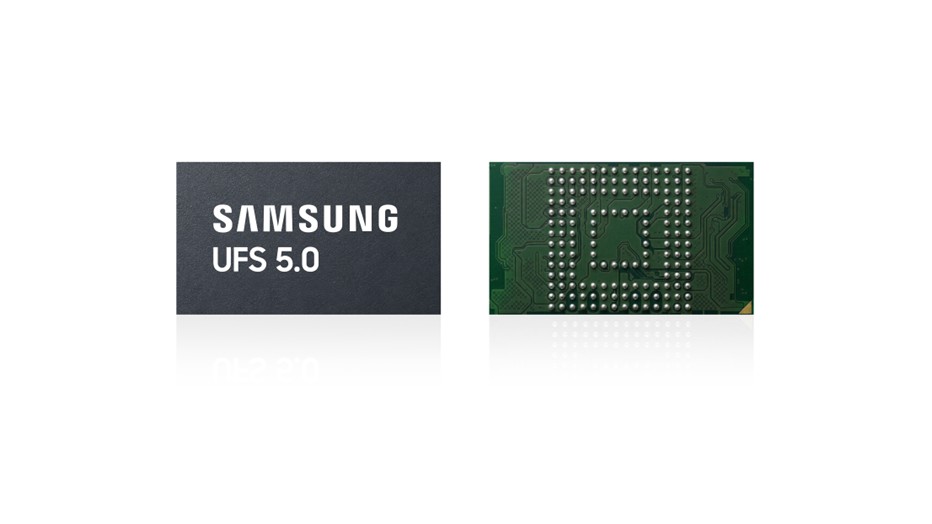
Samsung Unveils Industry’s Fastest UFS 5.0 Solution for Next-Gen On-Device AI Applications
TL;DR
Samsung Electronics has developed the industry's first UFS 5.0 memory solution, achieving read speeds up to 10.0 GB/s — roughly double the performance of current UFS 4.0 standards. This breakthrough is critical right now because it directly enables complex on-device AI workloads, such as real-time language translation and generative image editing, without relying on cloud servers, addressing growing privacy and latency demands.
What Happened
On Monday, June 22, 2026, Samsung Electronics announced the development of the industry's first Universal Flash Storage (UFS) 5.0 solution, marking a generational leap in mobile memory performance. The new storage standard is engineered specifically to support next-generation on-device AI applications, promising seamless execution of large language models and real-time data processing directly on smartphones, tablets, and other mobile devices.
Key Facts
- Samsung’s UFS 5.0 solution achieves sequential read speeds of up to 10.0 GB/s, a 100% improvement over the UFS 4.0 standard's 5.0 GB/s ceiling.
- Sequential write performance has been doubled to 7.0 GB/s, enabling faster saving of high-resolution video and AI-generated content.
- The new solution leverages Samsung’s proprietary 8th-generation V-NAND technology and a custom controller to achieve these speeds.
- UFS 5.0 is projected to deliver 50% improvement in power efficiency per gigabyte transferred compared to UFS 4.0, critical for battery-driven AI workloads.
- The standard introduces multi-queue support with up to 16 queues, a significant increase from UFS 4.0's single queue, allowing parallel processing of AI inference tasks.
- Mass production is expected to begin in Q4 2026, with the first commercial devices likely arriving in early 2027.
- Samsung claims UFS 5.0 reduces latency for random read operations by 40% , directly benefiting applications that require instant responses, such as voice assistants and real-time video processing.
Breaking It Down
Samsung’s announcement is not merely an incremental speed bump; it is a fundamental architectural shift designed to solve the primary bottleneck for on-device AI: data throughput. Current flagship smartphones running on-device AI models, such as Google’s Gemini Nano or Apple’s on-device LLMs, are often throttled by the storage subsystem's inability to feed the neural processing unit (NPU) fast enough. UFS 5.0’s 10.0 GB/s read speed effectively removes that bottleneck, allowing an NPU to load a 7-billion-parameter model in under a second—a task that would take nearly two seconds on UFS 4.0.
Doubling sequential read speed to 10.0 GB/s means a smartphone could load a 7-billion-parameter AI model in under 0.8 seconds, compared to over 1.5 seconds on the fastest current UFS 4.0 drives.
The introduction of 16 multi-queues is arguably the more transformative feature for AI. On-device AI is not a single, monolithic task; it involves multiple concurrent streams—loading the model, processing user input, fetching context from memory, and saving results. UFS 4.0’s single-queue architecture forced these tasks to be serialized, creating latency spikes. UFS 5.0’s parallel queue design allows a smartphone to simultaneously handle a voice query, load a background image generation model, and write a 4K video file without perceptible delay. This directly enables the "ambient AI" vision where multiple AI agents operate continuously in the background.
The 50% power efficiency gain is equally strategic. On-device AI is a power-hungry operation. By reducing the energy cost per gigabyte transferred, Samsung ensures that the performance leap does not come at the expense of battery life. This efficiency improvement, combined with 40% lower random read latency, makes UFS 5.0 particularly suited for real-time inference tasks like on-device language translation or AR object recognition, where every millisecond of delay degrades user experience.
What Comes Next
Samsung’s timeline is aggressive, but the industry faces several hurdles before UFS 5.0 becomes mainstream.
- Q4 2026 – Mass Production Start: Samsung will begin initial production of UFS 5.0 chips, likely in 256GB and 512GB capacities. Early supply will be allocated to Samsung’s own Galaxy S26 series, expected in early 2027.
- Early 2027 – First Consumer Devices: The first smartphones featuring UFS 5.0 are expected to launch. Watch for Qualcomm’s Snapdragon 8 Gen 5 and MediaTek’s Dimensity 9500 platforms, which will need updated memory controllers to support the new standard.
- Mid-2027 – Competitor Response: Micron and SK Hynix are likely to announce their own UFS 5.0 solutions. The standard must be ratified by JEDEC (the solid-state technology association) for cross-industry adoption, a process expected to complete by late 2026.
- Late 2027 – AI Software Optimization: Major OS updates from Google (Android 17) and Apple (iOS 20) will need to optimize file systems and AI APIs to fully leverage UFS 5.0’s multi-queue capabilities, especially for on-device model caching.
The Bigger Picture
This development sits at the intersection of two powerful trends: Edge AI and Storage-Centric Computing. The industry is moving away from cloud-dependent AI toward on-device processing to address privacy concerns, reduce latency, and enable offline functionality. UFS 5.0 is the storage infrastructure that makes this shift viable. Without it, even the most powerful NPU would be starved for data.
Simultaneously, the Mobile Compute Convergence trend is accelerating. As smartphones increasingly handle tasks once reserved for PCs—such as video editing, 3D rendering, and now AI model training—the storage subsystem must keep pace. UFS 5.0’s 10.0 GB/s read speed approaches the performance of entry-level NVMe SSDs in laptops, blurring the line between mobile and desktop capabilities. This convergence will drive demand for higher-capacity mobile storage, potentially making 1TB and 2TB configurations standard in flagship devices within two years.
Key Takeaways
- [Speed Leap]: UFS 5.0 doubles sequential read speeds to 10.0 GB/s and write speeds to 7.0 GB/s, setting a new performance baseline for mobile storage.
- [AI Enablement]: The new standard’s 16 multi-queues and 40% lower latency are specifically architected to support concurrent on-device AI inference tasks.
- [Power Efficiency]: A 50% improvement in power efficiency ensures that the performance gains do not compromise battery life in mobile devices.
- [Timeline]: Mass production begins in Q4 2026, with first commercial devices expected in early 2027, likely led by Samsung’s Galaxy S26 series.


