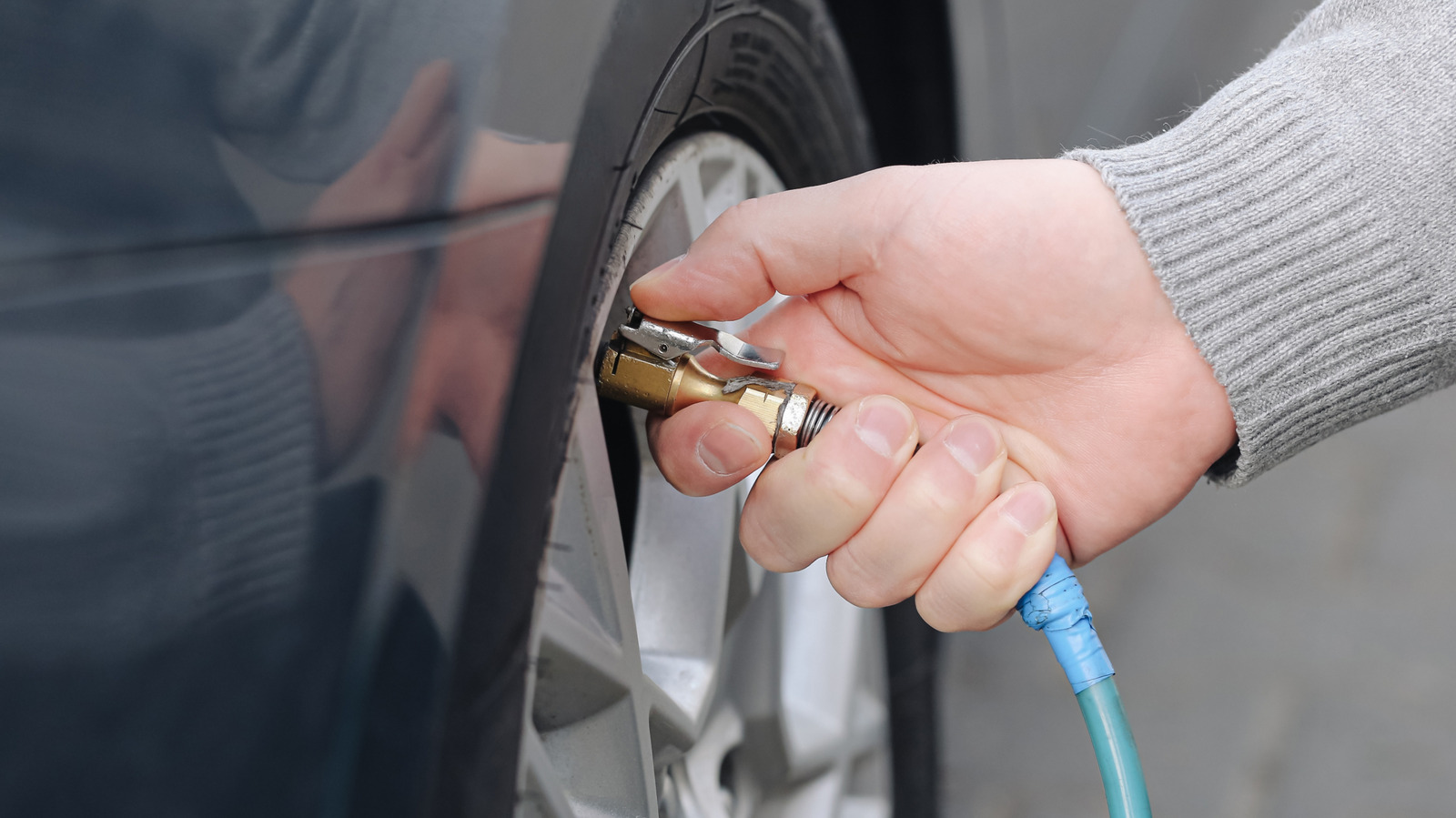
TL;DR
The 4 PSI rule—the guideline that a tire's pressure should increase by roughly 4 pounds per square inch from cold to hot—is a useful heuristic but not a universal law. Its reliability breaks down under extreme temperatures, heavy loads, and for modern low-profile or run-flat tires, meaning drivers relying on it alone risk underinflation or overinflation.
What Happened
On Monday, June 22, 2026, automotive outlet Jalopnik published an investigation into the so-called "4 PSI rule," the decades-old mechanic's shortcut that says a properly inflated tire will gain about 4 psi when driven from cold to hot. The article challenges the rule's universal reliability, warning that driving conditions, tire type, and ambient temperature can produce gains ranging from 2 psi to 7 psi, potentially misleading drivers about their actual inflation status.
Key Facts
- The 4 PSI rule compares a tire's cold pressure (before driving) to its hot pressure (after at least 20 minutes of highway driving) to estimate whether inflation is correct.
- Jalopnik's analysis notes that the rule was developed in an era of bias-ply tires and moderate driving speeds; modern radial tires and higher sustained speeds alter heat generation patterns.
- Ambient temperature swings of 30°F or more can change tire pressure by roughly 1 psi per 10°F, skewing the 4 PSI baseline significantly.
- Load weight—such as towing a trailer or carrying a full family and cargo—increases sidewall flex and heat, often producing hot-pressure gains of 5–7 psi even when cold pressure is correct.
- Low-profile tires (aspect ratio 45 or lower) generate less sidewall flex and thus less heat, sometimes showing hot gains of only 2–3 psi at proper inflation.
- Run-flat tires, with their reinforced sidewalls, also produce smaller pressure increases than conventional tires, making the 4 PSI target unreliable for them.
- The article cites data from Tire Rack and NHTSA studies showing that over 25% of vehicles on U.S. roads have at least one tire underinflated by 8 psi or more, indicating widespread confusion about inflation guidelines.
Breaking It Down
The 4 PSI rule is a classic example of a heuristic that worked well for its time but has not kept pace with changes in tire and vehicle technology. When bias-ply tires were standard, sidewall flex was relatively uniform, and typical highway speeds hovered around 60 mph. Under those conditions, a 4 psi hot gain was a reliable indicator that the tire had reached its optimal operating temperature and pressure. Today, however, a Toyota Camry on all-season radials, a Ford F-150 towing a boat, and a Tesla Model 3 on low-profile summer tires can each produce different hot-pressure gains while all being correctly inflated.
A Tire Rack study cited in the Jalopnik article found that a properly inflated P275/55R20 all-terrain tire on a pickup truck towing 5,000 pounds can show a hot gain of 6.5 psi—more than 60% above the 4 PSI rule. Drivers following the rule would incorrectly conclude the tire was overinflated and bleed air, leaving them dangerously underinflated when the load is removed.
The most analytically significant problem is that the 4 PSI rule treats pressure gain as a fixed number rather than a function of energy input. A tire's pressure increase is proportional to the heat generated by sidewall flexing and internal friction. Factors like higher speed, heavier load, lower ambient temperature, and softer tire compounds all increase heat generation. Conversely, stiffer sidewalls (as in run-flats or low-profile tires), lighter loads, and cooler driving styles reduce it. The rule collapses because it ignores these variables. For example, a Honda Civic on 18-inch low-profile tires driven gently on a 50°F day might show only a 2.5 psi hot gain while being perfectly inflated, whereas the same car on 16-inch standard tires driven aggressively on a 90°F day might show a 5 psi gain. Both could be correct, but the 4 PSI rule would flag one as underinflated and the other as overinflated.
What Comes Next
The Jalopnik article is likely to accelerate a broader industry conversation about how to simplify tire inflation guidance for consumers without sacrificing accuracy. Several developments are worth watching:
- NHTSA rulemaking on TPMS thresholds: The National Highway Traffic Safety Administration is expected to propose updated Tire Pressure Monitoring System (TPMS) regulations by late 2026, potentially requiring systems to display actual psi readings rather than just a low-pressure warning light. This would reduce reliance on the 4 PSI rule.
- Tire manufacturer education campaigns: Bridgestone, Michelin, and Goodyear have all signaled interest in launching consumer-facing apps or QR-code-based guides that provide vehicle-specific and load-specific inflation targets, moving beyond the one-size-fits-all sticker on the driver's door jamb.
- Automaker integration of load-sensing TPMS: Ford and Tesla are reportedly developing TPMS systems that estimate vehicle load via suspension sensors and adjust recommended pressure targets in real time. If commercialized by 2027, such systems would render the 4 PSI rule obsolete.
- Potential liability shift: If a high-profile accident is traced to a driver following the 4 PSI rule with a modern tire type, plaintiff attorneys may target tire manufacturers or automakers for failing to update consumer guidance. A lawsuit could force clearer labeling.
The Bigger Picture
This story connects to two broader trends in automotive technology and consumer safety communication.
First, the decline of mechanical heuristics in the digital age. The 4 PSI rule is one of many "old mechanic's rules"—like the 30-second oil pressure check or the "three-second following distance"—that were developed for simpler vehicles and driving conditions. As cars become more complex (low-profile tires, run-flats, electric powertrains with different weight distributions), these shortcuts become not just inaccurate but potentially dangerous. The automotive industry is slowly realizing that consumer-facing guidance must become more data-driven and personalized.
Second, the tension between simplicity and accuracy in safety messaging. NHTSA and tire manufacturers have long favored simple, memorable rules because they believe complex instructions won't be followed. But the 4 PSI rule's failure for 25%+ of drivers suggests that oversimplification may be causing more harm than good. The industry is now grappling with how to deliver precise, load-specific, temperature-aware inflation guidance without overwhelming drivers—a challenge that mirrors similar debates in nutrition labeling and medical dosing instructions. The solution likely lies in smart TPMS and connected vehicle data, not in better rules of thumb.
Key Takeaways
- [Rule is outdated]: The 4 PSI rule was developed for bias-ply tires and moderate speeds; it does not reliably apply to modern radials, low-profile tires, or run-flats.
- [Load matters most]: Heavy loads (towing, full cargo) can produce hot gains of 5–7 psi even at correct cold pressure, making the 4 PSI threshold misleading.
- [Temperature skews results]: Ambient temperature changes of 30°F shift baseline pressure by about 3 psi, further complicating the cold-to-hot comparison.
- [Better tools exist]: The most reliable method remains checking cold pressure against the vehicle's door-sticker recommendation; next-generation TPMS with real-time readouts will soon eliminate the need for rules of thumb.