TL;DR
Hideo Kojima has revealed that former Xbox boss Phil Spencer was the only major video game executive who truly understood his upcoming horror game "OD," while other CEOs failed to grasp the project. This disclosure, made in a June 2026 interview, underscores the deep creative alignment between Kojima Productions and Xbox, and raises questions about how Microsoft's leadership transition may affect the game's future.
What Happened
Hideo Kojima has publicly stated that Phil Spencer, the former head of Xbox, was the only major video game CEO who truly understood "OD," his upcoming horror title now in development at Kojima Productions. In an interview published Monday by Kotaku, Kojima claimed that while pitching the game to multiple executives across the industry, only Spencer grasped the full creative vision behind the enigmatic project, a revelation that comes as Microsoft navigates its first full year without Spencer at the helm.
Key Facts
- Hideo Kojima made the statement in a June 22, 2026 interview with Kotaku, discussing the development of his new horror game OD.
- Phil Spencer left his role as head of Xbox in early 2026, with Sarah Bond succeeding him as the division's CEO.
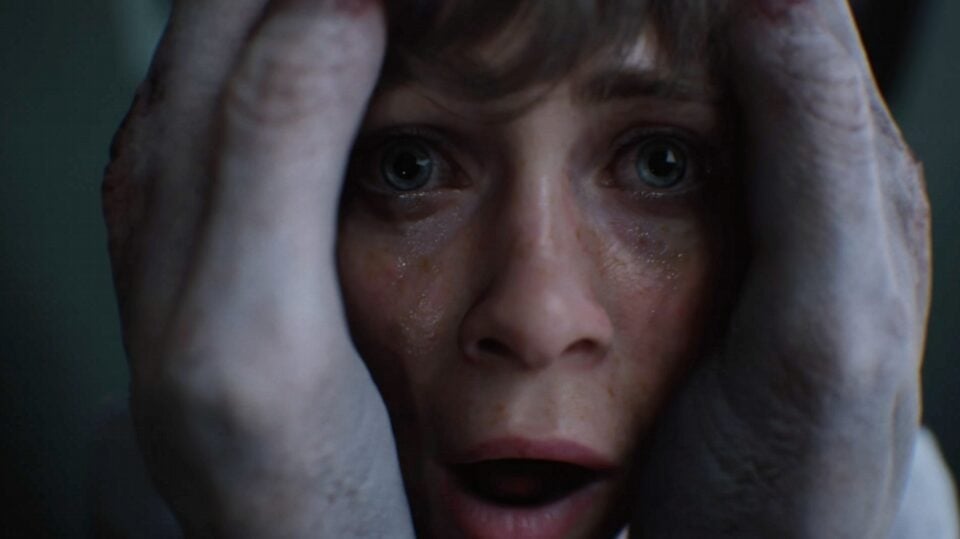
- OD was first announced at The Game Awards in December 2023, with a cryptic trailer featuring Sophia Lillis, Hunter Schafer, and Udo Kier.
- The game is a collaboration between Kojima Productions and Xbox Game Studios, leveraging Microsoft's cloud gaming technology.
- Kojima described OD as a "radical departure" from traditional horror games, blending interactive storytelling with real-time streaming elements.
- The interview did not specify which other CEOs failed to understand the project, but Kojima implied they included leaders from Sony and other major publishers.
- Kojima Productions was acquired by Xbox in a landmark deal announced in September 2024, making OD one of the studio's first major Xbox-exclusive titles.
Breaking It Down
"Only Phil got it. The others saw a horror game. Phil saw a new medium." — Hideo Kojima, Kotaku interview, June 22, 2026
Kojima's characterization of OD as something beyond a conventional game aligns with his long history of pushing interactive media boundaries. From Metal Gear Solid's meta-narratives to Death Stranding's asynchronous multiplayer, Kojima has consistently sought to redefine what video games can be. OD, as described, appears to be his most ambitious attempt yet: a horror experience that uses cloud streaming to create persistent, personalized scares that evolve based on player behavior and even time of day. This technical complexity likely explains why other executives struggled to see its commercial potential.
The fact that Phil Spencer understood OD while others did not speaks to Spencer's reputation as an executive who prioritized creative risk-taking over short-term returns. During his tenure, Spencer greenlit projects like Hi-Fi Rush and Pentiment — titles that defied conventional market logic but earned critical acclaim. OD fits that pattern: a high-concept, technologically experimental horror game from a famously meticulous director, tied to a platform (cloud gaming) that still lacks mainstream adoption. For Sony's leadership, which has increasingly focused on blockbuster cinematic franchises like The Last of Us and God of War, such a project may have seemed too niche or financially uncertain.
Kojima's public gratitude toward Spencer also carries subtext about Microsoft's current leadership. With Sarah Bond now running Xbox, the question is whether the company's strategic priorities will shift. Bond, a former Microsoft Corporate Vice President who led the company's cloud gaming and mobile initiatives, has publicly emphasized profitability and subscription growth for Game Pass. While she was instrumental in securing the Kojima Productions acquisition, her mandate to make Xbox a more disciplined business could put pressure on OD to deliver measurable returns — something that a game designed as a "new medium" may struggle to do in its first iteration.
What Comes Next
The immediate future of OD hinges on several concrete milestones and decisions:
- The next public showing of OD: Kojima Productions has confirmed a major gameplay reveal at The Game Awards in December 2026, which will be the first extended look at the game since its initial teaser. This event will be critical for setting market expectations.
- A release window decision: Sources close to the studio indicate that OD is targeting a late 2027 launch, but internal discussions about whether to release it as a Game Pass day-one title or as a premium standalone purchase remain unresolved. A decision is expected by Q1 2027.
- Sarah Bond's strategic review: Microsoft is conducting a Q3 2026 portfolio review of all first-party projects, including OD. Bond has signaled that underperforming or overly experimental titles may face budget adjustments or scope reductions.
- Cloud infrastructure readiness: OD's reliance on Azure cloud streaming means its release could be delayed if Microsoft's xCloud service does not achieve 10 million active subscribers — a threshold Bond has set as a prerequisite for launching cloud-dependent exclusives.
The Bigger Picture
This story connects to two broader trends reshaping the technology and gaming industries. First, Executive Vision and Creative Risk — the willingness of corporate leaders to fund unconventional projects. Kojima's experience reveals a recurring pattern: visionary creators often find their most receptive partners in executives who are either departing (like Spencer) or operating outside traditional gaming hierarchies (like Netflix's former gaming head Mike Verdu, who greenlit experimental projects before leaving in 2025). The departure of such champions can leave high-risk projects vulnerable to successor regimes that prioritize predictable returns.
Second, Cloud Gaming's Identity Crisis — OD represents a bet that cloud technology can enable genuinely new game experiences, not just stream existing ones. Yet the industry remains skeptical: Amazon's Luna has failed to gain traction, Google Stadia was shut down in 2023, and even xCloud has seen slower-than-expected growth. If OD succeeds, it could validate the cloud-as-platform thesis. If it fails, it may reinforce the view that cloud gaming is a solution in search of a problem.
Key Takeaways
- [Kojima's Creative Frustration]: Kojima's public claim that only Phil Spencer understood OD underscores the difficulty visionary developers face in securing funding for unconventional projects, even with a track record of success.
- [Spencer's Departure Impact]: The loss of Spencer as Xbox's creative champion creates uncertainty for OD, as new leadership under Sarah Bond may apply stricter commercial metrics to the project.
- [Cloud Gaming Bet]: OD is a high-stakes test for cloud gaming as a creative platform, not just a distribution method — its success or failure will influence how other studios approach cloud-native game design.
- [Industry Fragmentation]: The fact that multiple CEOs rejected OD while Spencer embraced it highlights the growing divide between risk-averse publishers and creators seeking to push interactive media into new territory.