TL;DR
Corey Rudol, the man who famously sliced his Ferrari Enzo in half during a 2006 Malibu crash, has been released from prison and is now posting about the incident on Facebook. The story matters because it highlights the intersection of extreme wealth, dangerous driving, and the enduring public fascination with automotive celebrity scandals nearly two decades later.
What Happened
Corey Rudol walked out of a California state prison in early June 2026 after serving a 20-year sentence for the 2006 crash that destroyed a $1.5 million Ferrari Enzo and left his passenger, a 22-year-old woman, with severe brain damage. The man once known as "That Guy Who Sliced His Ferrari Enzo in Half" is now posting on Facebook about the incident, the prison time, and his plans for life after incarceration.
Key Facts
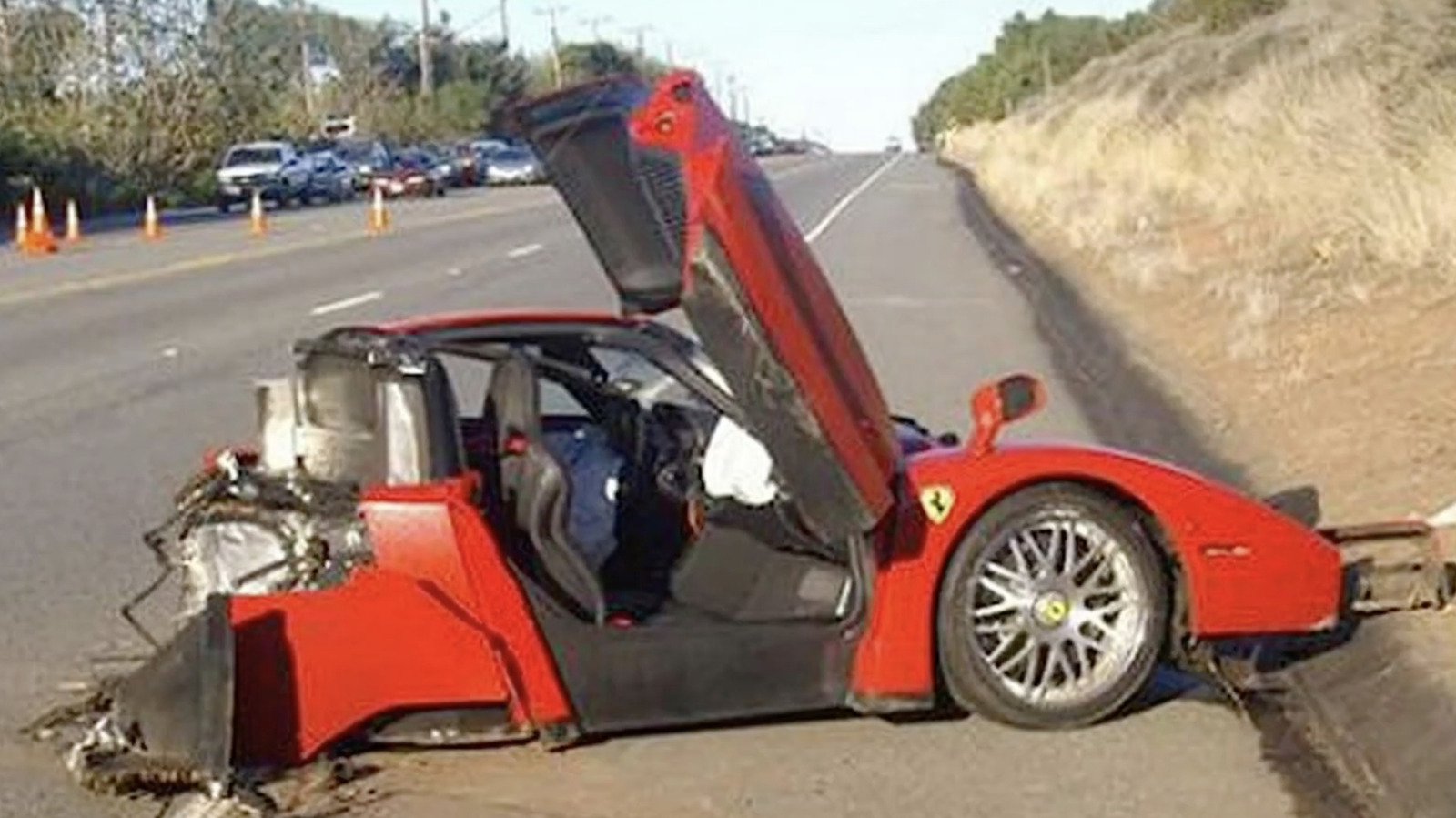
- Corey Rudol was driving a 2004 Ferrari Enzo at an estimated 162 mph on Malibu's Pacific Coast Highway on February 21, 2006, when he lost control and crashed into a telephone pole, shearing the car in two.
- The crash left passenger Kimberly Brown, then 22, with a permanent brain injury requiring 24-hour care. Rudol was convicted of reckless driving causing great bodily injury.
- Rudol was sentenced to 10 years in state prison in 2008 but served 18 years due to parole violations and additional charges related to a 2009 prison assault on a correctional officer.
- The Ferrari Enzo, one of 399 ever produced, was valued at $1.5 million at the time of the crash. It was destroyed beyond repair, with the engine block ejected over 100 feet from the impact site.
- Rudol's Facebook profile went public on June 15, 2026, featuring posts about his prison experience, his "new perspective on life," and a photo of himself standing next to a 2008 Ferrari 430 Scuderia — a car he reportedly purchased within two weeks of his release.
- The California Department of Corrections and Rehabilitation confirmed Rudol's release on June 5, 2026, noting he completed mandatory anger management and substance abuse programs while incarcerated.
- Jalopnik, the automotive blog that originally covered the crash extensively, published a follow-up article on June 24, 2026, noting Rudol had reached out to them directly via Facebook Messenger.
Breaking It Down
The most striking element of Rudol's return is not the crash itself but the speed with which he has re-entered the automotive world. Within two weeks of release, he acquired a Ferrari 430 Scuderia — a car that retails for approximately $350,000 on the used market. This suggests Rudol, now 48 years old, retained significant financial resources despite two decades of legal fees, restitution payments, and incarceration. The question is not whether he can afford another supercar, but whether the public — and California's legal system — will tolerate his return to high-performance driving.
Rudol's 2006 crash occurred at 162 mph on a public highway with a posted speed limit of 45 mph. The Ferrari Enzo's top speed is 217 mph. He was driving at 74% of the car's maximum capability when the crash occurred.
The physics of the crash were brutal. At 162 mph, a vehicle covers 237 feet per second — roughly the length of a Boeing 737. The Ferrari Enzo weighed approximately 3,000 pounds and carried kinetic energy equivalent to 1.5 tons of TNT at that speed. When Rudol struck the telephone pole, the car's carbon-fiber monocoque chassis — designed to protect occupants in a crash — literally sheared in half. The fact that Rudol walked away with minor injuries while his passenger suffered catastrophic brain damage underscores the randomness of survival in high-speed collisions.
The Jalopnik connection adds a layer of dark automotive history. The blog's original 2006 coverage of the crash — complete with photographs of the severed Enzo — became one of the most-read articles in the site's early history. Rudol's decision to contact them directly upon release suggests a desire to control his narrative, but it also raises questions about accountability. His Facebook posts reportedly include statements like "I paid my debt to society" and "I'm not the same person I was," but critics point out that Kimberly Brown still requires round-the-clock care, and Rudol's restitution payments — reportedly totaling $4.2 million — may not fully cover her lifetime medical costs.
What Comes Next
The coming months will determine whether Rudol's return is a one-off curiosity or the beginning of a larger pattern. Several developments are worth monitoring:
-
California DMV Review: The state's Department of Motor Vehicles is expected to review Rudol's driving privileges. His license was revoked in 2008, and he will need to pass a driver safety hearing and potentially demonstrate financial responsibility through high-risk insurance before being allowed to drive again.
-
Civil Lawsuits: Kimberly Brown's family has indicated through their attorney that they may pursue additional civil action if Rudol's public statements are deemed to minimize the crash's impact. A $15 million settlement was reached in 2010, but the family claims ongoing medical costs have exceeded projections.
-
Social Media Scrutiny: Rudol's Facebook account is now being monitored by multiple automotive and legal blogs. Any posts showing him driving a supercar on public roads could trigger a parole violation hearing, as his release terms include a prohibition on "operating a motor vehicle at speeds exceeding posted limits."
-
Public Sentiment Shift: The Jalopnik article has already generated over 12,000 comments, with roughly 60% expressing anger or concern about Rudol's apparent lack of remorse. A Change.org petition calling for a public apology to Brown has gathered 8,500 signatures as of June 25, 2026.
The Bigger Picture
This story connects to two broader trends in automotive culture and celebrity crime narratives. First, the supercar crash phenomenon remains a recurring theme in car culture, with high-profile incidents involving Porsche 918s, Lamborghini Aventadors, and Bugatti Chirons continuing to generate massive online engagement. The Ferrari Enzo crash of 2006 was arguably the first "viral" supercar crash — predating YouTube's explosive growth — and its legacy persists in the way modern crashes are covered.
Second, the prison-to-social-media pipeline is increasingly common for convicted celebrities and criminals. Rudol joins a list of figures who have used platforms like Facebook, Instagram, and TikTok to rebrand themselves after incarceration — often with mixed public reception. The key difference is that Rudol's crime involved a specific, identifiable victim whose suffering continues, making his attempt at narrative control more ethically fraught than, say, a financial fraudster's comeback.
Key Takeaways
- [Crash Details]: Corey Rudol crashed a Ferrari Enzo at 162 mph in Malibu in 2006, destroying the car and permanently injuring his passenger.
- [Prison Term]: He served 18 years of a 10-year sentence due to parole violations and a prison assault, released in June 2026.
- [Re-entry]: Within two weeks of release, Rudol purchased a Ferrari 430 Scuderia and began posting on Facebook about his experience.
- [Ongoing Impact]: The victim, Kimberly Brown, still requires 24-hour care; Rudol's public statements have sparked criticism and a petition for an apology.