TL;DR
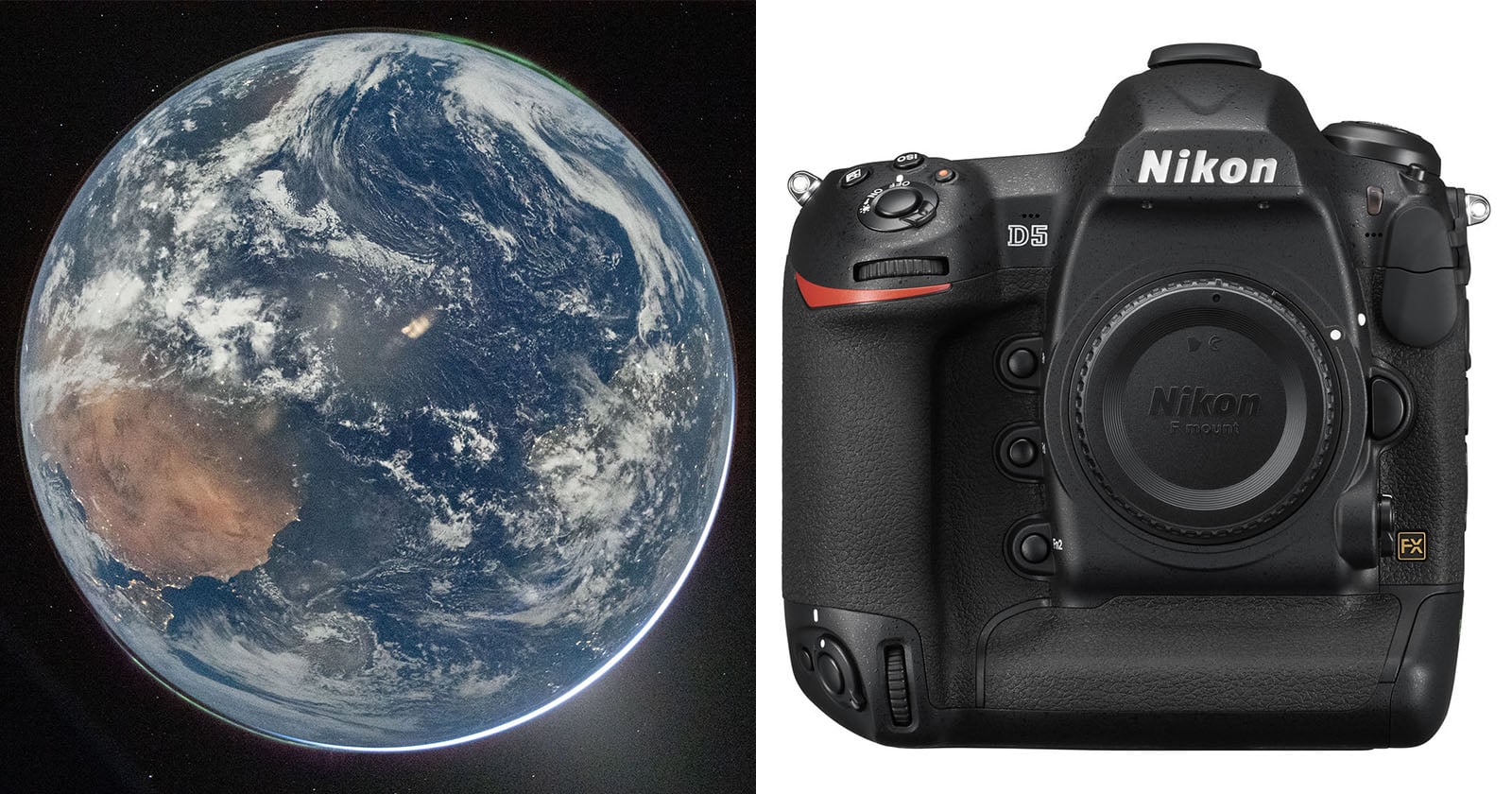
NASA has selected the Nikon D5, a decade-old professional DSLR, as a primary handheld camera for the Artemis II lunar flyby mission. This decision underscores that for the extreme conditions of space, proven reliability and specific performance metrics—particularly in low-light—trump the latest consumer technology. The choice matters now as it highlights the meticulous, risk-averse engineering philosophy driving humanity's return to the Moon.
What Happened
In a move that defies the consumer tech industry's relentless push for the new, NASA has officially confirmed that the Nikon D5 DSLR, first released in 2016, will be a key photographic tool aboard the Orion spacecraft during the Artemis II mission. This selection, reported by PetaPixel, validates the camera's legendary status among professionals and reveals the critical engineering priorities for equipment destined to operate in the unforgiving environment of cislunar space.
Key Facts
- NASA has certified the Nikon D5 for use on the Artemis II mission, the first crewed flight of the Orion spacecraft and the first human lunar flyby since 1972.
- The camera body is a stock, unmodified version of the D5, though it will be fitted with Nikkor lenses and a specialized thermal blanket for space.
- The D5’s selection hinges on its exceptional low-light performance, capable of capturing usable images at extraordinarily high ISO settings, a necessity for photographing the dark side of the Moon and Earth against the blackness of space.
- Artemis II is currently scheduled for launch no earlier than September 2025, carrying NASA astronauts Reid Wiseman, Victor Glover, Christina Koch, and CSA astronaut Jeremy Hansen.
- The camera is part of a handheld kit for crew documentation, complementing the spacecraft's built-in, fixed engineering cameras.
- Nikon has a long history with NASA, providing modified cameras since the Nikon Photomic FTN during the Apollo program and more recently the Nikon D3S, D4, and D800 on the International Space Station.
- The decision was made despite the D5 being succeeded by the Nikon D6 in 2020 and the industry's wholesale shift to mirrorless camera systems.
Breaking It Down
NASA’s choice is a masterclass in requirements-based engineering over marketing hype. The agency isn't selecting a "camera"; it's selecting a tool that must function flawlessly under specific, brutal conditions: extreme thermal cycling, intense radiation, vacuum, and high vibration. The D5, through its decade of service in war zones, sporting events, and on the ISS, has a proven reliability pedigree that a newer, untested model cannot match. Its mechanical shutter and optical viewfinder, while "old" technology, offer simplicity and direct control—vital attributes when astronauts are wearing pressurized gloves.
The Nikon D5 can produce a usable image at an ISO sensitivity of 3,280,000, a figure that remains staggering even by 2026 standards.
This extreme ISO capability is the D5's killer app for Artemis. The mission profile will plunge the crew cabin into periods of profound darkness, both during the lunar flyby and in orbital night over Earth. Capturing detailed images of the lunar surface, spacecraft exteriors, or crew activities in these conditions without relying on artificial lighting is paramount for scientific documentation and operational monitoring. A modern mirrorless camera might boast superior video or autofocus, but none have been stress-tested for years in space to prove they can deliver this specific, critical performance metric when it counts.
Furthermore, the selection underscores a supply chain and certification advantage. NASA and its contractors have existing technical data, testing protocols, and familiarity with the D5's design from its ISS use. Certifying a new camera for human spaceflight is a multi-year, multi-million dollar process involving radiation testing, thermal-vacuum cycles, and electromagnetic interference checks. By choosing a known quantity, NASA avoids this lengthy requalification, reducing risk, cost, and complexity ahead of a pivotal mission. This is the same philosophy that saw the Space Shuttle use Intel 8086 processors and the Orion spacecraft itself rely on proven, if older, avionics.
What Comes Next
The confirmation of the D5 is just one step in finalizing the photographic suite for Artemis II. The focus now shifts to integration, training, and the development of the protocols that will govern its use.
- Lens Selection and Kit Finalization: NASA and Nikon will finalize which Nikkor lenses will fly. Expect a mix of wide-angle primes for interior shots and fast telephoto zooms for detailed lunar surface observation. The design and testing of the specialized thermal blanket that will protect the camera from temperature extremes will also be completed.
- Astronaut Training and Protocol Development: The Artemis II crew will undergo extensive training with the D5 in simulated lighting conditions, likely in NASA's Neutral Buoyancy Lab or using VR simulators. They will develop standardized settings and shot sequences to ensure consistent, valuable imagery is captured amidst a busy flight schedule.
- Data Management Planning: A major operational question is how the potentially thousands of high-resolution RAW images will be downlinked given the bandwidth constraints of the Orion spacecraft. Mission planners must decide what can be transmitted in near-real-time and what will be stored on physical media for return to Earth.
- Legacy for Artemis III and Beyond: The performance of the D5 on Artemis II will directly inform camera choices for Artemis III, the mission slated to land astronauts near the lunar South Pole. If successful, a variant of the D5 or its successor, the D6, could be certified for surface operations, facing an even harsher environment of abrasive dust and greater thermal swings.
The Bigger Picture
This decision connects to several enduring truths in high-stakes technology deployment. First, it exemplifies the principle of "flight heritage," where a component's proven performance in the operational environment is the ultimate credential, far outweighing theoretical advantages on a spec sheet. This is why aerospace and defense industries often use generations-old chips and systems; failure is not an option.
Second, it highlights the growing divergence between consumer tech cycles and industrial/exploration tech timelines. The smartphone and camera markets thrive on annual obsolescence, while a human lunar program operates on decadal planning horizons. The D5's selection is a stark reminder that the cutting edge for Instagram is not the cutting edge for interplanetary travel. Finally, it touches on technology preservation. As the industry abandons the DSLR for mirrorless, NASA's move ensures that a specific, optimal tool for an extreme niche remains available and supported, effectively creating a "technology lifeboat" for a critical application.
Key Takeaways
- Reliability Over Novelty: For critical systems in hostile environments, a decade of proven performance is infinitely more valuable than the latest unproven features.
- Low-Light is Non-Negotiable: The D5’s extreme high-ISO capability was the decisive technical factor, a specialized requirement that overrides general advancements in areas like autofocus or video resolution.
- Certification is a Hurdle: The immense cost and time required to space-rate new hardware creates a powerful inertia favoring existing, flight-proven equipment.
- Legacy Tech Has a Future: This decision validates that even "obsolete" consumer technology can have a vital, long-term role in scientific exploration when its specific performance characteristics are perfectly matched to a unique need.