TL;DR
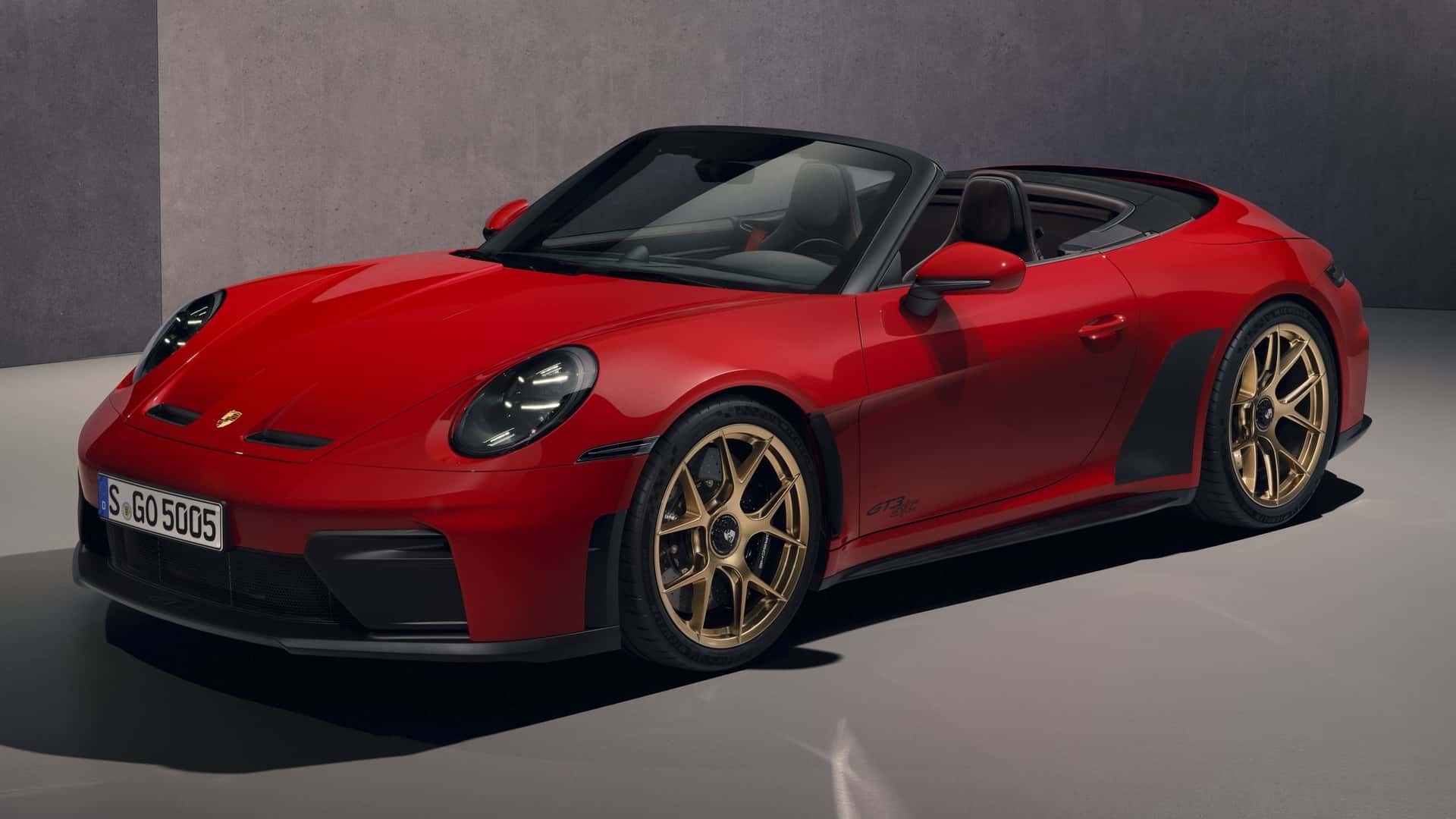
Porsche has unveiled the 911 GT3 S/C, a lightweight, manual-only convertible variant of its track-focused GT3. This model directly challenges the industry-wide shift towards electrification and automated transmissions by doubling down on a naturally aspirated, high-revving engine and pure driver engagement. Its release in 2026 serves as a defiant statement of Porsche's engineering philosophy at a critical inflection point for the automotive industry.
What Happened
On April 15, 2026, Porsche AG pulled the sheet off a vehicle that purists feared might never exist: a roofless, manual-transmission 911 GT3. Dubbed the 911 GT3 S/C, this model fills a conspicuous gap in the performance lineup, delivering the unfiltered, high-revving experience of the iconic GT3 coupe in an open-top configuration, but exclusively with a six-speed manual gearbox. This strategic launch places a high-stakes bet on driver-centric analog performance in an era increasingly dominated by hybrid powertrains and dual-clutch automatics.
Key Facts
- Model Name & Date: The Porsche 911 GT3 S/C was officially unveiled on Wednesday, April 15, 2026.
- Core Specification: It is powered by a naturally aspirated 4.0-liter flat-six engine that achieves a 9,000 rpm redline, a hallmark of the GT3 lineage.
- Transmission: The car is offered with only one transmission option: a six-speed manual gearbox, making it a rarity in the high-performance segment.
- Body Style: The "S/C" designation stands for "Speedster/Cabriolet," confirming it is a true convertible model, a first for the 992-generation GT3.
- Source & Category: The announcement was reported by Motor1.com and falls under the technology category, highlighting its significance as a technical counter-trend.
- Market Position: It is described as a "driver's delight," positioning it as an emotional, engagement-focused vehicle rather than a pure numbers machine.
Breaking It Down
Porsche's decision to launch the 911 GT3 S/C in 2026 is a meticulously calculated move, less about filling a product niche and more about reinforcing a brand dogma. At a time when every major performance manufacturer, including Porsche itself with models like the 911 Turbo S Hybrid, is integrating electrification, the GT3 S/C stands as a monument to internal combustion purity. Its naturally aspirated engine, devoid of turbochargers or electric assist, represents a peak in mechanical engineering focused on throttle response, linear power delivery, and an auditory experience that is fundamentally tied to internal combustion. This car is engineered for the segment of the market that measures performance in tactile feedback and emotional resonance, not just lap times or 0-60 mph figures.
The 911 GT3 S/C's 9,000 rpm redline is not merely a specification; it is the engineering manifesto of the entire vehicle. This stratospheric engine speed is achievable only through extreme precision in components like forged pistons, titanium connecting rods, and a rigid valvetrain—technology that is astronomically expensive to develop and largely irrelevant to electrified powertrains. The redline defines the car's character, demanding active driver participation to access its full performance band and creating a visceral, rising symphony that is a core part of the convertible experience. In an age of instant, silent torque from electric motors, Porsche is investing heavily in the theater and mechanical artistry of high-rpm combustion.
The choice to make the GT3 S/C manual-only is perhaps an even bolder statement than its powertrain. The PDK dual-clutch transmission is faster, more efficient, and overwhelmingly popular among buyers of previous GT3s. By removing the option, Porsche is performing a hard segmentation of its customer base. This move signals that the S/C is not for every GT3 buyer; it is specifically for the connoisseur, the individual for whom the physical act of clutching and rowing through gears is an irreplaceable element of driving joy. It protects the car's intended character from being diluted by performance metrics that would favor an automatic. This philosophy echoes limited-run models like the 911 R of 2016, which commanded massive premiums on the secondary market precisely because of its manual transmission and focus on driver engagement over outright speed.
Furthermore, engineering a true convertible version of the track-honed GT3 presents significant challenges. The GT3 chassis relies on exceptional rigidity for its sharp handling. Removing the roof necessitates substantial reinforcement elsewhere—likely in the sills, A-pillars, and underbody—to maintain structural integrity, inevitably adding weight. Porsche's engineers have had to perform a delicate balancing act, likely employing materials like additional aluminum alloys or high-strength steel to compensate without completely negating the GT3's lightweight ethos. The success of the S/C will be judged on whether it feels as taut and responsive as its fixed-roof sibling, or if the convertible experience comes with a dynamic compromise.
What Comes Next
The unveiling of the GT3 S/C is just the beginning of its story. Its reception and rollout will be closely watched as a barometer for the future of analog sports cars.
- Pricing and Order Bank Opening (Late Q2 2026): The first critical step will be the announcement of its MSRP. Expect it to command a significant premium over the standard GT3 coupe due to its limited nature and complex convertible engineering. How the market responds to this price will be an immediate test of demand for such a specialized vehicle.
- First Media Drives and Performance Data (Q3 2026): Independent reviews will be crucial. Journalists will scrutinize whether the chassis reinforcement has successfully preserved the GT3's legendary handling, and they will quantify any performance delta—particularly in lap times and rigidity metrics—compared to the PDK-equipped GT3 coupe.
- Initial Customer Deliveries and Secondary Market Activity (Q4 2026/Q1 2027): As the first units reach customers, watch for immediate activity on collector forums and resale sites. If history is a guide, a manual-only, convertible GT3 will be produced in limited numbers. Whether it sells at or above MSRP in the secondary market will be the ultimate measure of its success and cultural impact.
- Influence on Future Porsche Product Cycles (2027+): The commercial and critical performance of the GT3 S/C will directly inform Porsche's decisions for the next-generation (994) 911. A strong reception could justify further "analog" special editions, while a tepid one may accelerate the integration of hybrid systems even into the GT3 line.
The Bigger Picture
The Porsche 911 GT3 S/C is a poignant case study intersecting several dominant technology trends, precisely because it defiantly swims against the current.
First, it confronts the Electrification Mandate head-on. While regulators worldwide push for EV adoption and Porsche invests billions in its Mission R and Macan EV programs, the GT3 S/C is a rolling argument for the continued relevance and perfection of internal combustion. It represents a "last hurrah" engineering philosophy, pushing a known technology to its absolute zenith before potential sunsetting. Second, it challenges the Automation of Performance. The industry trend is toward software-defined vehicles where stability control, torque vectoring, and transmission programming optimize performance beyond human capability. The manual-only GT3 S/C re-asserts the human driver as the central, irreplaceable control system, valuing skill and involvement over consistent, algorithmically-perfected speed.
Finally, it taps into the Economics of Exclusivity and Experience. In a digital age, tangible, mechanical experiences are becoming luxury goods. The GT3 S/C is not just a car; it is a complex, engaging machine that offers an experience disconnected from screens and driver aids. Its value proposition is rooted in emotional resonance and rarity—a form of analog luxury that stands in stark contrast to the tech-forward luxury defined by seamless connectivity and autonomous features.
Key Takeaways
- Analog Rebellion: The 911 GT3 S/C is a deliberate, engineering-led rebuttal to industry trends, prioritizing a high-revving naturally aspirated engine and manual transmission in an age of electrification and automation.
- Driver-Focused Segmentation: By being manual-only, Porsche is targeting a specific, purist segment of its customer base, sacrificing broad appeal to protect the car's intended character and driving experience.
- Engineering Challenge Achieved: Creating a convertible version of a track-focused chassis like the GT3's required significant reinforcement; its success hinges on delivering a driving dynamic that matches the rigid coupe's reputation.
- Market Bellwether: The pricing, sales velocity, and secondary-market performance of this limited-run model will serve as a key indicator of consumer demand for non-electrified, engagement-focused performance cars in the late 2020s.